Incredible Secret Spaces Hidden Inside the World’s Biggest Landmarks
Many of the world’s most famous landmarks contain spaces the public rarely sees. Behind their familiar exteriors are hidden chambers, underground passages, and sealed rooms created for security, maintenance, or historical use.
A few of these areas can be visited through limited tours, but many remain closed. They show that even the most photographed landmarks still hold parts that most visitors never discover.
The Vault at Mount Rushmore
Credit: Wikimedia Commons
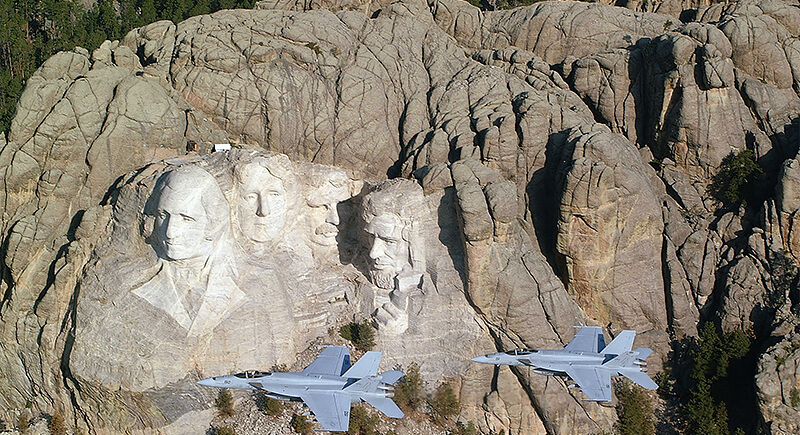
Sculptor Gutzon Borglum wanted Mount Rushmore to preserve key American records for distant future generations. Behind Abraham Lincoln’s face, he carved a 70-foot tunnel meant to hold notable Americans’ busts, an 800-foot staircase, and bronze cabinets. He died in 1941 before finishing any of it. The space now holds a sealed titanium vault beneath a 1,200-pound granite capstone allegedly containing porcelain panels etched with the Constitution, the Declaration of Independence, and the Bill of Rights.
The Private Apartment at the Top of the Eiffel Tower
Credit: Wikimedia Commons
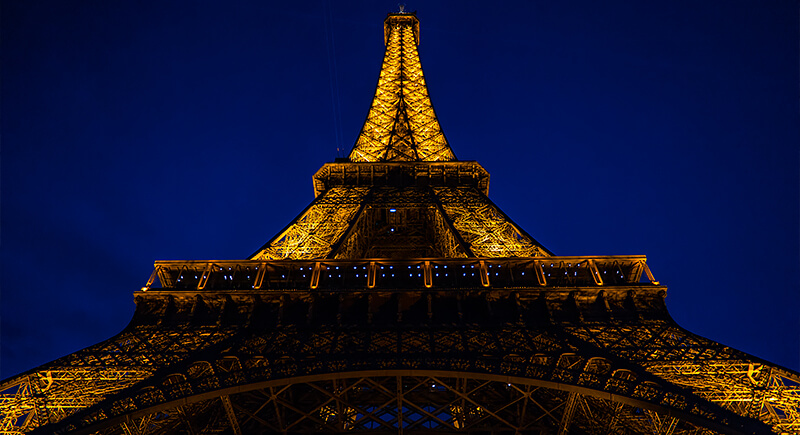
Gustave Eiffel built a private apartment near the top of his tower and refused every offer to rent it out. The almost 950-foot-high suite had a piano and a sitting room. His most famous guest was Thomas Edison, who visited the apartment and presented Eiffel with a phonograph as a gift. Today, wax figures of both men are in a glass-enclosed recreation of the space.
The Colosseum’s Hidden Backstage World
Credit: Wikimedia Commons
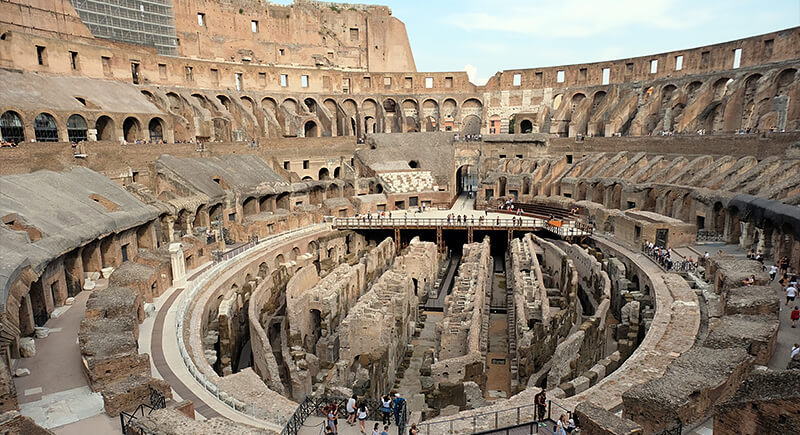
Romans must have enjoyed events at the Colosseum, but the real spectacle might have happened underground. The hypogeum, a two-level maze of tunnels and holding cells beneath the arena floor, was run like a military operation. Multiple hand-cranked elevators could launch a caged lion through a trapdoor in seconds. Separate tunnels kept the emperor out of sight. The space was buried and was excavated in the 20th century.
The Underground Lake Beneath the Paris Opera House
Credit: Wikimedia Commons
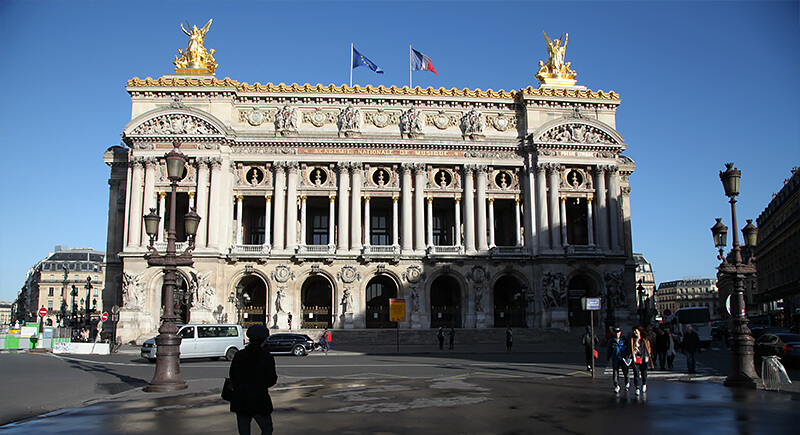
Nobody planned for a lake beneath the Palais Garnier, but when workers hit groundwater they couldn’t drain, architect Charles Garnier built a concrete cistern around it. The lake is meters below the stage. Paris firefighters utilize it for underwater rescue training, and a small population of carp reportedly lives in it. Gaston Leroux drew on the building’s real underground mysteries when writing The Phantom of the Opera.
The Disney World Tunnels That Keep the Magic Alive
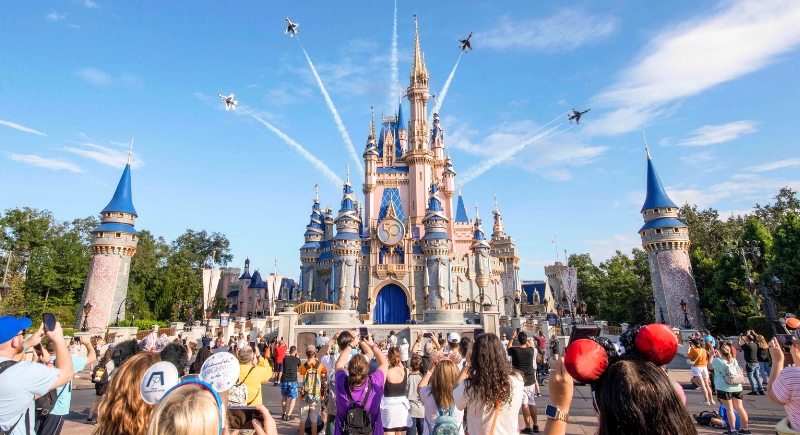
Credit: Wikimedia Commons
Places like Disneyland are popular for many reasons, including maintaining the promised illusion. Obviously, keeping some employees out of sight is key to that goal. When Walt Disney designed Disney World, he built the Magic Kingdom on the second floor. Underneath is a nine-acre corridor network called the “utilidors.” Cast members move between themed lands unseen, trash travels through pneumatic tubes, and a park-wide monitoring system runs from below.
The Sealed Void Inside the Great Pyramid
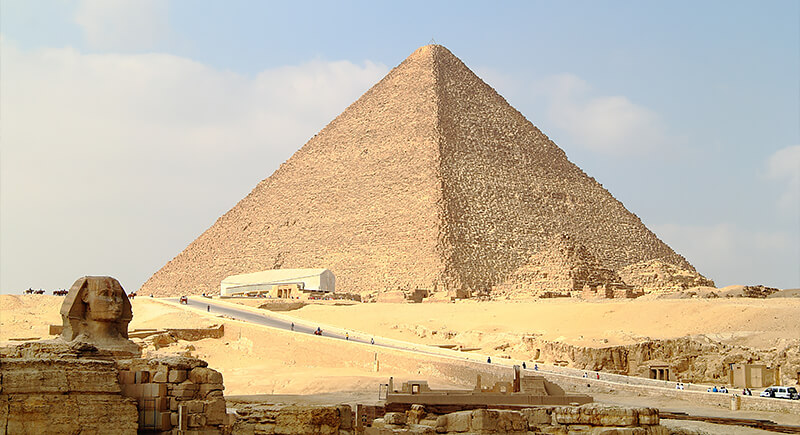
Credit: Wikimedia Commons
In 2017, physicists using muon radiography detected a hidden space at least 30 meters long just above the Grand Gallery inside the Great Pyramid of Giza. Three separate research teams independently confirmed it. No entrance has ever been located, and no one has been inside. Archaeologists are still debating whether it could be a gallery, a structural relieving chamber, or something else.
The Freemasons’ Cornerstone Buried Beneath the Washington Monument
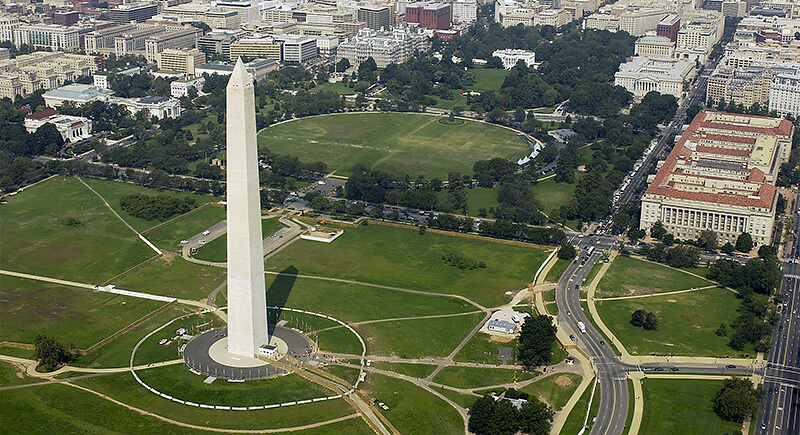
Credit: Wikimedia Commons
On July 4, 1848, the Grand Lodge of Masons of Washington, D.C., led the cornerstone ceremony for the Washington Monument. A large marble block was placed into the foundation, and a zinc case inside it held newspapers, coins, and other commemorative items from the time. When engineers strengthened the monument’s foundation in 1880, the cornerstone was covered with concrete, which left it permanently sealed beneath the structure.
The Pope’s Private Escape Route
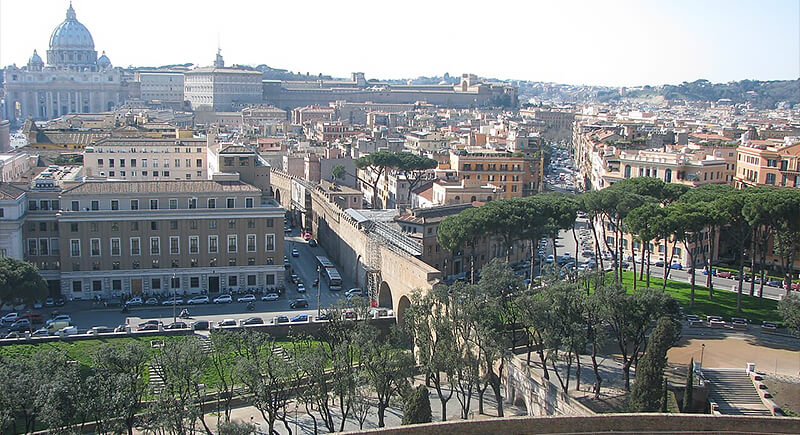
Credit: Wikipedia
Pope Clement VII fled through it in 1527 while Rome burned. Pope Alexander VI used it in 1494 to escape French forces. We’re talking about the Passetto di Borgo, a raised corridor connecting the Vatican to Castel Sant’Angelo. Nearly half a mile long, it let the pope disappear without anyone knowing. The passage still exists, mostly unchanged, and occasionally opens for limited tours.
The 1,600-Year-Old Tunnel Network Beneath Hagia Sophia
Credit: Wikipedia
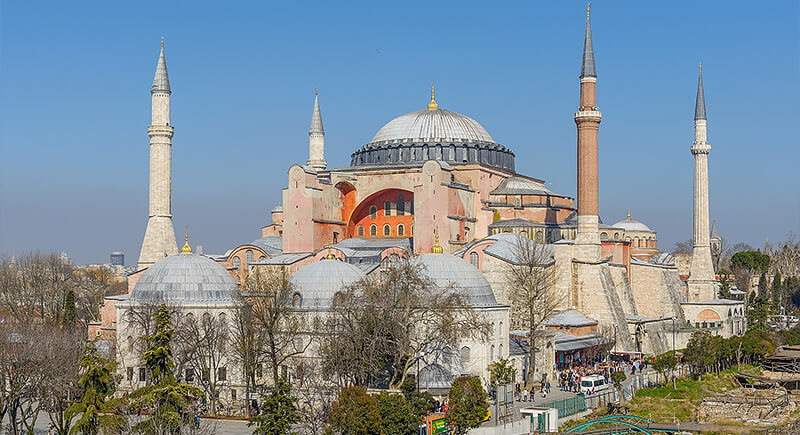
In 2026, restoration crews beneath Hagia Sophia in Istanbul made an announcement that caught the archaeological world off guard. They had mapped seven underground tunnel lines, dating back over a millennium to the early Byzantine period, beneath the structure. Several tons of soil were removed during excavation. Workers also uncovered a hypogeum, or a burial complex, that could have predated Hagia Sophia.
The Gladiator Training Facility Near the Colosseum
Credit: Wikipedia
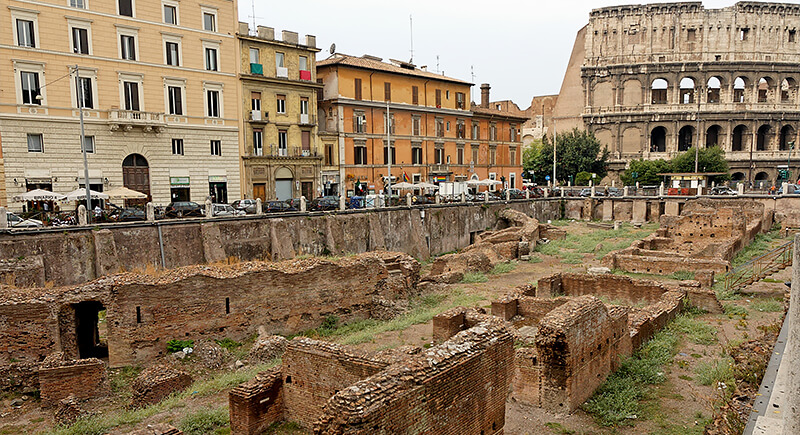
Embedded in the streets of modern Rome are the ruins of the Ludus Magnus, once the city’s largest gladiator training school. An underground tunnel connected it directly to the Colosseum, which allowed gladiators to move between the training school and the arena without passing through the city streets. The Ludus had its own smaller practice arena, which the Romans could watch as a standalone attraction.