In Brazil, Prisoners Can Decrease Their Sentence by Reading Books
A former president convicted of plotting a coup is now eligible to shorten his prison sentence in Brazil by reading books. The same law that applies to thousands of incarcerated people across the country allows prisoners to reduce their sentences by four days for every approved book they read and review. The policy, introduced in 2012, has become one of Brazil’s most unusual and far-reaching rehabilitation tools.
How the Sentence Reduction Works

Image via Canva/Handmadefont
The reading remission law gained renewed public attention in 2026 when Jair Bolsonaro, Brazil’s former president, became eligible to participate after being sentenced to 27 years in prison for plotting a coup.
Under the program, incarcerated participants select books from an approved list that typically includes literature, philosophy, science, and classic works. After reading a book, the inmate must produce a handwritten review or essay showing they understood the material.
These reviews are evaluated by a commission that may include teachers, librarians, and representatives from civil society. Each approved review earns the prisoner a four-day reduction in their sentence. Participants may submit up to 12 reviews per year, allowing a maximum reduction of 48 days annually.
A Supreme Court judge authorized Bolsonaro’s inclusion in the program, subject to the same annual limit. His approved reading list reportedly includes works on democracy, indigenous rights, racism, Brazil’s military dictatorship, and lengthy literary classics.
Like every other participant, Bolsonaro is required to submit written reports demonstrating comprehension to qualify for any reduction. The process is structured and monitored, with clear limits designed to keep the program educational.
Oversight, Access, and Accommodations
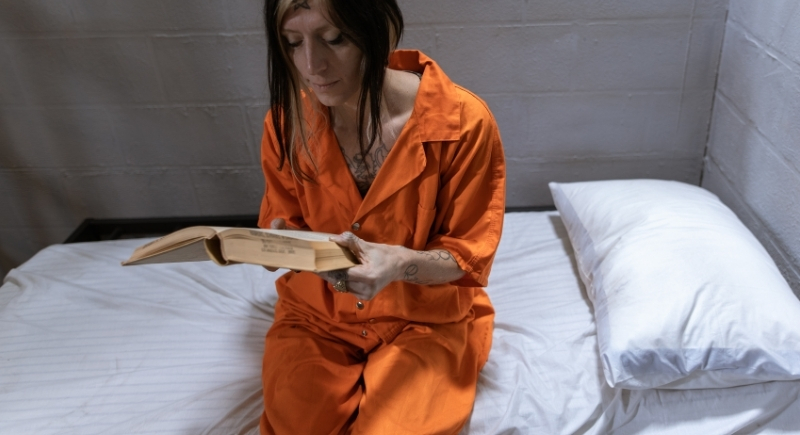
Image via Pexels/RDNE Stock project
Prisoners are generally given between 21 and 30 days to read a book, followed by a set period to complete the written review. Libraries within participating facilities are required to offer accessible materials, including audiobooks, Braille editions, and foreign-language titles. For inmates with limited literacy, alternative methods such as oral reports, peer assistance, or visual interpretations are permitted.
The program is available not only to convicted prisoners but also to some individuals in pretrial detention, provided the facility has the required infrastructure and oversight.
Brazil has one of the largest prison populations in the world, with long-standing challenges related to overcrowding, limited educational access, and high recidivism rates. Reading-based sentence remission was introduced as a low-cost way to promote literacy, encourage reflection, and provide intellectual stimulation in environments where opportunities are often scarce.
Officials and educators involved in the program emphasize that the reading requirement is intended to build critical thinking skills, expand vocabulary, and expose inmates to ideas and perspectives that may support better decision-making after release.
Evidence of Impact
Studies and interviews with participants suggest that prisoners enrolled in the program often read significantly more than the national average. Educators working inside prisons report higher engagement with learning and improved writing skills among regular participants. Some inmates have described the program as a way to manage stress, structure time, and focus on personal growth.
Publishers and cultural organizations in Brazil have also partnered with the program by donating books and, in some cases, sharing selected inmate reviews publicly to highlight the intellectual effort involved.
The reading-remission policy applies across Brazil’s prison system and has been used by inmates from a wide range of backgrounds. By linking reading, writing, and accountability to sentence reduction, Brazil has embedded education into its correctional framework in a way few countries have formalized.