How Morocco Just Smashed Every Tourism Record in Africa
Africa has many globally recognized destinations, but 2025 marked a measurable shift in tourism performance. Morocco recorded the highest annual visitor total ever reported by an African country.
The country welcomed 19.8 million international visitors in 2025, surpassing the national target of 18 million. Morocco also maintained its position as Africa’s most visited destination for the second consecutive year. Tourism generated an estimated $13.5 billion USD in revenue.
The scale of this growth reflects long-term planning across aviation, infrastructure, and destination development.
Expansion Of Flight Access Drove Consistent Visitor Growth
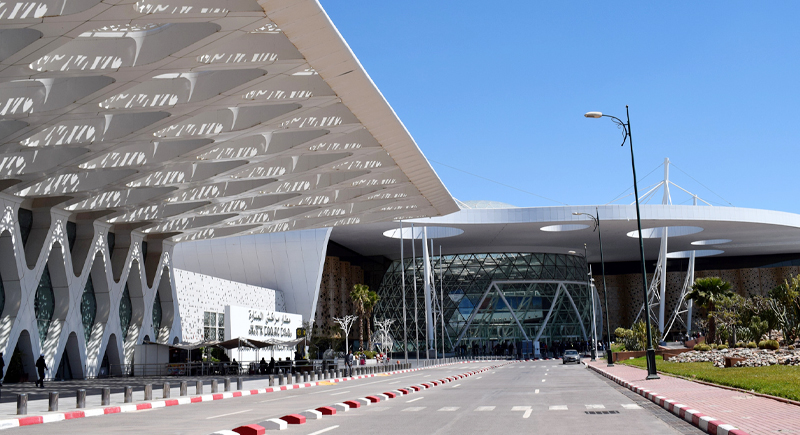
Image via Wikimedia Commons/János Korom Dr.
Morocco’s tourism increase is closely tied to aviation expansion. The country increased direct routes to Europe, North America, and parts of Asia, while low-cost carriers expanded connections between regional Moroccan cities and major European markets.
This strategy reduced reliance on a small number of gateway airports and made multi-city travel inside Morocco easier for international visitors. Airport data supports this shift.
Moroccan airports handled 36.3 million total passengers in 2025, an increase of 3.6 million from 2024. Casablanca and Marrakech remained the primary entry points, but regional airports also recorded strong growth. Marrakech Airport alone exceeded 10 million passengers in a single year.
Major Events Boosted Visibility, But Did Not Define The Year

Image via Wikimedia Commons/Ben Sutherland
Large-scale sporting events contributed to visitor numbers, especially the Africa Cup of Nations tournament held across late 2025 into early 2026. International football fans increased hotel occupancy and flight bookings across several major cities.
However, tourism growth remained strong throughout the year.
Infrastructure Investment Supported Higher Visitor Capacity
Morocco’s aviation and tourism strategy is supported by long-term infrastructure investment. The national airport development plan includes major expansions, most notably a planned 600,000-square-meter terminal expansion at Casablanca’s Mohammed V Airport, designed to support future passenger volumes reaching tens of millions annually.
At the same time, cities have invested in transportation upgrades, public space renovations, resort expansion, and cultural heritage preservation. These improvements directly affect visitor experience, length of stay, and spending levels.
Current visitor numbers are already estimated to be roughly 50% higher than pre-pandemic tourism levels, which shows how quickly the sector has recovered.
Morocco Maintained The Top Position Despite Strong Competition From Egypt
Egypt also posted record tourism numbers in 2025, reaching roughly 19 million visitors, representing a stronger percentage growth rate year over year. Morocco maintained a lead in total arrivals, while Egypt’s growth reflects strong recovery momentum after earlier downturn periods.
Tourism ranking comparisons across African countries can vary slightly due to differences in how visitor data is calculated, such as cruise passenger counting and short-stay classifications. Even with those differences, Morocco and Egypt clearly dominate tourism performance across the continent.
The 2030 World Cup Is Expected To Increase Long-Term Tourism Capacity

Image via Unsplash/Fauzan Saari
Morocco is scheduled to co-host the 2030 FIFA World Cup alongside Spain and Portugal. The government has already set a target of 26 million annual visitors by 2030.
Preparation work is already visible. Cities are upgrading, expanding transportation capacity, and modernizing major tourism zones to support future demand. The World Cup is expected to accelerate projects that were already planned as part of long-term tourism growth.
Morocco’s Record Matters Beyond One Strong Year
Tourism growth in Morocco is tied to diversification. The country promotes multiple travel segments simultaneously, including coastal, desert, cultural heritage, and urban tourism. This reduces dependence on a single market segment or season.
Morocco is positioned to continue increasing tourism capacity throughout the rest of the decade. The 2025 record shows the impact of combining aviation strategy, infrastructure expansion, and destination marketing into one coordinated model.