
A cheap kid's pencil and an old rail atlas turned my night trains into a moving history lesson with receipts.
Trace the old route in pencil before you book anything
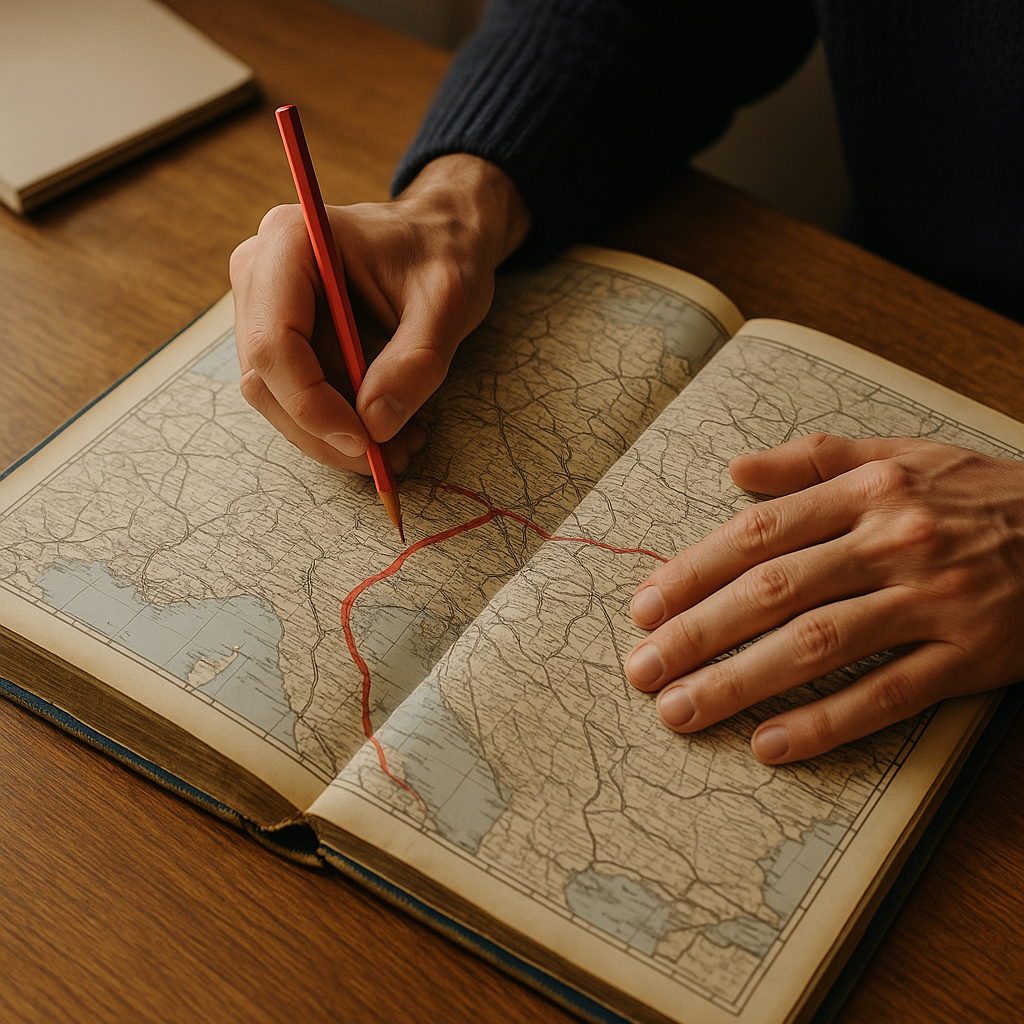
I used to plan overnight trains the lazy way: pick the departure city, pick the arrival city, hope the timetable works, then treat the hours in between like dead air. The first time I stopped doing that was in a little apartment in Vienna with a battered European rail atlas on the table and a kid's red pencil from a hotel notepad. I traced the route I thought I was taking, then compared it to the thick, older-looking trunk lines printed on the same page. That one scribble changed the whole feel of the ride. Suddenly, I wasn't just going from A to B; I was following a corridor that had been welded into Europe's muscle memory for a century.
Here's how I do it now, especially for historic European routes: I pick the corridor first, then the sleeper. Open a proper rail atlas (paper is better here because you can see how lines relate) and look for the bold, long-distance spines that connect big stations you've heard of: Paris, Vienna, Budapest, Venice, Berlin, Zurich. Then look for the thin side-branches and ask yourself a blunt question: does this night train follow the spine, or does it zigzag into places that used to matter for a totally different reason (ports, border towns, mountain passes)? Your job is to identify the line you want to inhabit overnight, not just the endpoints you want to brag about.
Once you've traced it, write three station names along the line that you will pass while you're asleep. Not as a checklist. As a mood-setter. On my Vienna-to-Venice run, the names on the page made it clear that the train was using an old north-south route across the Alps, not some random modern shortcut. And when I woke up to a grey dawn and a platform sign I recognized from my pencil notes, it felt like I'd stepped into the route on purpose. That tiny pre-booking ritual keeps me from buying the wrong romance.
Use borders and passes to predict what you'll feel at 2:00 a.m.
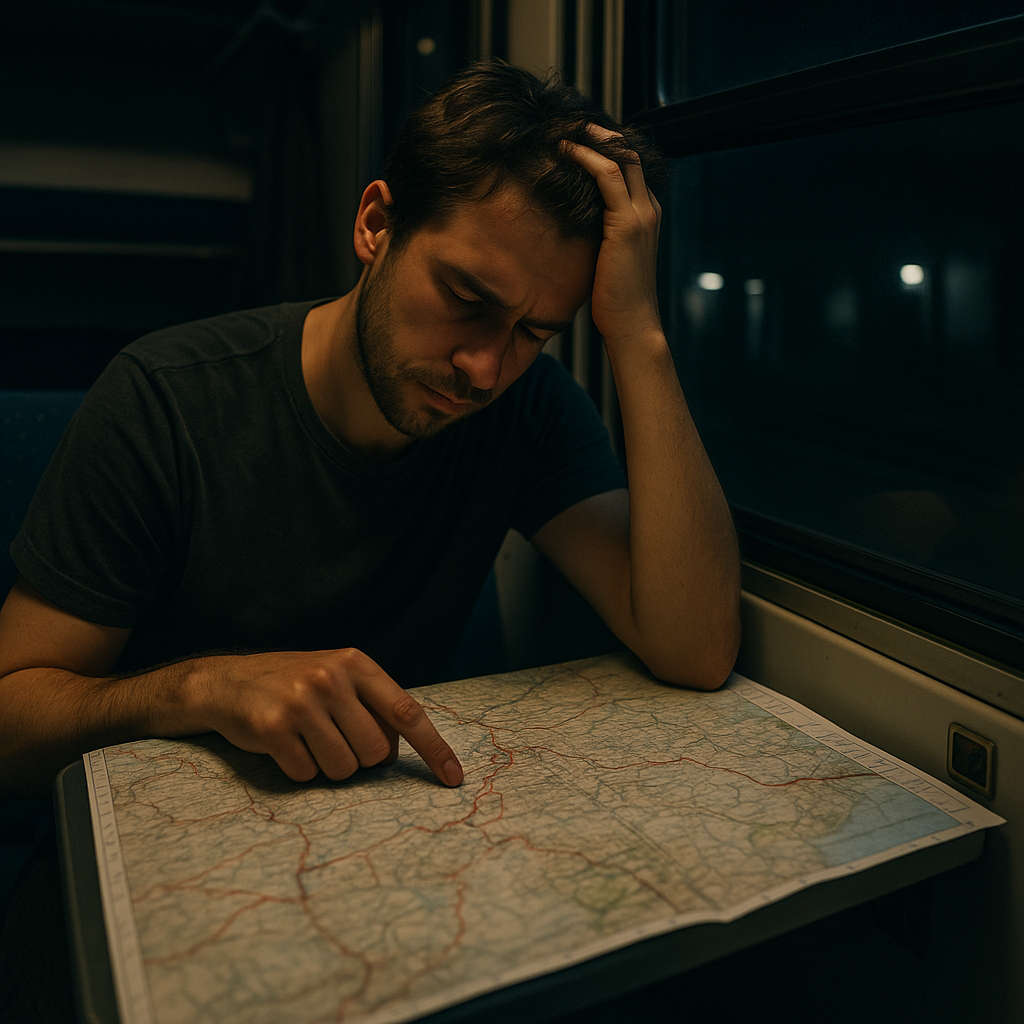
If you've slept on enough overnight trains, you start to notice the same three wake-ups: the hard brake, the long stillness, and the sudden shove that makes the hangers rattle. I used to blame random delays. Then I started reading the route like terrain. A sleeper isn't a teleport. It's a machine dragging you through chokepoints that have been chokepoints since horses.
Take any historic European corridor and hunt for two things on the page: border crossings and mountain passes. Borders are the obvious cultural hinge. Passes are the physical ones. Even within the Schengen Area, where routine internal border checks are generally absent, temporary border controls and identity checks can still occur. The timetable rarely tells you much about the terrain ahead. A detailed rail atlas can show how the line follows valleys, crosses mountain corridors, and connects major railway junctions.
When I'm choosing between two similar overnight options, I look at the profile clues I can infer without pretending to be an engineer. Does the line follow a river valley, cross an Alpine corridor, or make a long detour through major railway junctions? Check the train's current route rather than assuming that the night service follows the same line as daytime trains. Mountain routes can involve curves, tunnels, gradients, and longer operational stops, but an atlas cannot reliably predict how much movement or noise you'll experience. Check the actual timetable and route details if those things matter to your sleep.
The cultural part comes from knowing what's happening when you can't see it. On a run that skirts a former imperial border, I like to mark the crossing on my phone's offline map and set a quiet alarm for 10 minutes before it. Not to jump up and film the dark. Just to be awake enough to notice the vibe shift: the language on the signs, the conductor's announcements, the way the platform lighting looks different, even the snack cart selection if you're lucky. You don't get that if you treat the route like a blank line between cities. The page tells you where the seam is.
Pinpoint one pre-dawn platform for breakfast, not photos
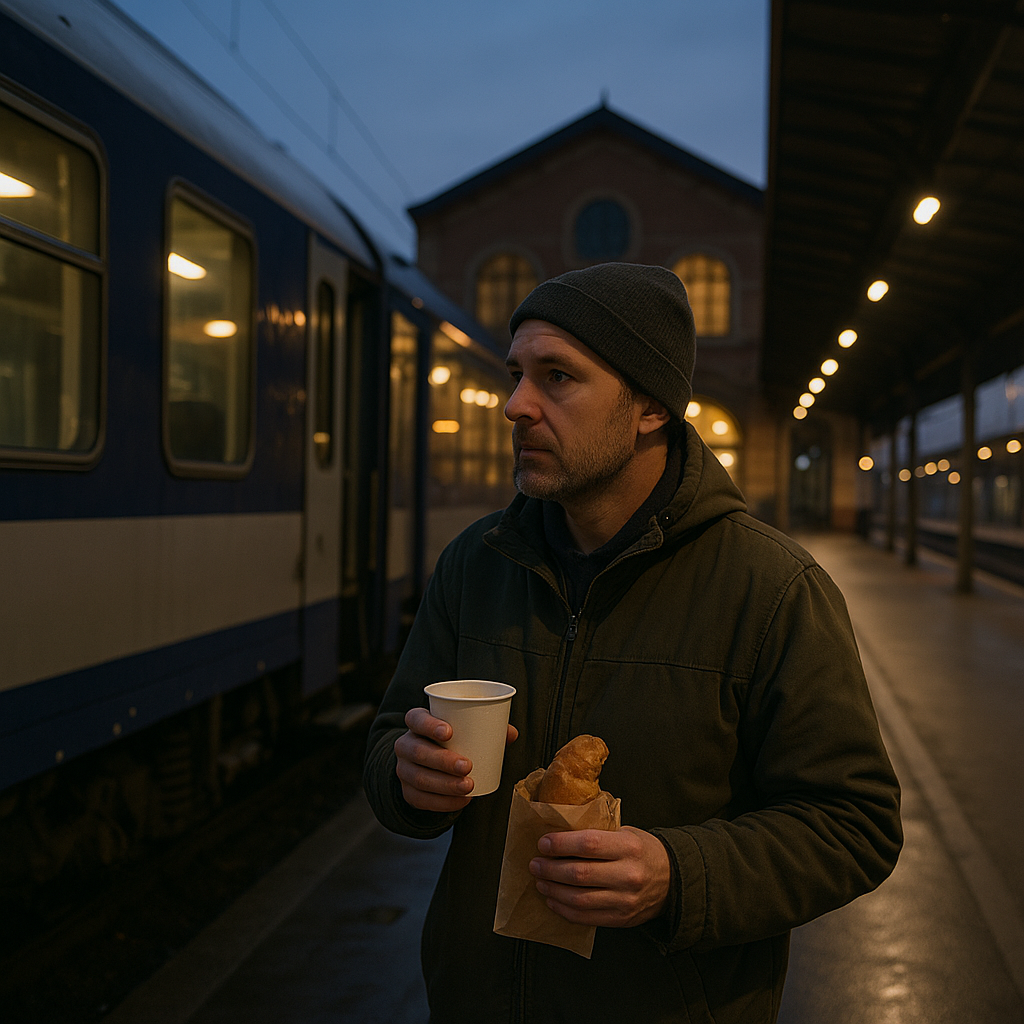
Everyone wants the romantic shot: misty window, sleeping compartment, some cathedral spire at dawn. Fine. The moment that sticks with me is smaller and more useful: the stop where you can step onto the platform, buy something warm, and listen to how that station wakes up. You can plan for it, and the route diagram is the cheat code.
I pick one station that meets three criteria. First, it's on the historic line I'm following, not a random operational stop. Second, it's early enough that you're groggy but not desperate, usually 5:30 to 7:00 a.m. Third, I check the current timetable and station information beforehand to confirm that the stop is long enough and that a café or kiosk will actually be open.
Then I do a thing that sounds fussy and ends up feeling like travel instead of logistics: I decide what I'm buying before I go to sleep. Coffee and a bread thing, yes, but be specific. In Austria, I want a hand-held pastry and the kind of coffee that comes out of a machine with a long hiss. In France, I'm looking for a jambon-beurre situation wrapped in paper that immediately turns translucent. In Italy, if I'm anywhere near an early bar, it's an espresso at the counter, not a sit-down. The point isn't foodie bragging. It's to anchor the route in a habit that locals do half-awake alongside you.
Practical notes from doing this the hard way: keep a couple of coins and a card where you can reach them without turning the berth into a yard sale. Slip-on shoes matter more than you think. And don't wander past the end of the platform if you don't know the stop length. I treat it like a pit stop, not a stroll. I only step off at an intermediate station when the railway staff confirms that passengers may do so and that there is ample time before departure. If there is any doubt, I stay aboard.
When you climb back into your compartment with a warm cup and a paper bag, the night train stops being a conveyor belt. It's a moving cross-section of daily life along a famous route, and you just took a bite of it.