Finland Has So Many Lakes that You Could Visit a New One Every Day for 500 Years
Finland carries a nickname, “the land of a thousand lakes,” but it couldn’t be further from the truth. The actual scale is far larger and much more difficult to comprehend.
The country has so many lakes that visiting a different one every single day would take more than 500 years with no revisits. There are official counts of roughly 188,000 lakes larger than 500 square meters. The measurement focuses on permanent bodies of freshwater and excludes temporary pools formed by seasonal melt or rainfall.
The familiar nickname suddenly feels far too small.
How Ice Shaped the Landscape
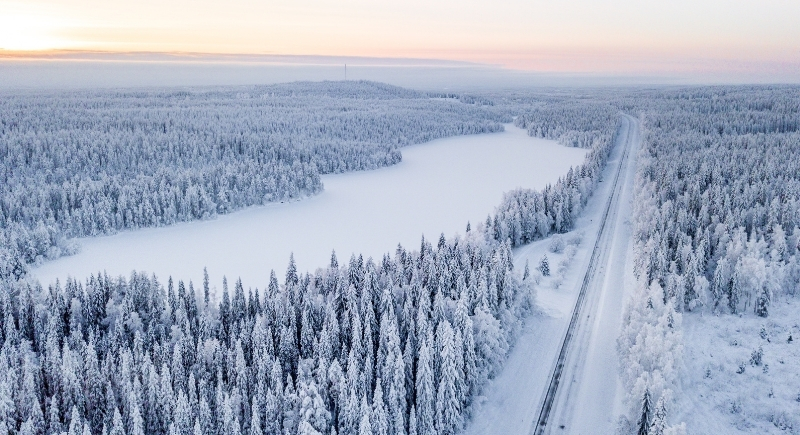
Image via Getty Images/lainea
Finland’s lake density traces back to the last Ice Age. As massive glaciers moved across the region, they pressed into the bedrock and carved countless depressions into the surface. When the ice receded, meltwater settled into those basins. Finland’s solid rock foundation held the water in place.
What emerged was a landscape filled with freshwater in nearly every direction, shaped by geological forces over thousands of years. Finland does not reserve its lakes for a single region. They appear near major cities, alongside farmland, behind residential areas, and throughout deep forested stretches. Freshwater covers roughly 10 percent of the country’s total surface area.
Small Lakes and Expansive Networks
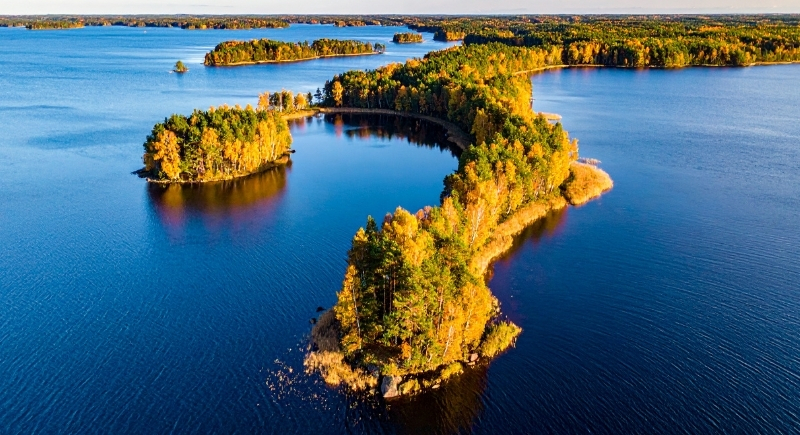
Image via Canva/MOUNT PHOTOGRAPHY
Most Finnish lakes are relatively small, yet many connect through narrow channels, rivers, and straits. Together, they form wide-reaching water networks that extend across entire regions.
Some lakes stand out for their scale, and Lake Saimaa is the clearest example. As Finland’s largest lake and one of Europe’s largest natural freshwater lakes, Saimaa stretches through a maze of islands, peninsulas, and winding passages. Navigating it can feel endless, even when you are already surrounded by water.
When Water Shapes Everyday Life
Finland’s lakes are known for their clarity, despite their sheer number.
Low population density plays a role, but environmental management has been just as essential. Forests surrounding the lakes naturally filter runoff, while rainfall and snowmelt replenish water supplies. Industrial activity near major lake systems remains tightly regulated.
With nearly 200,000 lakes, water functions as part of Finland’s infrastructure. It influences where people live, how land is developed, and how communities connect. It’s no wonder lakes are spoken about casually within the country.