
From reusing your towel to packing a real mug, these sleeper-train habits cut waste without turning your trip into a sermon.
Stop treating the sleeper like a disposable hotel room

The first time I took an overnight train with a private berth, I did what I always do in hotels without thinking: I used the little wrapped stuff because it was there. Two hours later, the trash was already annoying me. A sleeper cabin is basically a rolling closet. If you generate a bunch of single-use packaging, you get to live with it six inches from your elbow until the next stop. That physical constraint is the sneaky eco benefit: it nudges you into lighter, less wasteful habits because clutter feels personal, fast.
Now I pack like I'm going to be annoyed by my own decisions. I bring one small zip pouch with a toothbrush, a solid shampoo bar (or just skip the hair-washing for one night), and a travel-size hand soap sheet pack. I don't grab extra paper cups. If the attendant offers tea or coffee, I ask if they'll fill a mug. Lots of European sleepers are fine with it, and on others you can just use your mug for the station coffee before boarding and keep the lid on during the night.
There are also two easy wins that feel almost too small until you add them up across trips: hang the towel to dry and use it twice, and tell the attendant you don't need a full linen swap if you're staying in the same compartment on a multi-night run. You still get a clean bed, you just don't force a mid-trip laundry cycle because your brain is stuck in "fresh towel or nothing" mode. The cabin doesn't need to look like a boutique hotel to be comfortable. It needs to be functional, quiet, and not full of wrappers.
Pack for the dining car like you mean it
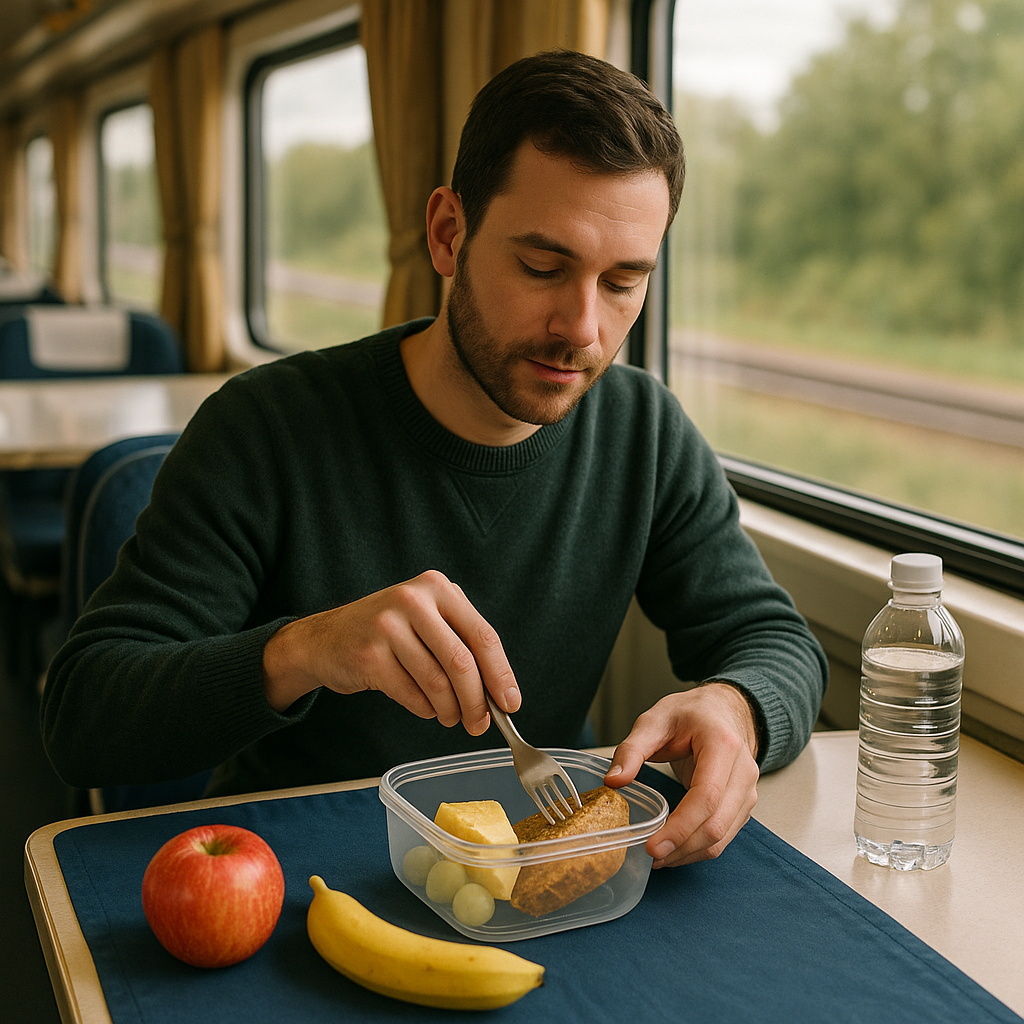
I love a dining car, but I don't love the weird in-between meals where you're hungry enough to buy something, but the only option is a plastic-wrapped sandwich plus a plastic fork plus a napkin you don't need. This is where sleeper train travel quietly changes the math for me: you have time and a stable surface. You're not juggling a gate change. You can eat like a normal person.
My routine is unglamorous and it works. I carry one wide-mouth container (something like a Stasher bag or a small lidded bowl), plus a metal spork. Before boarding, I hit a grocery store or station food hall and build a low-waste stash: a couple pieces of fruit, a chunk of cheese or hummus, and something bread-ish that won't crumble everywhere. In the lounge or at a platform bench, I portion it once. After that, I'm not tearing into five tiny packets in the middle of the night because I forgot dinner was going to be late.
On board, this also makes you a better neighbor. Nobody wants to share a compartment wall with someone rustling chip bags at 1:10 a.m. A container lets you eat quietly and put it away. And when the dining car is open, you can choose one proper meal instead of several small, packaged impulse buys. If you're offered bottled water, this is the moment to use the bottle you already have. Most conductors and attendants have seen the refill question a thousand times. Ask politely, accept the no if it's a no, and top up at the station if you have to.
The eco angle isn't performative. It's practical: fewer wrappers to store in a tiny space, fewer disposables sliding off a little table, and less of that travel habit where you buy food you don't even want because it's there and you have ten stressed minutes to decide.
Choose routes that make the train do the work, not a car
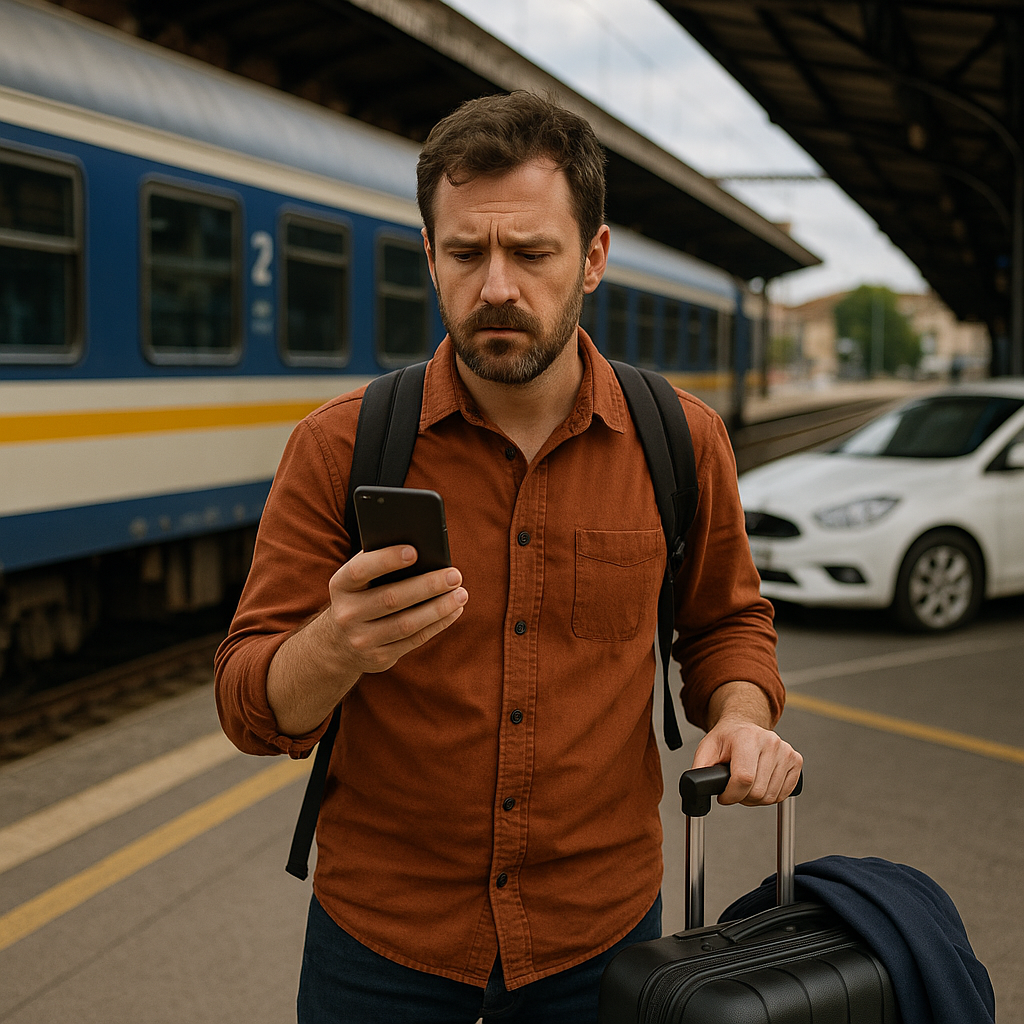
A sleeper can be a very eco-friendly choice, and then you can accidentally erase part of that win the moment you step off the platform and rent a car for three days because the station is in the wrong place for your plans. I've made that mistake. It wasn't malicious, it was lazy planning. I booked the fun overnight segment and treated the rest like an afterthought.
Now, when I'm comparing options, I ask one blunt question before I get attached to a route: when I arrive in the morning, can I live without wheels? That changes what "good" looks like. I look for stations that land me in the part of town where I can walk to a hotel, drop a bag, and keep moving on foot or with transit. Big, obvious examples are the ones you'd expect, but it matters even more in smaller cities where one station is central and another is basically a parking lot with rails.
If I'm traveling with one other person, we also talk through the last-mile plan while we're still at the kitchen table. Is there a tram stop outside the station? Is there a bus that runs early enough for our arrival time? Do we need to pre-book a taxi, or can we use a local ride-hail without bouncing our signal in a concrete canyon? I screenshot the transit map and timetable because train Wi‑Fi and station Wi‑Fi both love to fail at the exact moment you're trying to be responsible.
This is where the overnight format is secretly powerful. You arrive at a humane hour, not at midnight, so you can take a bus like a normal person instead of defaulting to a car because you're tired and everything else is closed. If you want the trip to be lighter on the planet, make the train your spine, then build the rest of the itinerary so you don't have to bolt an emissions-heavy scramble onto the end of it.