Weekend Getaways That Feel Straight Out of a Fairytale
A short trip can sometimes do more for your head than a long vacation ever could. There are places that feel slightly unreal in the best way, even though they are very much real and easy to reach. These weekend escapes require neither elaborate planning nor theatrics. A train ride, a quick flight, or a simple drive is often enough. If you want a brief break from routine and a setting that feels a little removed from everyday life, these destinations fit naturally.
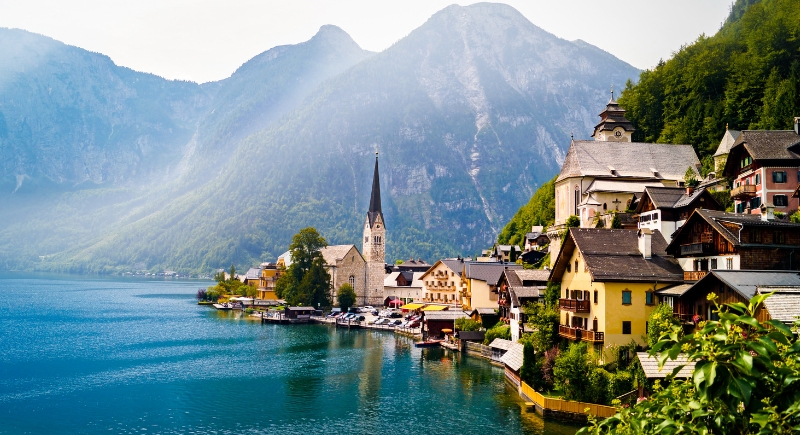
Hallstatt, Austria
Credit: Getty Images
Its 7,000-year-old salt mine history adds depth to its picture-perfect views. A quick funicular ride leads to a skywalk platform 1,150 feet above the village. Summer offers ferry rides; in winter, the entire scene looks frozen in time, snow-dusted and still.
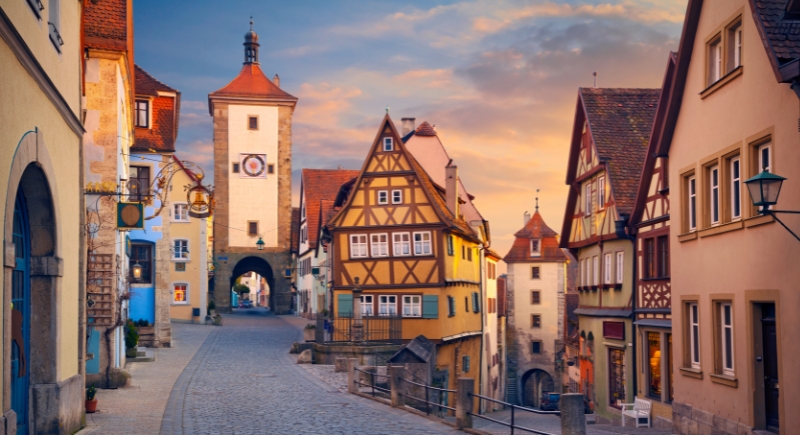
Rothenburg ob der Tauber, Germany
Credit: Getty Images
In December, Rothenburg feels like a vintage snow globe. Wooden stalls fill the medieval town square during Reiterlesmarkt, one of Germany’s oldest Christmas markets. The town’s timbered buildings and stone towers keep that feeling alive all year. There is even a museum devoted entirely to Christmas, and the year-round charm remains
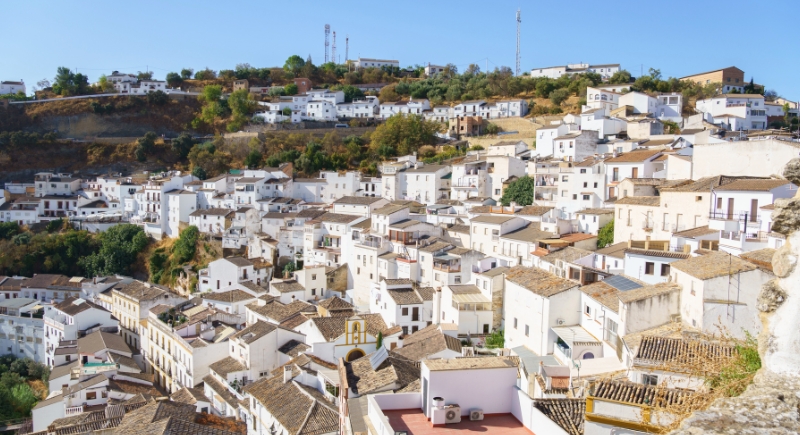
Setenil de las Bodegas, Spain
Credit: Canva
Rather than shaping the landscape to fit the town, this village grew directly into the rock itself. Homes and cafés sit beneath vast stone overhangs, with some roofs formed by the cliff above them. This is neither a novelty nor a modern design choice. People have lived this way here for centuries, adapting daily life to the terrain instead of resisting it.
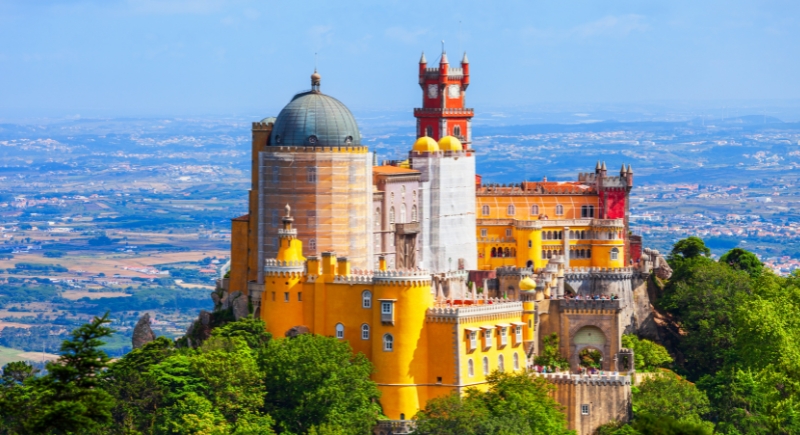
Pena Palace, Portugal
Credit: Canva
Although it appears ancient, most of it was built in the 1800s, inspired by Romanticism and the king’s imagination. The surrounding park stretches over 200 hectares, dotted with secret trails and hidden statues. It only takes 40 minutes by train to feel far from modern life.
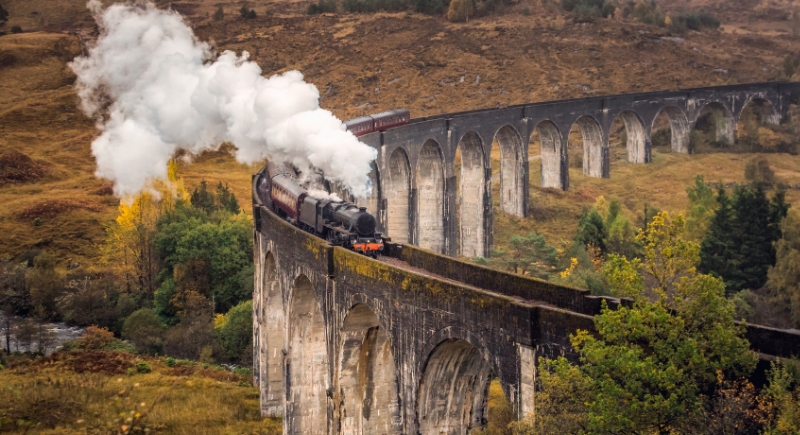
Glenfinnan Viaduct, Scotland
Credit: Getty Images
Travelers familiar with the Hogwarts Express might recognize this bridge. The Glenfinnan Viaduct cuts across the Scottish Highlands on a 21-arch curve, still in use by Jacobite steam trains. It’s possible to ride the same route or hike up to the viewpoint overlooking Loch Shiel. Both options give strong wizard-school vibes.
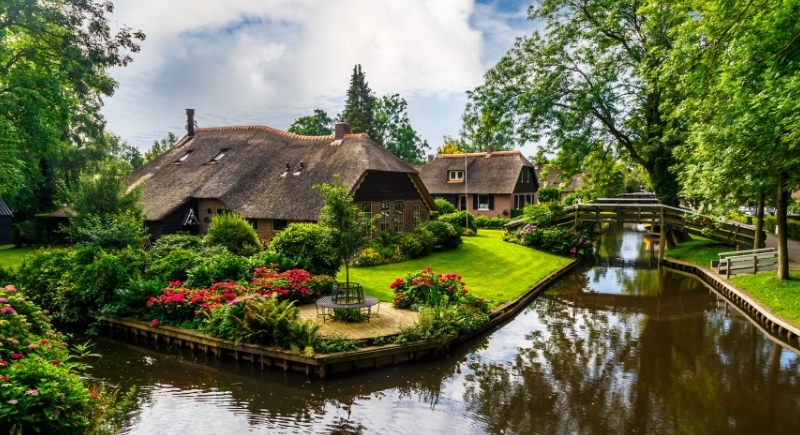
Giethoorn, Netherlands
Credit: Getty Images
In Giethoorn, boats replace cars, and silence often replaces the noise of traffic. This Dutch village earned the nickname “Venice of the North,” though it’s much calmer. Thatched cottages line the canals, and over 170 small bridges connect narrow walking paths. It’s less than two hours from Amsterdam but feels like another era entirely.
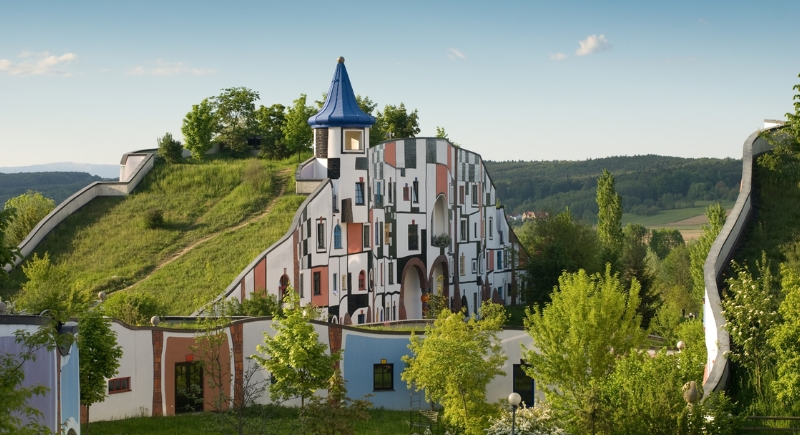
Rogner Bad Blumau, Austria
Credit: Wikimedia Commons
Architect Friedensreich Hundertwasser didn’t believe in straight lines. That belief shaped Rogner Bad Blumau, a thermal spa resort where grass-covered roofs and rounded walls look straight out of a fantasy book. Located in Austria’s Styria region, the resort includes natural hot springs, colorful mosaics, and a zero-symmetry design.
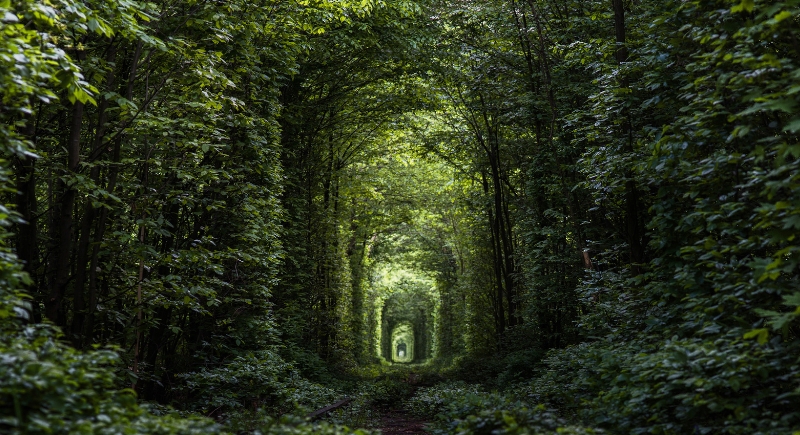
Tunnel Of Love, Ukraine
Credit: Getty Images
This two-mile stretch of railway outside Klevan might be one of the most photographed spots in Ukraine. A freight train still passes through daily, but the rest of the time, the leafy tunnel is open to walkers. It’s said to grant wishes if couples pass through together.
Reine, Norway
Credit: Getty Images
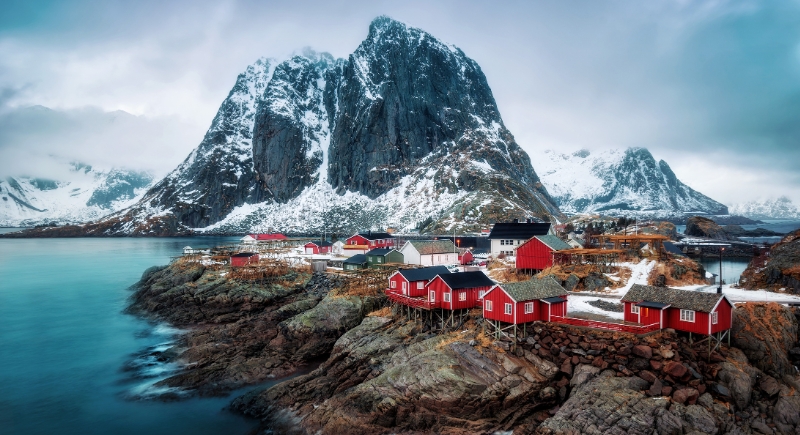
Red fishing cabins line the water beneath sharp mountain peaks in Reine, a small village in Norway’s Lofoten Islands. Despite the remote setting, getting there is simpler than it looks, with small regional flights and ferry routes connecting the area. The scenery shifts with the seasons. Summer brings weeks of midnight sun, while winter replaces it with long nights and frequent sightings of the Northern Lights.
Casa do Penedo, Portugal
Credit: Wikimedia Commons
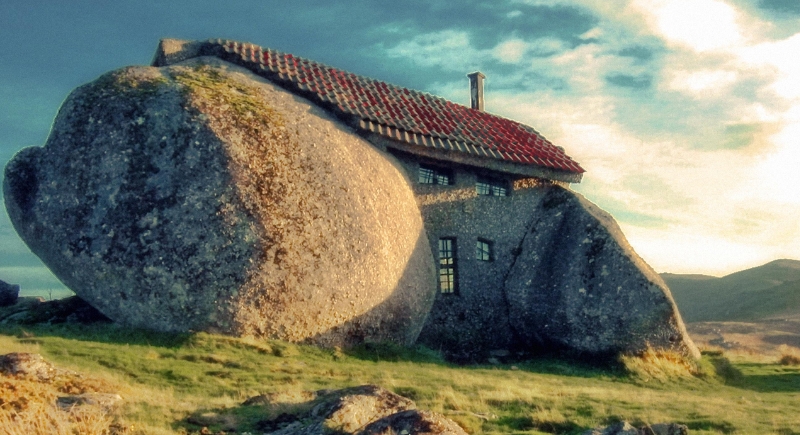
Between Braga and Fafe stands a house made from giant boulders. Casa do Penedo looks like something out of The Flintstones, but it’s real, and was used as a family holiday home after its construction in the 1970s. The structure uses stone for walls, roof, and even furniture.