Places on Earth That Literally Look Like They Belong on Mars
We spend billions imagining what other planets might look like. Meanwhile, Earth regularly flexes landscapes so strange they barely seem real. For example, our planet has bleeding glaciers, sulfuric acid pools, and bubblegum-pink lakes. These places look like sets from a sci-fi movie.
Socotra Island, Yemen
Credit: Getty Images
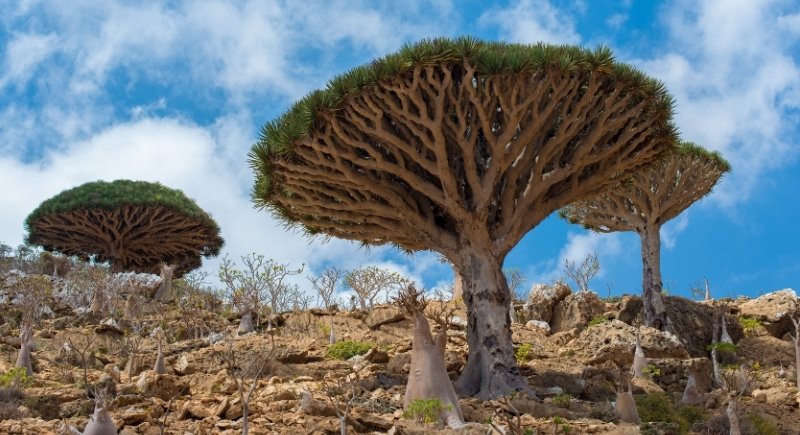
Socotra Island is known for the Dragon’s Blood Tree, a species found almost nowhere else. Its wide, umbrella-shaped canopy helps reduce water loss in the island’s dry climate. The tree produces a deep red resin, which gives it its name. Socotra’s long geographic isolation, estimated at millions of years, allowed many unusual species to evolve independently. Nearly one-third of the island’s plant species are endemic, meaning they exist nowhere else on Earth. The landscape features rocky plateaus, sparse vegetation, and wind-eroded terrain.
Fly Geyser, Nevada, U.S.
Credit: Wikimedia Commons
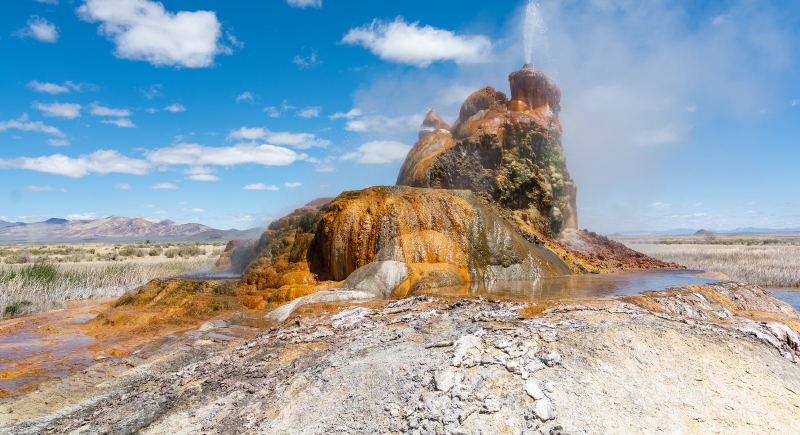
Fly Geyser wasn’t even supposed to exist. In 1964, a geothermal drilling project accidentally punctured a hot water pocket, and mineral-rich water began forcing its way to the surface. Over the decades, calcium carbonate deposits built up into neon-red and green mounds. Today, thermophilic algae thrive in the scalding water and create vivid hues that look digitally enhanced. Steam constantly rises from its three growing cones.
Blood Falls, Antarctica
Credit: Wikimedia Commons
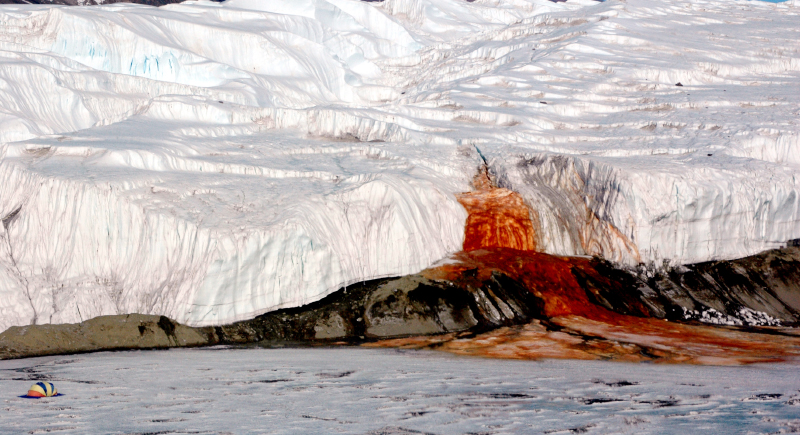
Antarctica is already otherworldly, but Blood Falls looks actively unsettling. Iron-rich saltwater flows from the front of Taylor Glacier. When this brine reaches the surface and mixes with oxygen in the air, the iron reacts and forms rust. The chemical reaction stains the ice a deep red color. The water comes from a subglacial lake that has been trapped beneath the ice for about 2 million years. Scientists have found microbial life surviving in the oxygen-poor, high-salinity environment—conditions that resemble those researchers seek on Mars.
Danakil Depression, Ethiopia
Credit: Wikimedia Commons
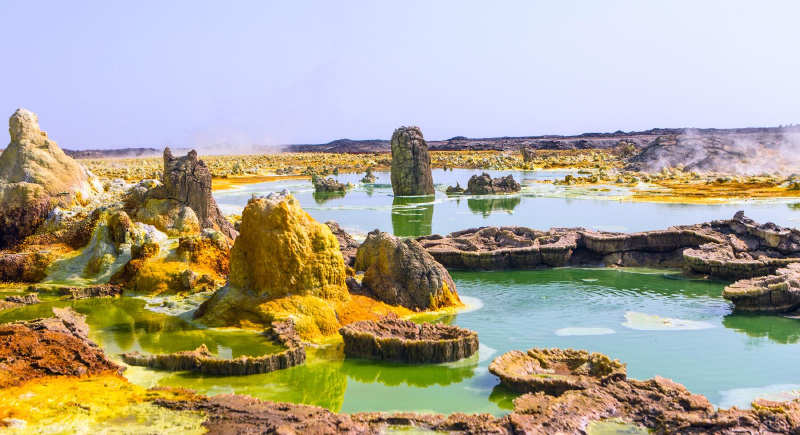
Standing in the Danakil Depression feels like standing on a hostile planet. Temperatures regularly exceed 113°F (45°C), and the landscape is covered in sulfur springs, acid pools, salt flats, and active volcanic vents. It’s located at a tectonic triple junction where three plates are pulling apart, so the region is constantly reshaped by geological tension. The terrain seems fractured and mineral-stained in neon yellows, greens, and oranges. NASA has studied the area as an analog for extreme planetary environments because it’s one of the harshest places on Earth.
Salar de Uyuni, Bolivia
Credit: Wikimedia Commons
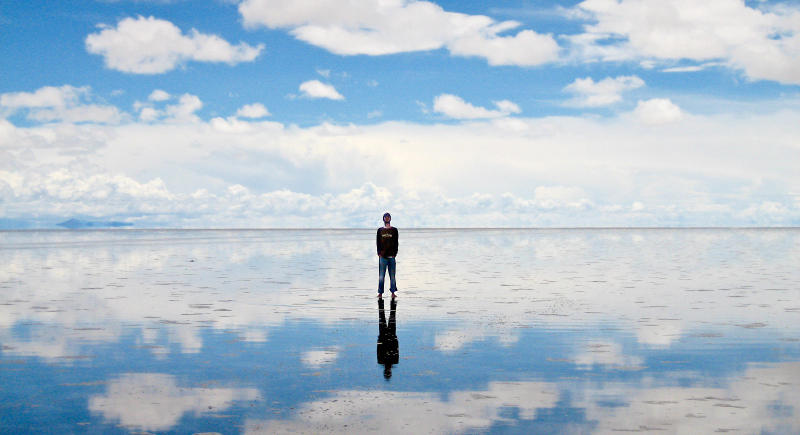
The world’s largest salt flat stretches across more than 3,800 square miles. During the rainy season, a thin layer of water transforms Salar de Uyuni into a perfect mirror that reflects the sky so completely that the horizon disappears. With depth perception erased and clouds mirrored below your feet, the surface feels infinite. Underground, Salar de Uyuni has the largest lithium reserves, which further adds to its geological significance.
Lake Hillier, Australia
Credit: Wikimedia Commons
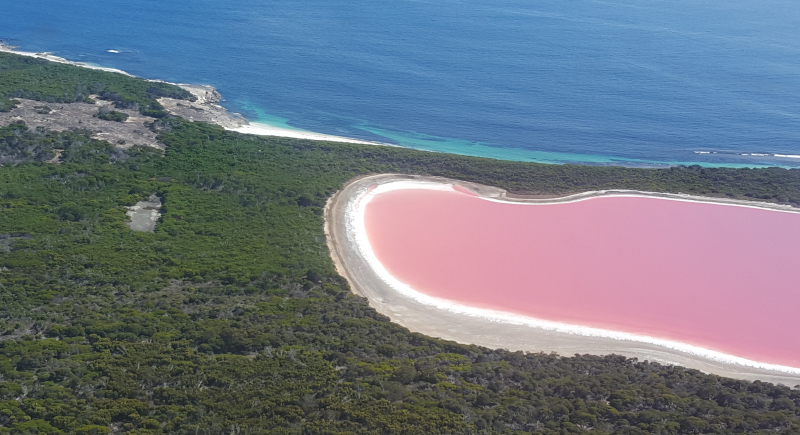
Lake Hillier is the color of strawberry milk. It’s located on Middle Island in Western Australia, and the water remains bright pink year-round. Scientists believe the color likely comes from Dunaliella salina microalgae and salt-loving bacteria that produce red pigments under highly saline conditions, similar to those in the Dead Sea.
Wadi Rum, Jordan
Credit: Getty Images
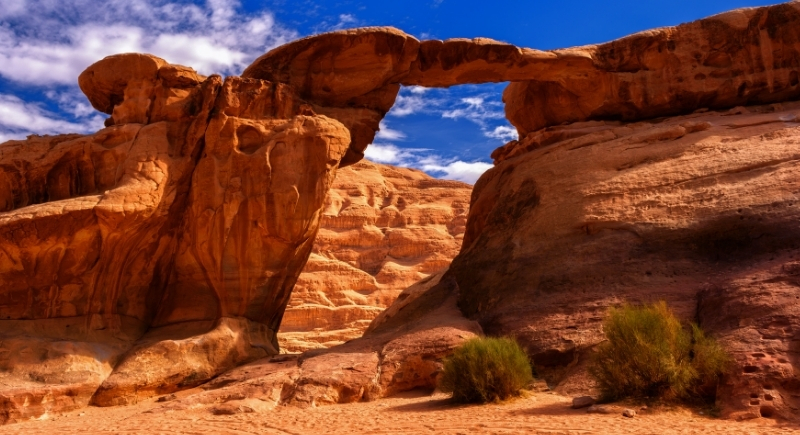
Wadi Rum’s red sand and sandstone cliffs have made it a favorite filming location for space movies. The desert spans about 277 square miles and features massive rock formations rising more than 1,700 meters (5,500 feet) above sea level. Wind erosion over millions of years carved arches, cliffs, and sweeping dunes across the valley floor. It’s easy to see why so many people say it looks like Mars. British officer T.E. Lawrence once described it as “vast, echoing, and God-like.”
Grand Prismatic Spring, Yellowstone National Park, U.S.
Credit: Wikimedia Commons
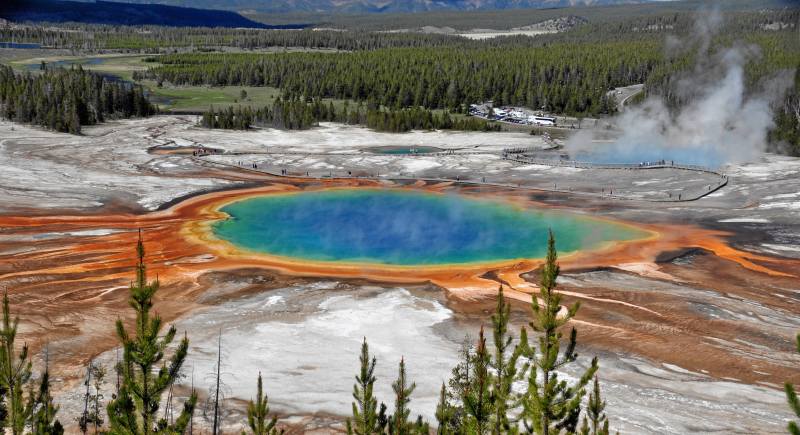
Yellowstone’s largest hot spring measures up to 300 feet in diameter and more than 121 feet deep. From above, it looks painted in concentric rings of impossible color. At its center is sterile, superheated water that appears intensely blue because it is too hot for microbial life. But around the edges, thermophilic bacteria thrive at cooler temperatures and create bands of orange, yellow, and green.
Rainbow Mountain, Peru
Credit: Canva
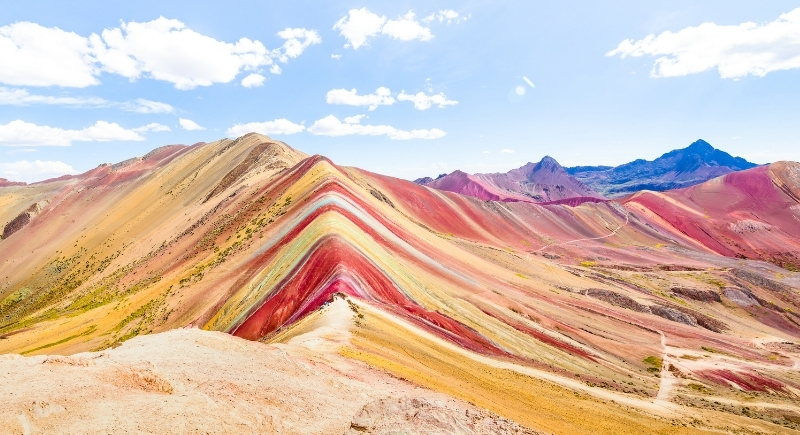
Rainbow Mountain, also known as Vinicunca, is located about 17,000 feet above sea level in the Andes. For years, it remained hidden under snow. When the snow receded, layers of mineral sediment were revealed in streaks of red, gold, turquoise, and lavender. The colors come from iron oxide, copper compounds, and other mineral deposits formed over millions of years. They create the mountain’s striking airbrushed stripes.
Waitomo Glowworm Caves, New Zealand
Credit: iStockphoto
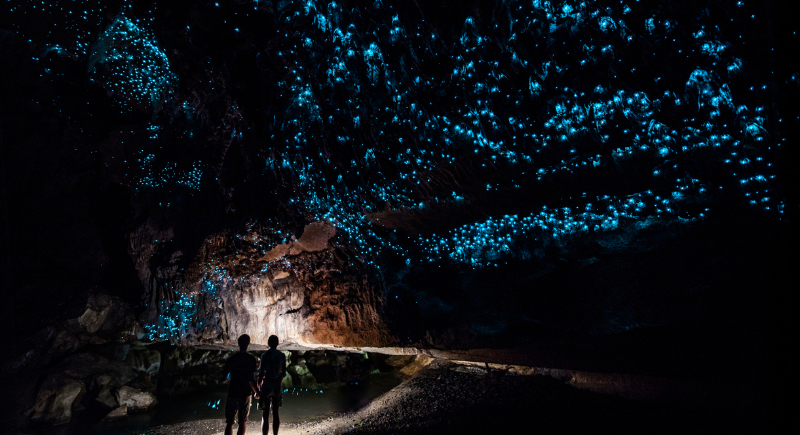
Inside the Waitomo Caves, the ceiling glows blue like a constellation. Thousands of glowworm larvae produce light through bioluminescence. The larvae hang sticky threads to trap insects, using their light to lure prey. Floating through the cave feels like drifting through a galaxy, except the stars are alive.