10 Drowned Towns That Are Accessible to Visitors
Flooded towns don’t usually show up on travel itineraries, but maybe they should. These places were once thriving communities, later abandoned and submerged to make way for dams, reservoirs, or the natural environment. Decades later, many have reappeared—partially or fully—thanks to droughts or clever preservation. Here are 10 fascinating towns you can actually visit.
Villa Epecuén, Argentina
Credit: iStockphoto
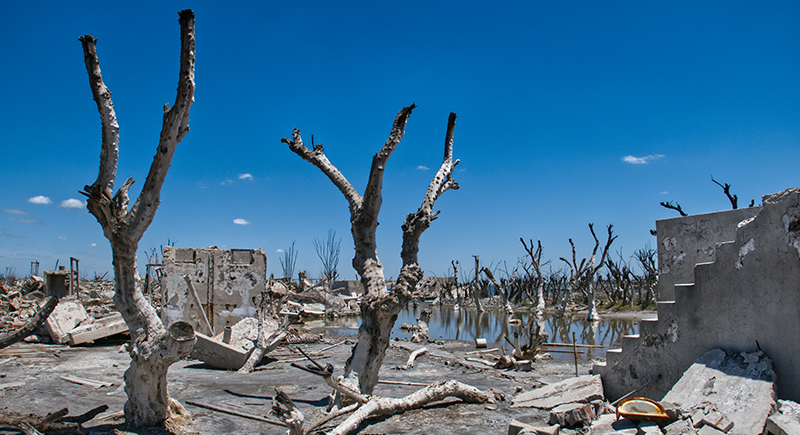
This former spa town was submerged for over two decades after a nearby embankment failed in 1985. The area was known for its salt lake, which was said to have healing powers, and once drew thousands of visitors. When the waters receded in 2009, they revealed bleached ruins and salt-crusted trees.
Lion City, China
Credit: X
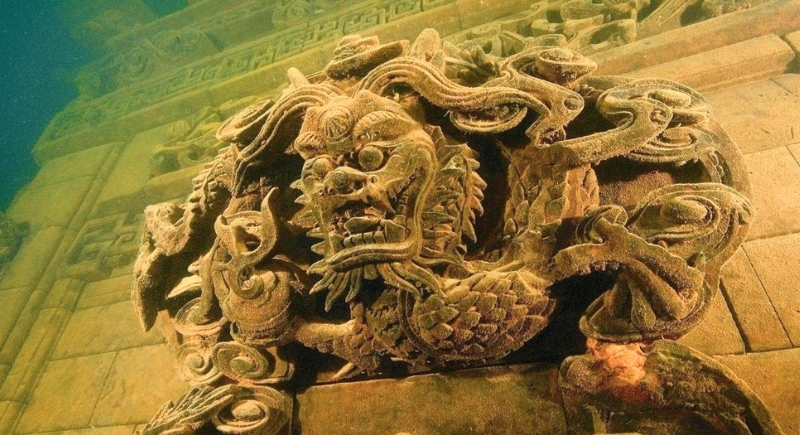
China’s Shi Cheng—also called Lion City—is located nearly 100 feet beneath Qiandao Lake. Divers exploring the ruins have found elaborate carvings of dragons and phoenixes remarkably intact. Although not suitable for beginner divers, guided underwater tours are available for experienced swimmers seeking to explore submerged temples and stone archways.
Graun, Italy

Credit: Wikimedia Commons
If you’re driving through South Tyrol, you’ll likely spot a church tower poking out of a lake. That’s all that remains of Graun, an Alpine village submerged in 1950 for a hydroelectric project. In winter, the lake freezes solid enough for visitors to walk out and touch the 14th-century bell tower.
St. Thomas, Nevada
Credit: Facebook
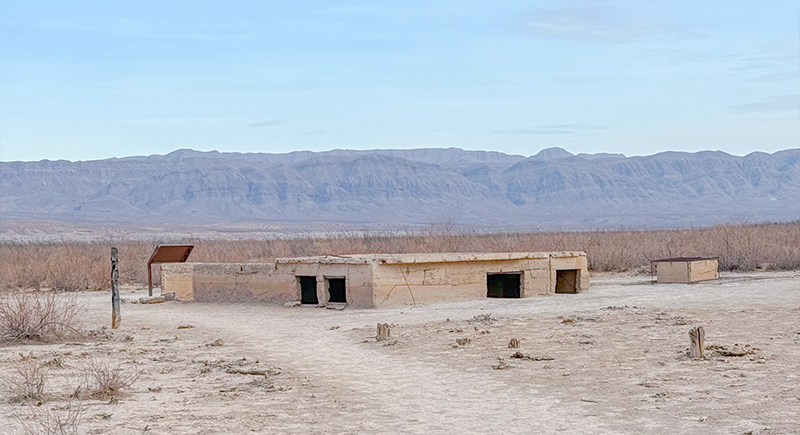
Once part of the Arrowhead Trail, which linked Salt Lake City and Los Angeles, St. Thomas was abandoned when Lake Mead filled up in the 1930s. Today, the ghost town emerges during drought years. Remnants of homes, a school, and even an old ice cream parlor are still visible.
Potosí, Venezuela
Credit: Wikimedia Commons
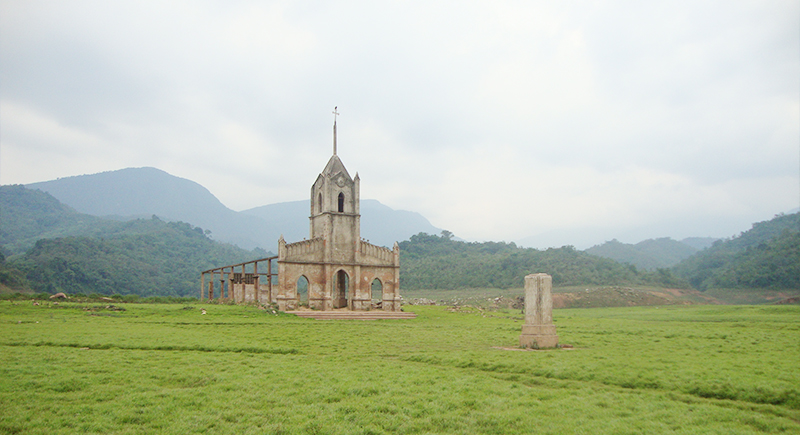
When a dam project flooded this Andean village in 1985, only the cross on the church steeple remained visible. By 2010, the church had emerged almost entirely after a long drought. Once again on dry land, it now sits near the crumbling ruins of houses and a cemetery.
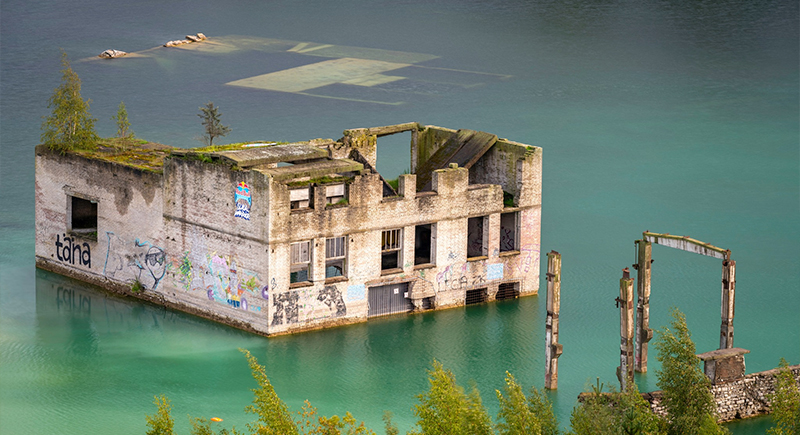
Rummu Quarry, Estonia
Credit: Facebook
Rummu Quarry was once an active limestone mine beside a Soviet-era prison. When operations ended in the 1990s, the pumps keeping the site dry were shut off, and groundwater quickly flooded the area. All that remains is a clear, turquoise lake covering abandoned prison walls, quarry buildings, and old mining equipment. The sharp contrast between submerged concrete structures and bright blue water gives the site its striking, almost unreal appearance.
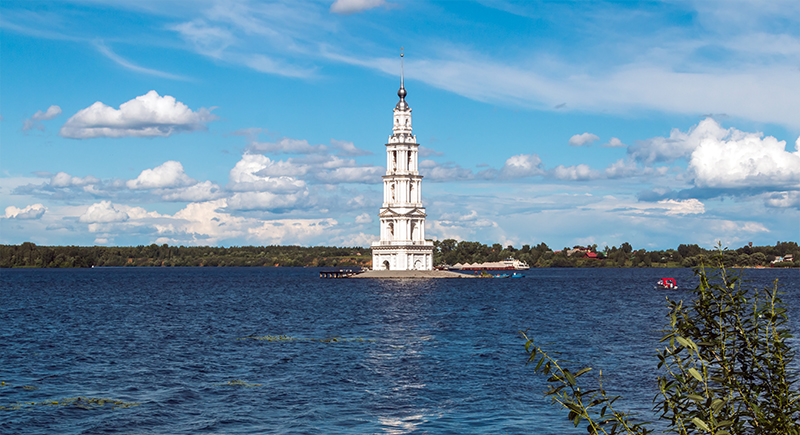
Kalyazin, Russia
Credit: Wikimedia Commons
When the Uglich Reservoir was created in the late 1930s, much of historic Kalyazin was flooded, and only the bell tower of St. Nicholas Cathedral was left standing. Today, the tower rises alone from the water. An artificial base was later added to stabilize it, and visitors can view the tower by boat.
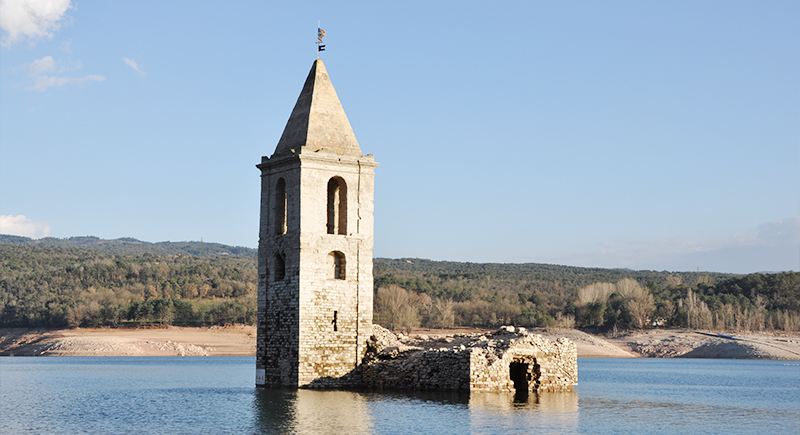
San Romà de Sau, Spain
Credit: Wikimedia Commons
A thousand-year-old village in Catalonia was sacrificed for a reservoir, but the stone church refuses to stay buried. Most of the time, only its steeple rises above the surface. During dry spells, however, the entire building appears, and it is sometimes even accessible on foot. Visitors report seeing old steps and Romanesque carvings.
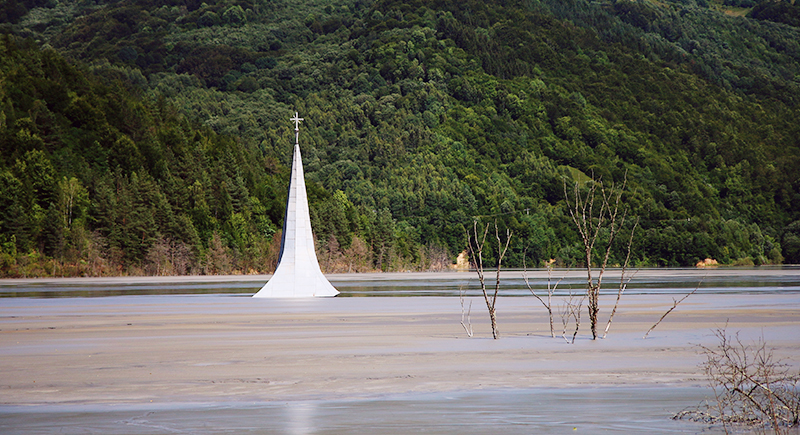
Geamăna, Romania
Credit: Wikimedia Commons
Unlike the others on this list, Geamăna wasn’t flooded for electricity. The Romanian government cleared out the town to store chemical runoff from a nearby copper mine. Toxic sludge eventually swallowed the village, but the church steeple still rises above the metallic waste. The area’s bright, unnatural colors make it unsettling.
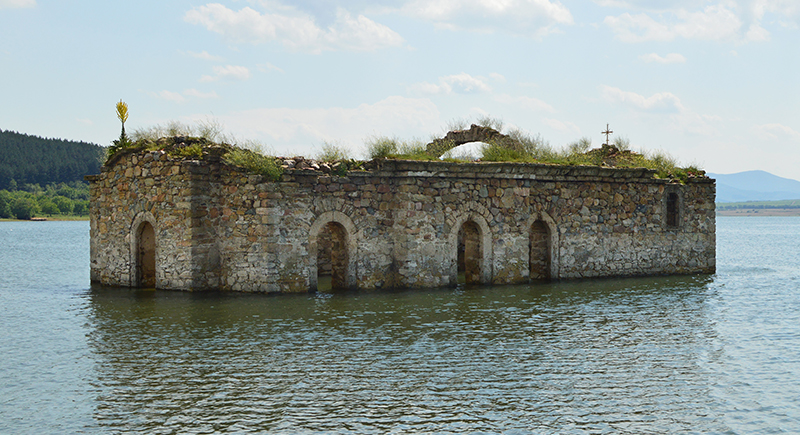
Zhrebchevo Reservoir Church, Bulgaria
Credit: iStockphoto
This 19th-century stone church stands partially submerged in Bulgaria’s Zhrebchevo Reservoir, created during the 1960s. The surrounding village was abandoned before flooding, which left the church isolated as water levels rose. Depending on rainfall and drought, the structure may appear knee-deep in water or almost fully exposed.