10 Mind-Blowing Thrill Rides That Are Taking Over Cruise Ships
Cruise ships aren’t just about pools and buffets anymore. They are now locked in a high-stakes competition to outdo each other with headline-grabbing attractions. The top deck has turned into a space for rides that match those in theme parks. Roller coasters started that trend, and it’s crazy to see just how far things have gone.
BOLT: Ultimate Sea Coaster — Carnival Mardi Gras
Credit: Youtube
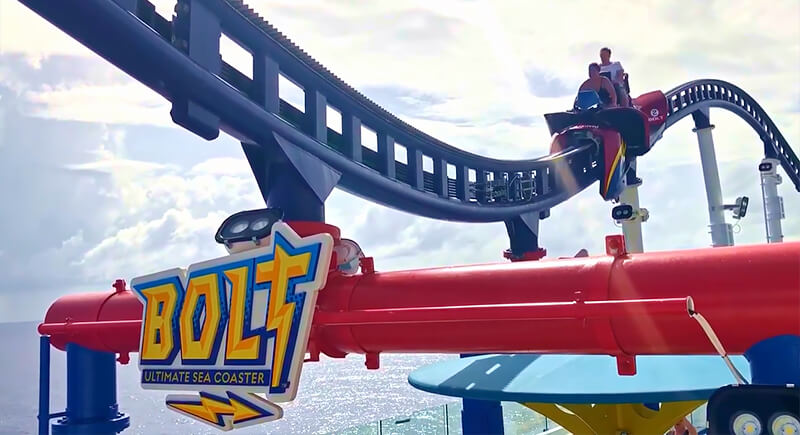
BOLT is the first true roller coaster at sea, running roughly 800 ft (244 m) along the top deck at speeds up to 40 mph (64 km/h). Riders sit on motorcycle-style seats and control their pace with a throttle, which changes how each lap feels. The open-air layout, combined with its height above the ocean, makes the exposure part of the experience.
Ironcycle Test Run — Disney Adventure
Credit: Youtube
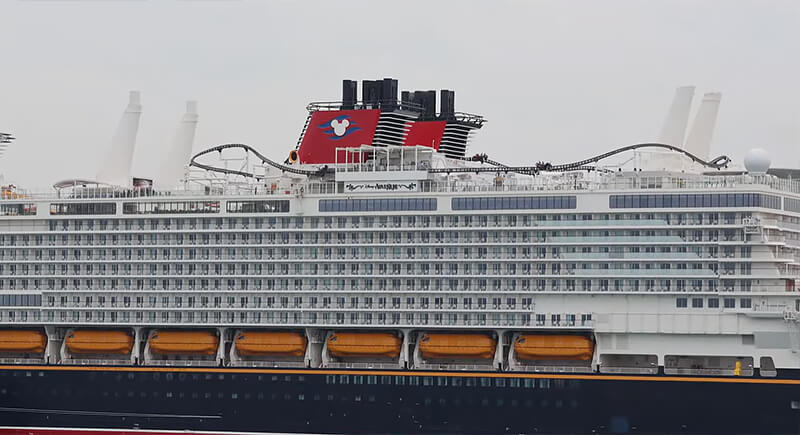
Ironcycle Test Run is designed to be the longest coaster at sea at about 820 ft (250 m), with speeds approaching 40 mph. Instead of feeling like a simple circuit, its layout and visuals work together to make the ride feel more structured and cinematic. The ride leans heavily on theming, with vehicles styled like futuristic bikes and a Marvel backdrop shaping the experience.
Aqua Slidecoaster — Norwegian Aqua
Credit: Youtube
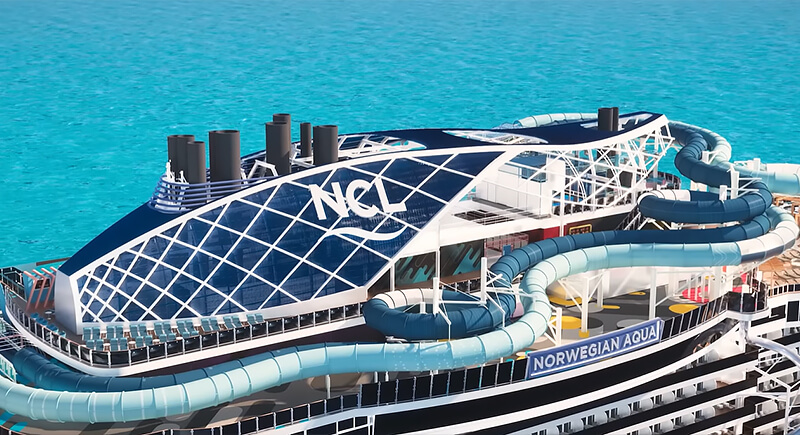
The Aqua Slidecoaster replaces rails with water propulsion, using powerful jets to move riders through drops, turns, and uphill sections. It keeps the rise-and-fall rhythm associated with coasters, but delivers it through fluid motion instead of a fixed track. Two rafts can run side-by-side and add a racing element that changes the pace of the ride.
AquaDuck — Disney Dream
Credit: Youtube
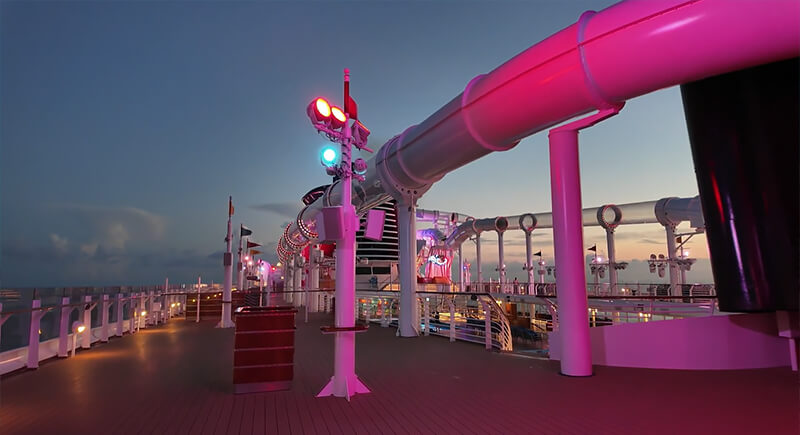
AquaDuck runs about 765 ft (233 m) and uses clear sections that extend beyond the ship’s edge. The transparency changes how the ride feels, as riders can see the ocean directly below while moving through turns and drops. The pacing is steady, but the visual exposure adds a layer that makes the experience feel more elevated than a standard water ride.
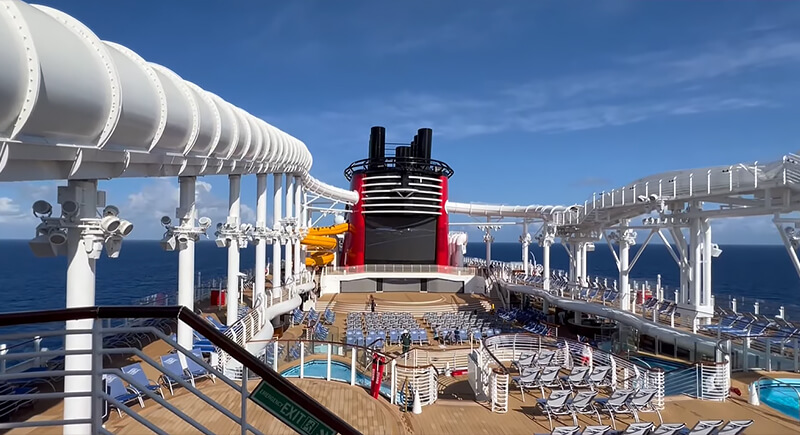
AquaMouse — Disney Wish
Credit: Youtube
AquaMouse builds on the same layout as AquaDuck but adds animated scenes, lighting effects, and synchronized visuals along the route. The added elements shift the focus toward what’s happening during the ride. It blends movement with storytelling.
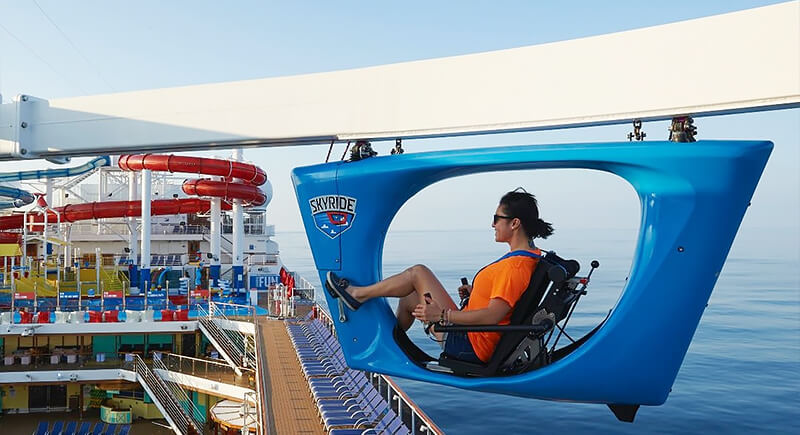
SkyRide — Carnival Vista
Credit: Instagram
SkyRide uses a suspended track where riders pedal their own vehicles around the deck. Each ride can be a different experience depending on how hard you push. The height above the ship and the open surroundings create a sense of exposure, even though the movement itself is steady and controlled.
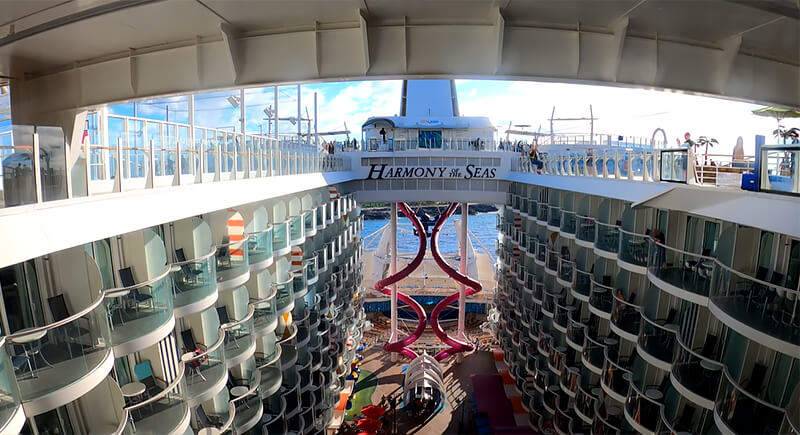
Ultimate Abyss — Harmony of the Seas
Credit: Youtube
Ultimate Abyss focuses on vertical movement rather than track-based motion. Riders descend roughly 10 stories from more than 150 ft (46 m) above the deck through enclosed tunnels. Lighting and sound effects compress the experience into a short, intense drop.
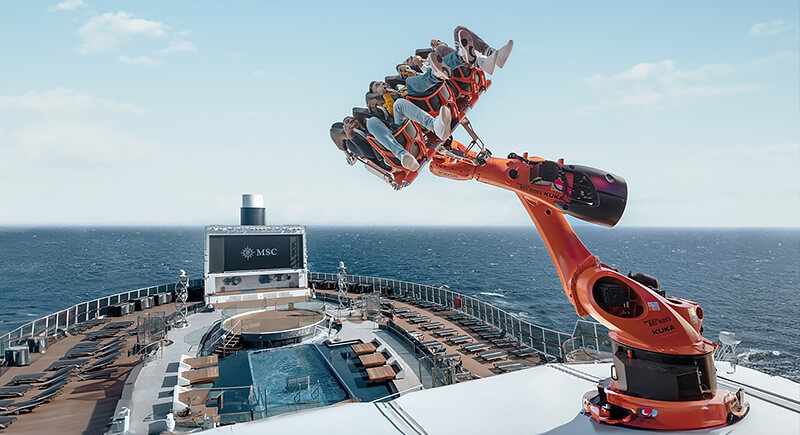
Robotron — MSC Seascape
Credit: Facebook
Robotron uses a robotic arm to spin, lift, and rotate riders high above the ship. Movements can vary, which removes any predictable sequence and makes each cycle feel different. Without a fixed track, the ride relies on changing orientation and height to create intensity.
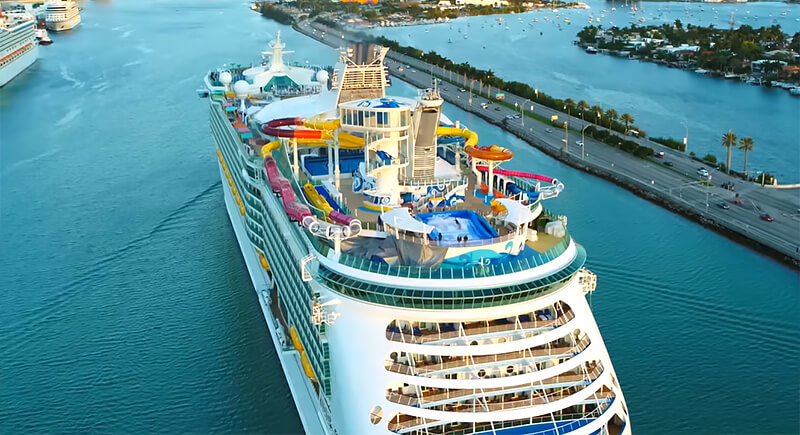
The Blaster — Navigator of the Seas
Credit: Youtube
The Blaster stretches over 800 ft (244 m) and uses water jets to push riders uphill before sending them into fast turns. It follows a similar pacing pattern to coasters, alternating between propulsion and descent. The combination of length and elevation changes gives it a continuous flow that keeps the ride feeling dynamic from start to finish.
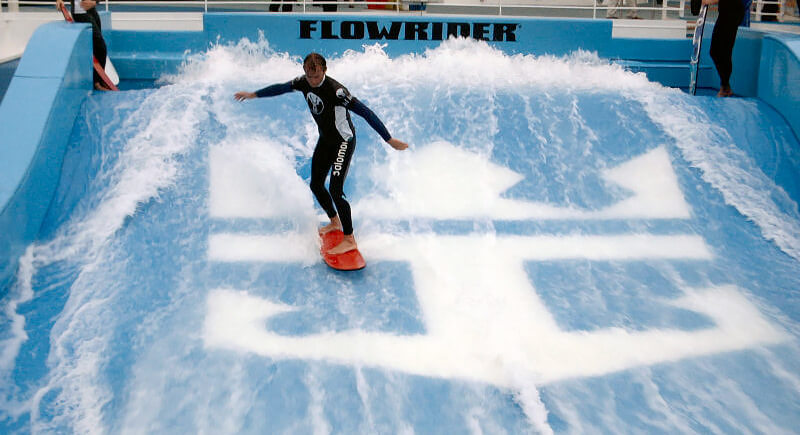
FlowRider — FlowRider
Credit: Wikipedia
FlowRider generates a continuous wave that riders can surf repeatedly. Instead of a single run, the appeal lies in improving with each attempt. The setup encourages people to watch, learn, and take turns. It’s an ongoing activity rather than a one-time experience.