China Builds an Ice City Every Year That Melts in Just Two Months
Cold weather tends to pull a city inward. You see the streets empty as people shift their daily routines indoors. But in Harbin, a city in China’s far north, the deep freeze does the opposite. When temperatures drop to levels that would keep most people home, an ice city begins to rise.
Construction begins weeks before the festival opens, with thousands of workers cutting, transporting, and assembling ice blocks in a carefully coordinated process. By early January, the site becomes a fully built ice park. It is a massive undertaking, built with the understanding that in just eight weeks, it will be gone.
A City Built on Ice
The process begins at the Songhua River. Each December, thousands of workers step onto its frozen surface to cut out massive ice blocks, some weighing close to a ton. Using saws and hooks, they pull the slabs free and move them to the construction site.
The construction site spans hundreds of thousands of square meters, with the exact size varying each year and sometimes exceeding one million square meters. Workers stack these blocks like bricks, using water as mortar to freeze them in place instantly.
By the time the festival opens in early January, they’ve built replicas of cathedrals, towers, and bridges strong enough to hold thousands of people.
More Than Just Sculptures
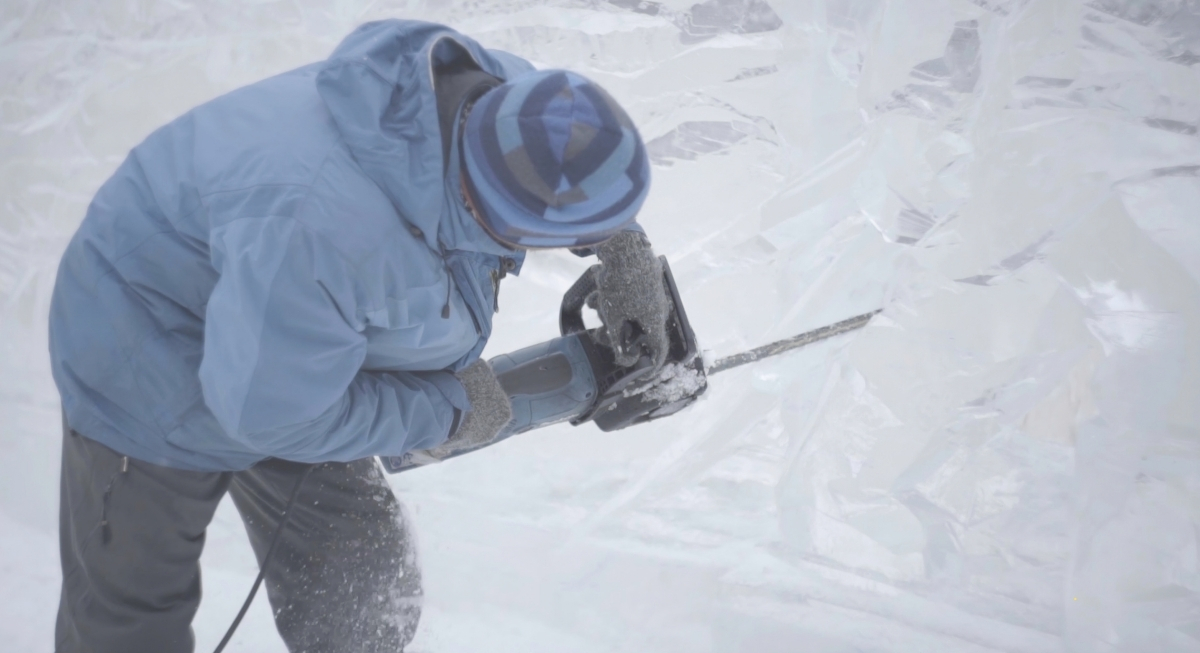
Image via Canva/Media Whale Stock
At night, Harbin’s Ice and Snow World fills with people moving between lit-up ice towers, climbing staircases carved from solid blocks, and lining up for long slides that cut across the grounds. It doesn’t stay still for long, with visitors constantly walking, climbing, and exploring different sections of the park.
A separate area is set aside for snow carving, where artists work packed snow into detailed shapes that hold their form even in daylight. There are small places to stop for a hot drink and even ice hotels for overnight stays, but most people keep moving to stay warm. Since everything is rebuilt each winter, the layout and designs change completely from one season to the next.
The Real Show Starts After Dark
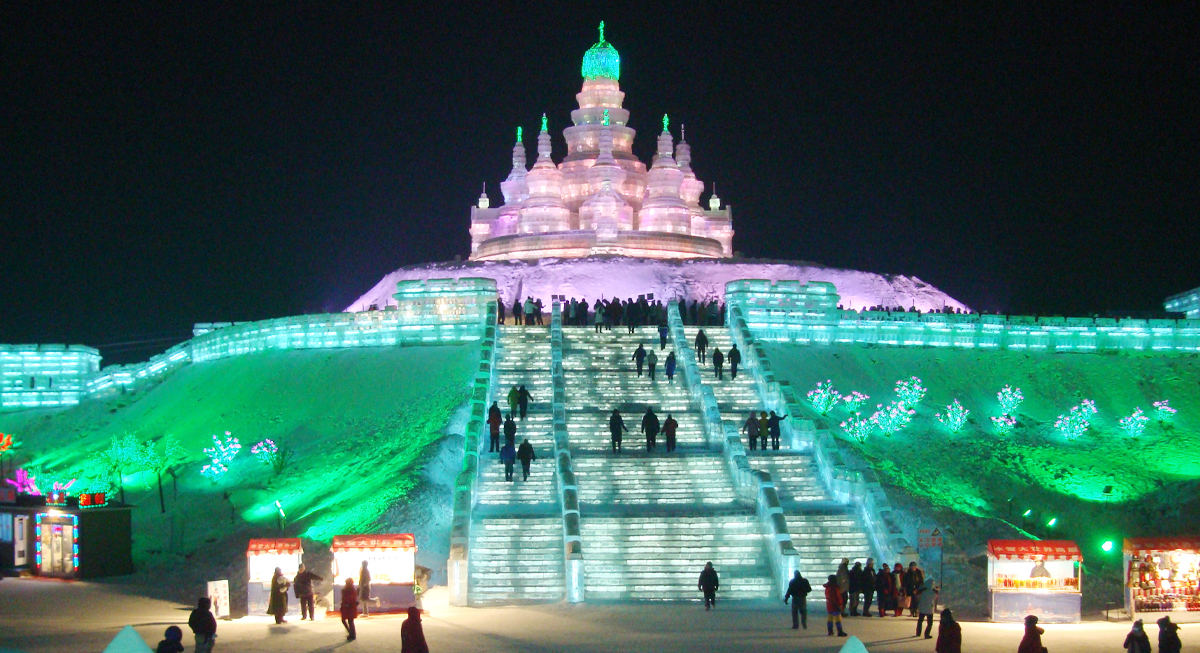
Image via Wikimedia Commons/Dayou_X
In the late afternoon, you can still see the ice for what it is. The blocks look clear and heavy, with small bubbles trapped inside, and the size of the structures stands out more before anything lights up.
After sunset, everything changes quickly. Lights inside the ice switch on, and the same walls and bridges start glowing in strong colors. Places that looked plain an hour earlier turn into bright walkways and landmarks, which is why most people wait around for this part, even in the cold.
Built to Disappear
The ending of the festival is hard to ignore once you think about it. After weeks of labor and massive investment, the entire city is only meant to exist for a short window before nature starts taking it back.
By late February or early March, the shift begins as temperatures rise and wind patterns change. The clean edges of the pagodas start to soften, details lose their sharpness, and towers begin to drip. For safety, crews step in and dismantle the structures before they can collapse. Within a few weeks, everything is gone, with the ice either returning to the river or melting into the ground.