Chase Over a Dozen Cascades Along Oregon’s Most Breath-Taking Scenic Drive
Oregon has more than 1,600 waterfalls, but one road keeps drawing most of the attention. Along this stretch, drivers stop every few miles, parking lots fill up quickly in peak season, and what starts as a short stop often turns into a full day of exploring waterfalls, mossy cliffs, and river views.
At one point, the Columbia River Gorge opens wide with canyon views that stretch far across the landscape. A few minutes later, the road narrows beside dark basalt walls with water sliding down them. Then another waterfall comes into view just around the curve. The drive keeps changing like this, which is why the Historic Columbia River Highway Scenic Byway stands out among Oregon routes.
Built in the 1910s as one of America’s first scenic highways, the roughly 70-mile route still feels designed for slowing down and taking in the view.
The Road Was Built to Slow Drivers Down
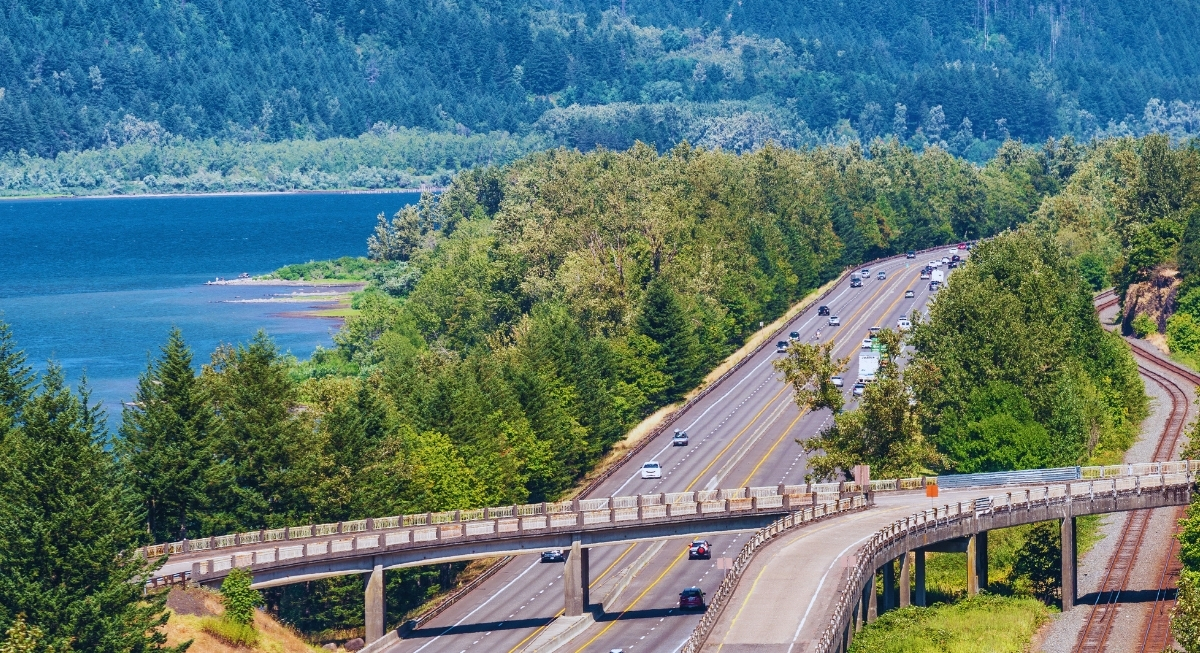
Image via Canva/Gagliardi Photography
The Historic Columbia River Highway stretches east of Portland between Troutdale and The Dalles, following the Columbia River Gorge along the Oregon-Washington border. Engineers designed it with curves, pullouts, stone guardrails, and viewpoints to keep travelers engaged with the landscape rather than racing through it.
Vista House at Crown Point is still one of the route’s biggest landmarks, sitting 733 feet above the Columbia River. The octagonal stone structure opened in 1918 as a memorial to Oregon pioneers, though most visitors arrive for the panoramic views of the gorge.
A few minutes away, the Portland Women’s Forum viewpoint delivers the classic postcard angle of Vista House perched above the river valley. It’s also where many travelers realize this drive is going to take much longer than expected.
Waterfalls Start Showing Up
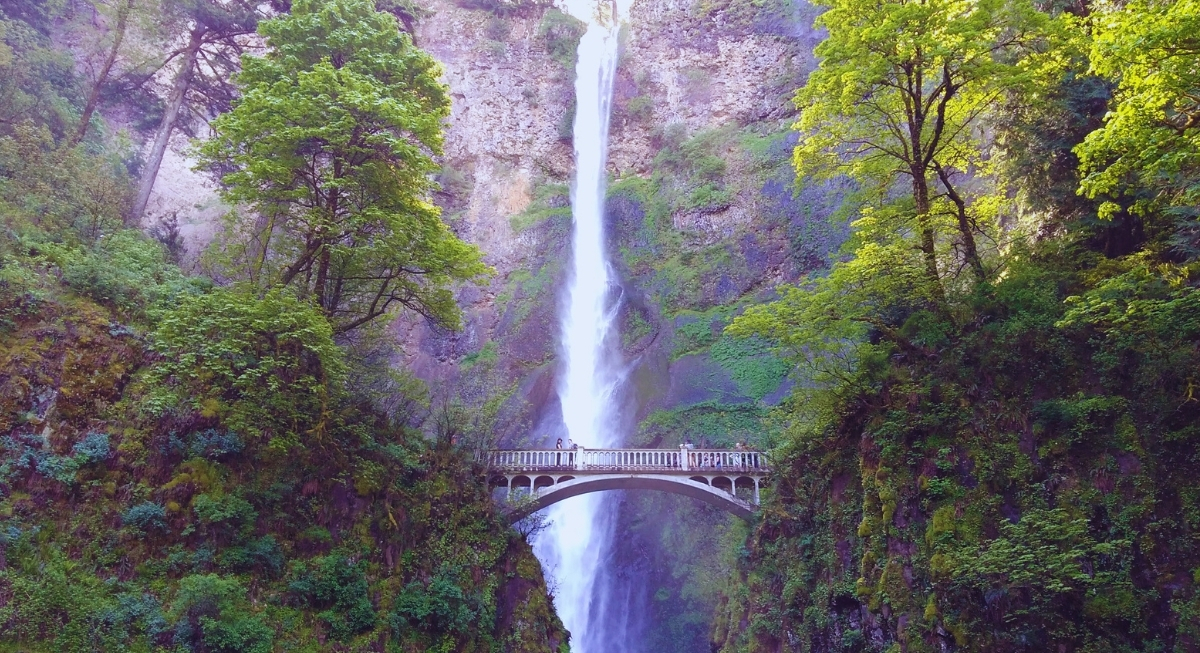
Image via Canva/DreamArtist
The Columbia River Gorge earned the nickname “Waterfall Alley” because the waterfalls barely give drivers a break. Latourell Falls appears early in the route and drops 224 feet over a basalt cliff. A short walk reveals wooden footbridges and Henderson Creek crossing through thick forest. Bridal Veil Falls sits nearby, partly hidden behind trees and reached by a quick trail that feels far removed from the highway traffic.
Multnomah Falls remains the most-visited natural recreation site in the Pacific Northwest. The two-tiered cascade plunges 620 feet, making it one of the tallest year-round waterfalls in the United States. Benson Bridge cuts across the middle of the falls, usually surrounded by mist and camera phones.
Further east, Horsetail Falls offers a completely different kind of stop. The 176-foot waterfall crashes so close to the highway that spray can reach the viewing area during rainy months. It also works well for travelers who want easy access without committing to long hikes.
The Scenery Changes Before the Drive Ends
One reason the route is memorable is how dramatically the gorge changes across 70 miles. The western side feels dense and green, packed with waterfalls, ferns, and shaded canyon walls. Closer to Mosier and The Dalles, the terrain dries out and opens into grasslands with sweeping river views.
This becomes obvious at Rowena Crest Viewpoint. The winding road below has become one of Oregon’s most photographed stretches, especially during spring wildflower season. Sunset hours draw photographers, cyclists, and travelers trying to squeeze in one final stop before the drive ends.
The route also keeps adding newer attractions. The Mitchell Point Tunnel recently reopened to pedestrians and cyclists, featuring carved windows that frame views of the Columbia River through the rock walls.
Spring and early fall usually deliver the best conditions along the byway. April through June brings stronger waterfall flow, fruit blossoms, and greener hillsides. September and October add cooler temperatures and lighter crowds.
Summer weekends can get chaotic, especially between Memorial Day and Labor Day. Parking fills quickly at major waterfall stops, particularly near Multnomah Falls. Many travelers now use the Columbia Gorge Express bus to avoid parking problems entirely.