Things Detected in Space That Left Scientists Completely Baffled
Despite significant scientific advancement over the last decades, the universe still finds new ways to surprise us. Every time astronomers build a better telescope or reanalyze old data, something turns up that does not fit the rules. These discoveries either eventually make sense or remain in research papers with question marks beside them.
Planet Nine
Credit: Wikimedia Commons
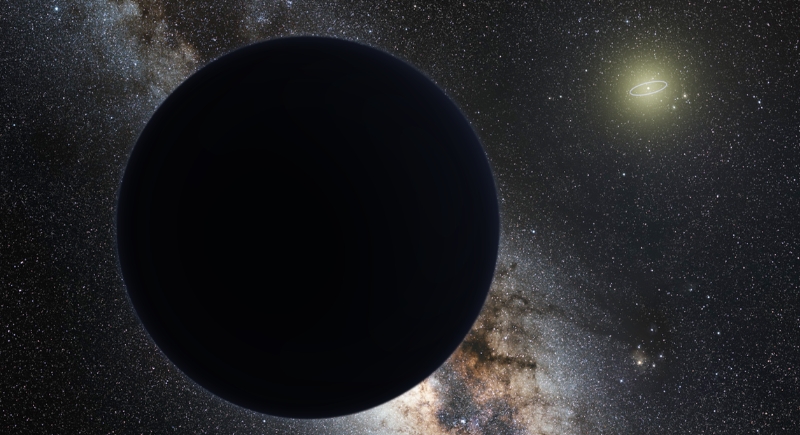
Far beyond Neptune, several icy objects in the Kuiper Belt follow oddly clustered orbits, as if something massive is tugging on them. To explain that pattern, astronomers proposed a hidden world nicknamed Planet Nine. Models suggest it could be five to 10 times Earth’s mass and take up to 10,000 years to orbit the Sun, traveling more than 500 times farther from the Sun than Earth does. Despite years of searching, no telescope has confirmed it. The upcoming Vera C. Rubin Observatory in Chile may finally settle whether this planet exists or whether the orbital clustering is simply a statistical bias.
ʻOumuamua
Credit: Wikimedia Commons
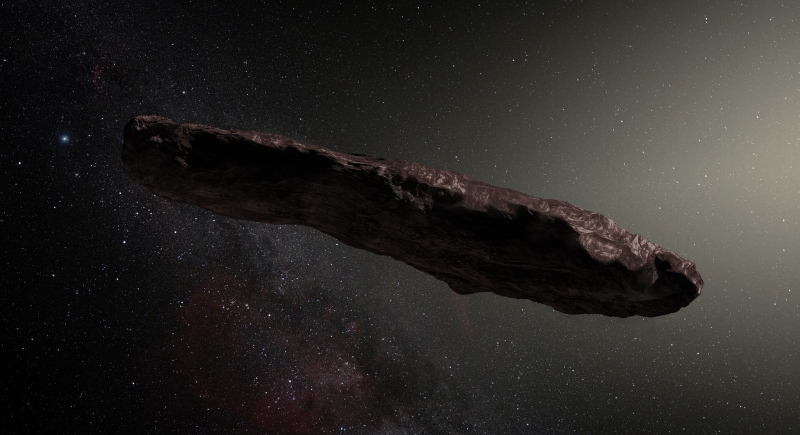
In 2017, telescopes spotted the first confirmed interstellar object passing through our solar system. The cigar-shaped body, named ʻOumuamua, accelerated slightly as it left the Sun in a way that gravity alone could not fully explain. It showed no visible comet tail, which made the acceleration puzzling. Some researchers proposed it was venting hydrogen or other invisible gases. Most astronomers favor natural explanations, but ʻOumuamua remains unusual enough that it reshaped how scientists think about visitors from other star systems.
The Runaway Black Hole
Credit: Wikimedia Commons
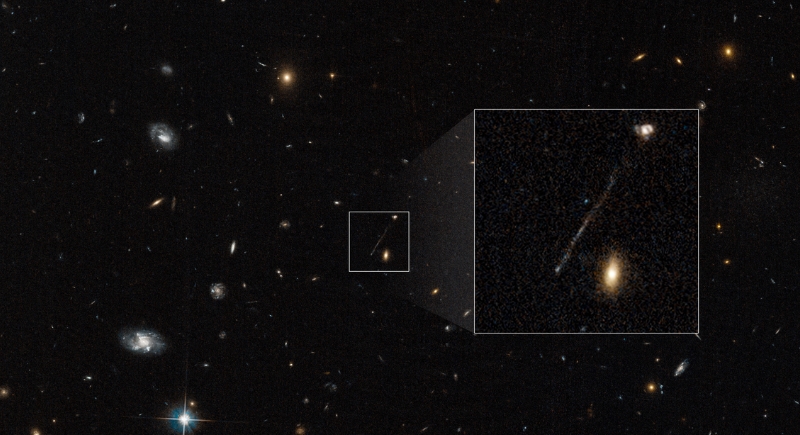
In 2023, astronomers reported what appears to be a supermassive black hole racing through intergalactic space at roughly 4,500 times the speed of sound. Estimated at about 20 million times the mass of the Sun, it seems to be leaving behind a 200,000 light-year trail of newly formed stars. Black holes typically anchor galaxies. They are not supposed to wander freely. The leading theory suggests a chaotic three-black-hole interaction during a galaxy merger flung one outward. If confirmed, it would be the first direct evidence that supermassive black holes can be ejected from their home galaxies.
The Fermi Bubbles
Credit: Wikimedia Commons
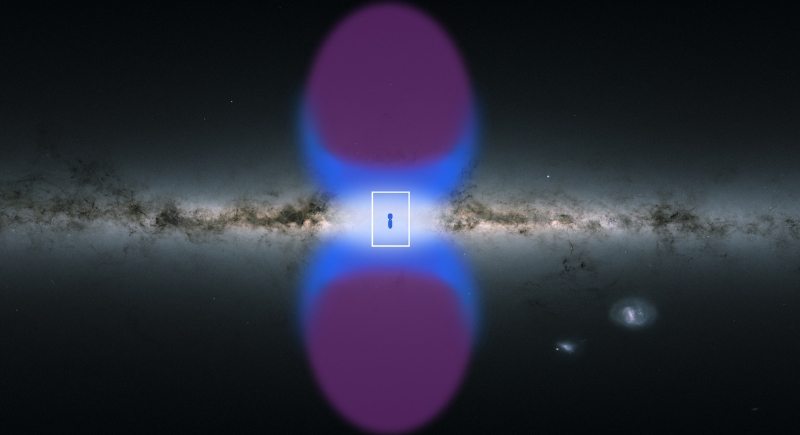
Stretching about 25,000 light-years above and below the center of the Milky Way are two enormous lobes known as the Fermi bubbles. They’re invisible to the naked eye and glow in gamma rays and X-rays. They span roughly half the width of our galaxy. A 2022 study suggested they may have formed during a massive outburst from our galaxy’s central black hole around 2.6 million years ago, lasting more than 100,000 years. The timeline surprised researchers because it implies our black hole was far more active in the relatively recent past than previously believed.
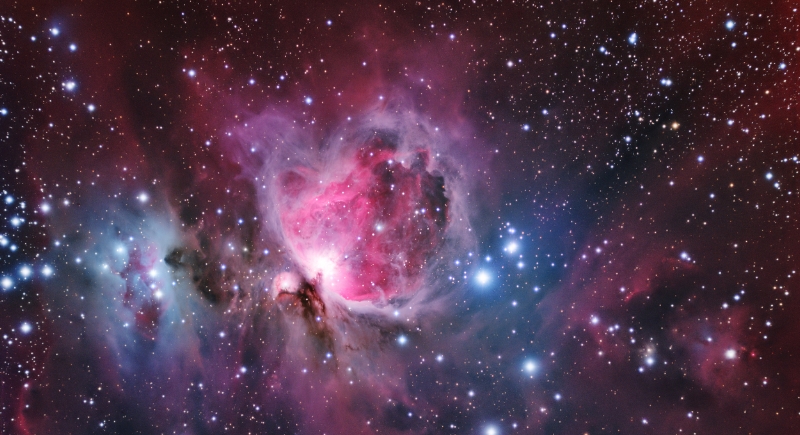
JUMBOs in the Orion Nebula
Credit: Wikimedia Commons
In 2023, the James Webb Space Telescope identified more than 500 rogue planets drifting through the Orion Nebula. Roughly 80 of them appear to orbit each other in pairs. These objects, roughly Jupiter-mass in size, were dubbed Jupiter-mass binary objects, or JUMBOs. Current models of planet formation struggle to explain how two free-floating planets could remain gravitationally bound without a parent star. Some theories suggest they formed directly from collapsing gas clouds, similar to stars. Others propose they were ejected from young star systems.
The Boötes Void
Credit: Wikimedia Commons
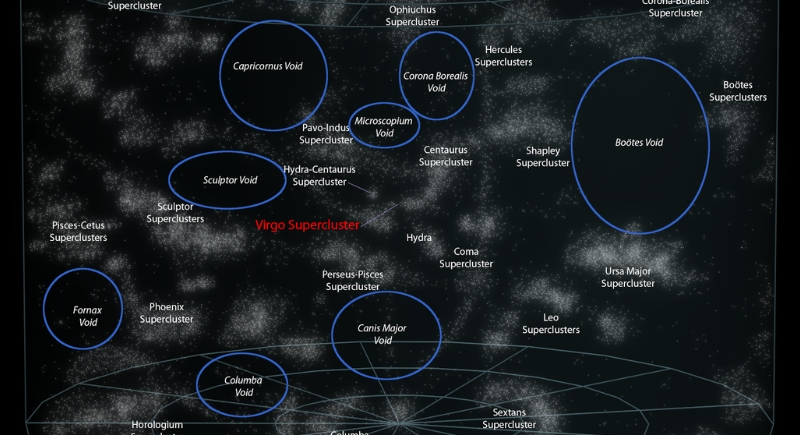
The Boötes Void is a vast region of space roughly 330 million light-years across that contains far fewer galaxies than expected. While the universe has large-scale structure, including filaments and clusters, such an enormous emptiness is hard to explain. Simulations of cosmic evolution can produce voids, but the scale of this one made astronomers double-check their assumptions. It serves as a reminder that the universe is not evenly distributed.
Fast Radio Bursts
Credit: Wikimedia Commons
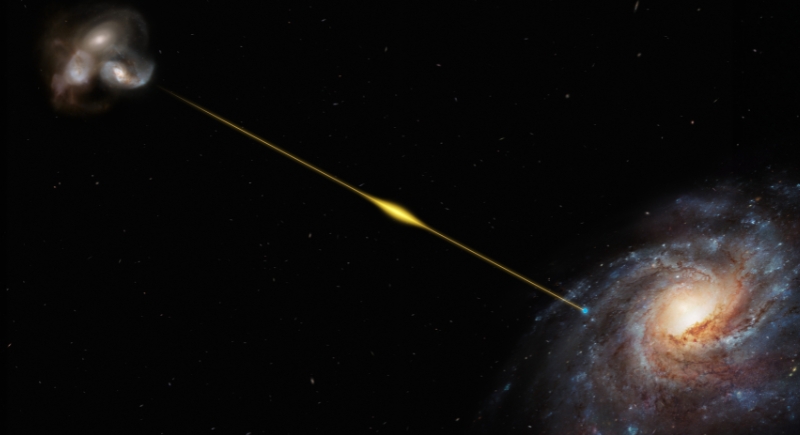
Fast radio bursts, or FRBs, are millisecond-long flashes of radio energy first discovered in 2007 in archival data from 2001. Some release as much energy in a fraction of a second as hundreds of millions of Suns emit in the same time. Thousands of FRBs have been detected, and at least one was traced to a magnetar within the Milky Way. This explained part of the mystery, but not all of it. Some FRBs repeat. Others do not. Some originate in environments where magnetars are unexpected.
Dark Flow
Credit: Wikimedia Commons
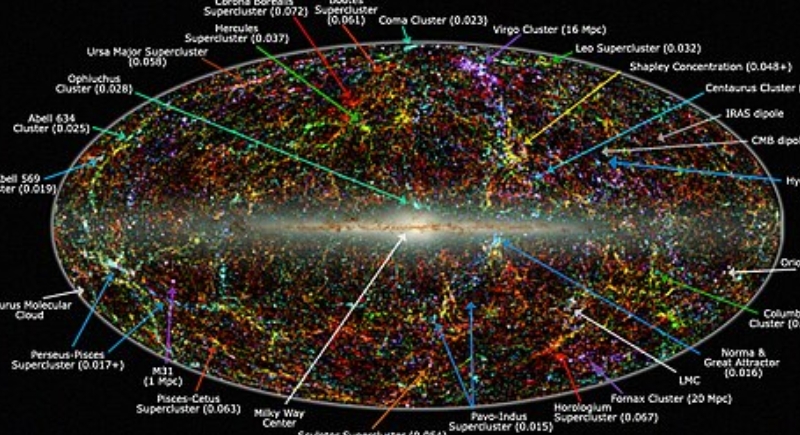
When scientists mapped the motion of galaxy clusters, some appeared to be drifting in the same direction at high speeds toward a region beyond the observable universe. This phenomenon was labeled dark flow. It could imply gravitational influence from structures outside the part of the universe we can see. Some researchers argue the effect may result from data interpretation or measurement uncertainties. The debate remains unresolved.
The Wow! Signal
Credit: Wikimedia Commons
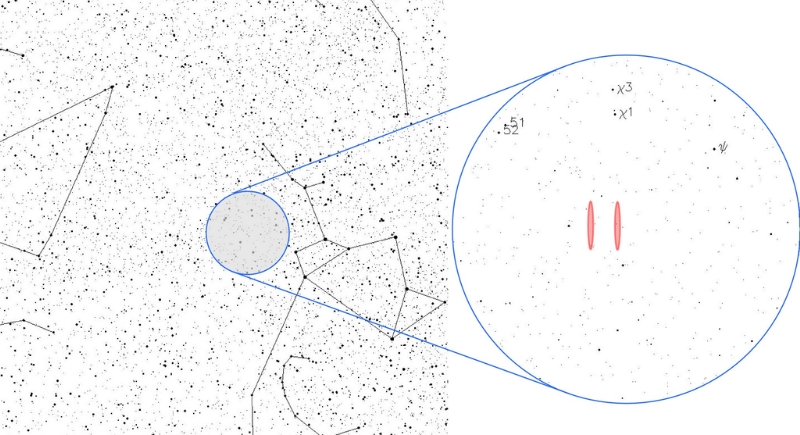
On August 15, 1977, a radio telescope in Ohio detected a strong, narrowband signal lasting 72 seconds. Astronomer Jerry Ehman circled the printout and wrote “Wow!” in the margin. The signal never repeated. Despite decades of follow-up observations, no confirmed explanation has been found. It may have been a rare natural radio source. It may also have been interference or something else entirely.
The Hubble Tension
Credit: Wikimedia Commons
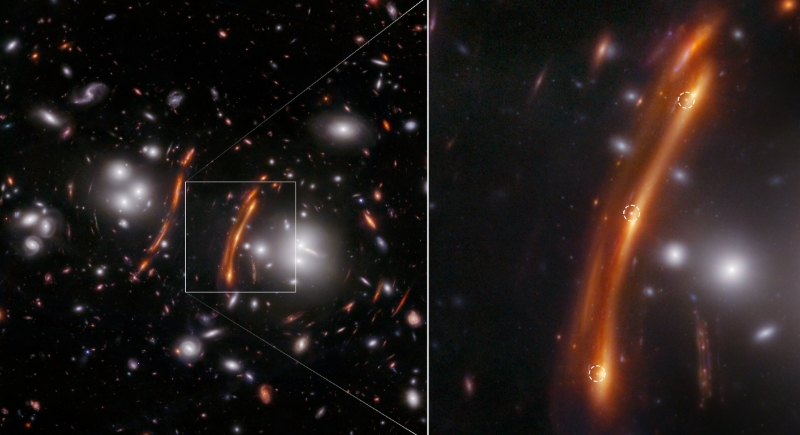
Measurements of how fast the universe is expanding are not consistent. Observations based on the cosmic microwave background suggest an expansion rate of about 67 kilometers per second per megaparsec. Measurements using Cepheid variables and Type Ia supernovae suggest closer to 73 kilometers per second per megaparsec. The gap, known as the Hubble tension, may seem small, but in cosmology, it is enormous. If it is not a measurement error, it could mean that something fundamental about the universe’s structure or physics is missing from current models.