Air New Zealand Debuts World-First Skynest Bunk Beds for $495 a Session
Air New Zealand is rolling out what it calls a world-first concept inside its Boeing 787-9 Dreamliners. Six bunk-style pods are placed between the economy and premium economy cabins, where passengers can lie flat during ultra-long-haul flights.
Each pod measures about 80 inches long and 25 inches wide. Inside, passengers get a mattress, pillow, sheets, blanket, reading light, ventilation, and a privacy curtain. There are USB ports, storage space, and even a seatbelt built into the bed.
The airline also adds a small comfort kit with an eye mask, earplugs, socks, skincare products, and a dental set. Everything is designed to help passengers settle in quickly and get some actual sleep.
How the $495 Sessions Work
Access to the Skynest pods comes in timed slots. Starting May 18, 2026, passengers can book a four-hour session priced from $495. Each traveler can reserve one session per flight, and only two sessions are expected to run on each journey at launch.
The rollout begins in November 2026 on one of the longest commercial routes in the world, connecting Auckland and New York. That flight stretches to nearly 18 hours, making it the perfect testing ground for a product built around rest.
Passengers still need to book a regular seat for the flight, so the pod works more like an extra add-on than a replacement. When their session starts, they leave their seat, walk to the bunk area, and climb into their assigned pod. It’s a clever idea, even if getting into the bunks can feel a little awkward at first.
The Fine Print Passengers Should Know
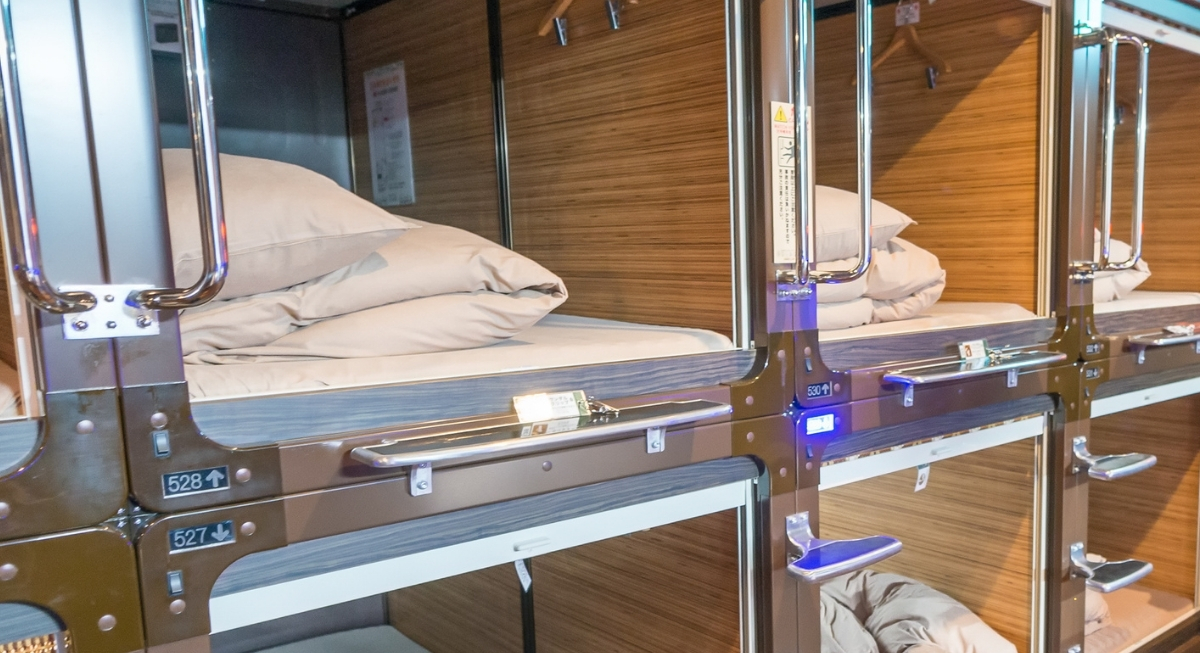
Image via Canva/Gagliardi Photography
The Skynest setup is not a private suite. Six pods are close together, so travelers share the space with others trying to sleep at the same time. Sitting upright inside the pod is not an option, and eating is off the table during the session.
Passengers are not allowed to share a pod, and children are not allowed in the space. Because the area is enclosed, the airline also asks travelers to avoid strong fragrances. Snoring, though, is treated with a bit more humor. Air New Zealand says it is simply part of the experience and even provides earplugs for nearby sleepers.
These details are vital because they shape expectations. The Skynest is built for rest, but it is still very much a shared environment.
Why Airlines Are Betting on Sleep
The rationale behind this idea goes beyond comfort. New Zealand is far from most major travel hubs, and long-haul flights are part of the deal for anyone visiting. Making those journeys easier could directly impact tourism, which brings in tens of billions of dollars annually for the country.
Airlines are also under pressure to rethink economy cabins. Travelers want more control over how they spend long hours in the air, and many are willing to pay extra for it. United Airlines is preparing its own take with “Relax Row” seating that turns a row into a flat surface, expected to arrive in 2027. Other carriers are experimenting with similar ideas, each seeking the right balance between comfort and cost.