A Massive Underground Transport System Is at Work Beneath the Swiss Alps
Switzerland is widely known for alpine landscapes and world-class rail travel, but a large portion of its infrastructure exists underground. Over several decades, the country has built roughly 1,800 to 2,000 tunnels stretching more than 2,500 kilometers (about 1,550 miles). These tunnels support transportation, energy movement, water systems, and logistics across terrain that would otherwise be extremely difficult to cross efficiently.
Mountain geography actually made tunneling a practical choice. The Alps create sharp elevation changes over short distances, while weather conditions can shift rapidly. Above-ground infrastructure would require heavy land clearing and constant maintenance. Tunnels provide direct routes through stable rock.
How Decades of Construction Built the System
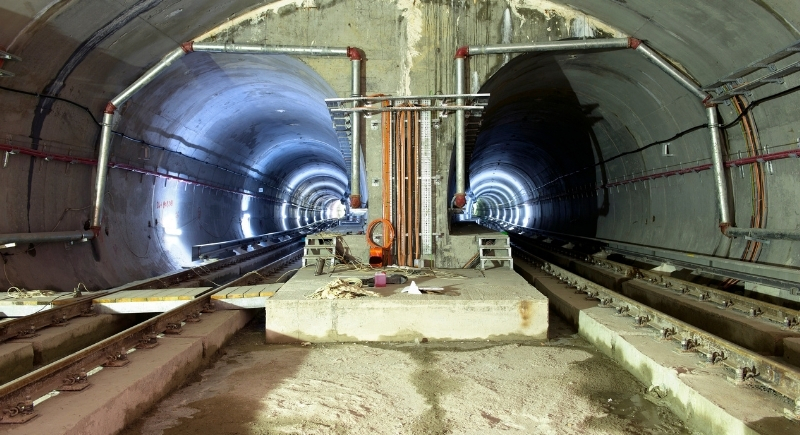
Image via Getty Images/baranozdemir
Large-scale tunneling expanded after World War II. In the 1950s, Switzerland focused heavily on underground drainage tunnels to support hydroelectric power. By the 1980s, road tunnels increased as vehicle traffic grew across Europe. Around the early 2000s, railway tunnels became the main priority, especially to shift freight transport from trucks to trains to reduce congestion and emissions.
Today, more than 10% of Switzerland’s motorway and railway networks operate underground. This proportion is among the highest anywhere in the world. Many tunnels exceed two kilometers in length, and new ones continue to be added to improve capacity and reduce travel bottlenecks across the country.
The Gotthard Base Tunnel and Mega-Engineering Under the Alps
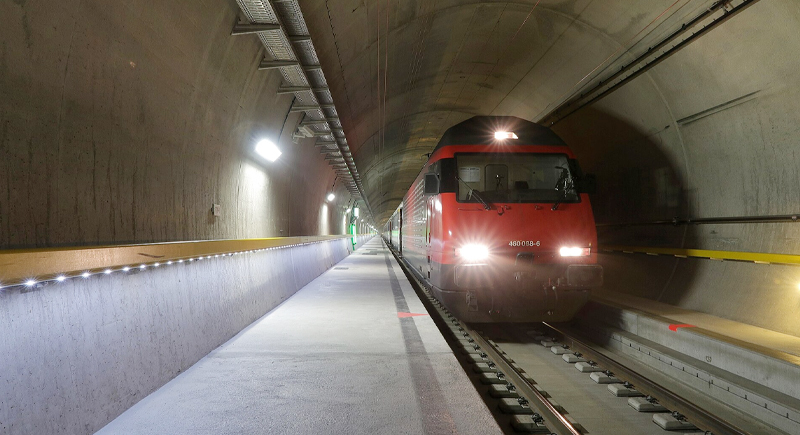
Image via Wikimedia Commons/Kecko from Rural area, Eastern Switzerland
The most famous part of this underground system is the Gotthard Base Tunnel. Opened in 2016, it runs about 57 kilometers (35 miles). It cuts directly through the Alps at low altitude and allows trains to maintain high speeds without climbing steep mountain passes.
Passenger trains can cross the tunnel in roughly 17 minutes. Freight traffic also moves far more efficiently than older routes allowed. Some sections are more than 2.3 kilometers (about 1.4 miles) below the surface.
During construction, engineers drilled through dozens of rock types and worked in temperatures reaching about 46°C (114.8°F). The project took roughly 17 years to complete and forms part of a major European freight corridor connecting northern and southern ports.
Flat tunnel routes also reduce fuel use because heavy freight trains often require only one locomotive rather than multiple engines. That efficiency supports Switzerland’s long-term strategy to move cargo from highways to railways while reducing environmental impact in sensitive mountain regions.
Underground Transport Matters for Swiss Cities and Daily Life
The underground network extends far beyond major Alpine tunnels. Switzerland’s national highway system includes hundreds of tunnels used to reduce noise, preserve land, and avoid unstable terrain. In many areas, highways pass beneath towns to limit surface disruption and protect historic city layouts.
Urban areas also rely heavily on underground infrastructure. Cities including Zurich, Basel, Bern, Geneva, and Lucerne operate underground rail stations, service corridors, ventilation systems, and emergency access routes. These systems are designed for reliability and high passenger volumes.
New tunnel projects continue, especially in Switzerland’s Central Plateau, where population and transport demand remain high. Planned rail expansions near Zurich aim to remove congestion on some of Europe’s busiest rail corridors.