A Juice Company Left 12,000 Tonnes of Orange Peels, and It Created a Lush Forest
In the mid-1990s, a stretch of land near the northwestern edge of Costa Rica’s Guanacaste region looked like the opposite of a rainforest. The soil was depleted, native trees struggled to return, and invasive pasture grasses dominated what had once been forest. Then, a juice company unloaded thousands of tonnes of orange waste onto the site and walked away. What followed became one of the most unexpected ecological success stories of the last few decades.
An Unlikely Agreement

Image via Wikimedia Commons/NTNU – Norwegian University of Science and Technology
The story began around 1997, when ecologists Daniel Janzen and Winnie Hallwachs collaborated with conservation groups associated with the Área de Conservación Guanacaste, a protected region of tropical dry forest.
Nearby, a Costa Rican orange juice company called Del Oro faced a costly problem of how to dispose of massive amounts of orange peels and pulp left over from juice production.
Rather than build an expensive processing facility, Del Oro entered a monitored agreement. The company would donate land it owned near the park, and in return, it could deposit its organic orange waste on a small area of already degraded pastureland inside the conservation zone. Only peel and pulp were allowed, with no pesticides or chemical additives.
Over a period of roughly two years, approximately 12,000 metric tonnes of orange waste—hauled in by an estimated 1,000 truckloads—were spread across about three hectares (seven acres) of previously lifeless soil.
Waste Became Soil
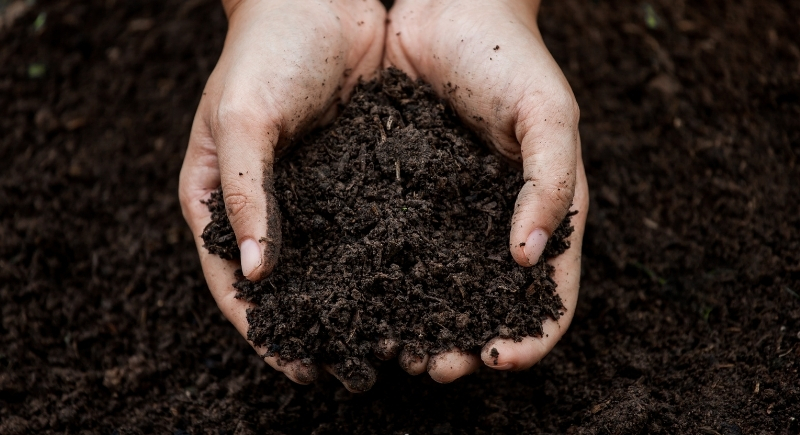
Image via Getty Images/Sasiistock
At the time, the project appeared messy and unpromising. The orange peels formed thick piles that decomposed rapidly in the tropical heat and attracted insects. However, within months, as the peels broke down, they created a dark, nutrient-rich loam. The decomposing citrus added phosphorus, nitrogen, potassium, and organic matter to the soil, which had been stripped of nutrients by years of grazing. Even more crucially, the heavy layer of organic material smothered the invasive African grasses that had prevented native trees from re-establishing.
Once the dumping stopped, no further human intervention followed. The site was left entirely to natural regeneration. The experiment did not last long. A rival juice company filed a lawsuit, arguing that dumping agricultural waste inside a national park amounted to environmental damage. Despite support from some environmental groups, Costa Rica’s Supreme Court ultimately ordered the project to stop.
With no reason to return, the orange-covered plot faded from attention for more than a decade.
Sixteen Years Later, a Forest
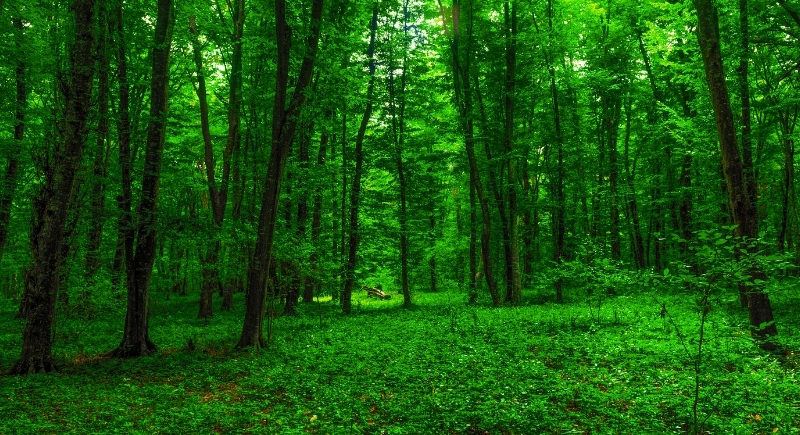
Image via Canva/Vastram
In 2013, ecologist Timothy Treuer, then a graduate researcher, set out to find the old orange-peel site while conducting unrelated fieldwork in Costa Rica. Finding it turned out to be harder than expected.
The once-barren pasture had transformed into dense vegetation so thick that even a large roadside sign marking the area was hidden behind vines and trees.
When Treuer and his colleagues compared the site with nearby untreated land, the differences were stark. According to findings later published in the journal Restoration Ecology, the orange-treated area showed about a 176–200 percent increase in above-ground tree biomass. There were roughly three times as many tree species as in the control plot, with persistently higher soil nutrient levels nearly two decades later.
The forest that emerged was not only greener but also structurally more complex, featuring taller trees, denser canopy cover, and species typically associated with more mature tropical forests.
Why the Orange Peels Worked
Researchers believe the success came from a combination of factors. The orange waste improved soil chemistry, retained moisture during dry seasons, and physically blocked invasive grasses long enough for native seedlings to gain a foothold.
Importantly, the peels had already been processed for juice, meaning their oils and acids, which can inhibit plant growth, were largely removed. That made them safe as a soil amendment.
Scientists also emphasize what this experiment does not prove. Dumping organic waste indiscriminately is not a restoration strategy, and similar results would not automatically occur in colder, drier, or chemically different environments.
The orange peel forest covered a small area, emerged under very specific conditions, and succeeded partly by accident.