A Forbidden Library in the Vatican That Holds Documents No One Can Read
The Vatican holds one of the largest historical collections in existence. These collections contain documents that most people will never see and that only a small group of scholars can access and interpret. The immense archive preserved inside has generated much speculation.
Generations of people have imagined a forbidden library hidden behind locked doors, filled with lost scriptures, dangerous knowledge, or secrets capable of changing history. They may be misguided about the secrecy but right about its potential impact.
The Archive Behind the Legend
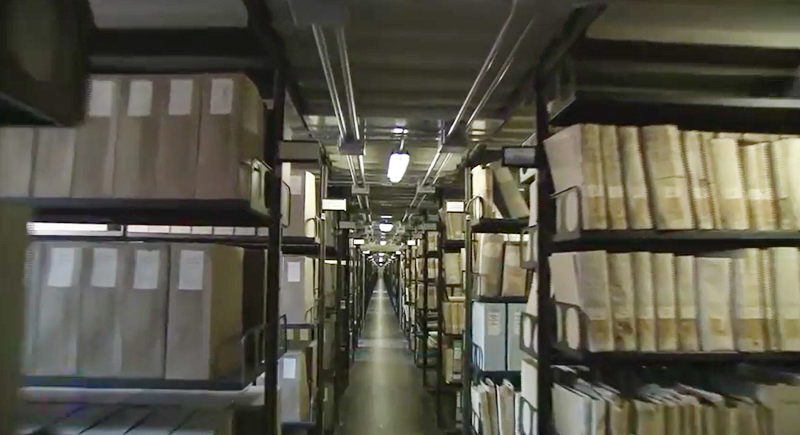
Image via Wikimedia Commons/Collective
The collection is officially known today as the Vatican Apostolic Archives. For centuries, however, it carried the more mysterious title Vatican Secret Archives. The word “secret” helped fuel many myths, but its meaning was far less dramatic. The Latin term secretum referred to something private rather than hidden. These records were simply the personal archive of the pope and the administrative offices of the Catholic Church.
The archive was formally organized in 1612 by Pope Paul V, though the materials it contains are far older. Some fragments preserved there date back to the eighth century. Over time, the collection grew into a massive historical repository. Today, the shelves stretch roughly 53 miles and hold documents spanning more than 12 centuries.
Even with tens of thousands of catalog books trying to keep everything organized, the archive is just too massive to fully map out. As a result, historians still come across forgotten or overlooked documents in their research, even today.
Documents That Shaped History
The shelves contain far more than church paperwork. The archive preserves records connected to major turning points in world history. Among them is the papal bull Decet Romanum Pontificem, issued by Pope Leo X in 1521, which formally excommunicated Martin Luther. That decree cemented the break that led to the Protestant Reformation.
Another document captures Mary Queen of Scots’ final plea. Facing execution in 1587 after years of imprisonment in England, she wrote a desperate letter to Pope Sixtus V asking for intervention against the authorities who had condemned her. The letter survives today as part of the Vatican’s collection.
One of the most famous discoveries in the archive came much later. In 2001, researchers rediscovered the Chinon Parchment, a massive document detailing the investigation of the Knights Templar in the early fourteenth century. The parchment revealed that Pope Clement V had actually absolved the order of heresy in 1308, contradicting centuries of assumptions about the Templars’ fate.
Why Access Is So Limited
Image via Canva/Horia Ionescu’s Images
Despite the fascination surrounding the archive, it is not open to the public. The Vatican treats it as a specialized research collection rather than a museum. Scholars must apply in advance, provide academic credentials, and explain the specific topic they plan to study. Even approved researchers may request only a small number of documents each day.
Many materials are also restricted by a 75-year rule. Documents considered too recent remain sealed until enough time has passed. The policy reflects a common archival practice intended to protect sensitive information connected to modern history.
These limitations mean that most people will never enter the archive’s reading rooms. Instead, the documents remain accessible only to historians, archivists, and other trained researchers.
The Challenge of Reading the Archive
Access alone does not guarantee understanding. Much of the archive is written in Latin or in medieval handwriting that requires specialized training to decipher. Papal registers, legal records, and diplomatic correspondence were recorded by scribes using scripts unfamiliar to modern readers. Without years of study in historical languages and paleography, the texts are extremely difficult to interpret.
The scale of the archive creates another challenge. Millions of documents must be cataloged, preserved, and studied. Even with detailed indexing systems, researchers often spend weeks searching for a single record. Some materials remain only partially cataloged simply because the collection is so vast.
A Library That Still Holds Untold Stories
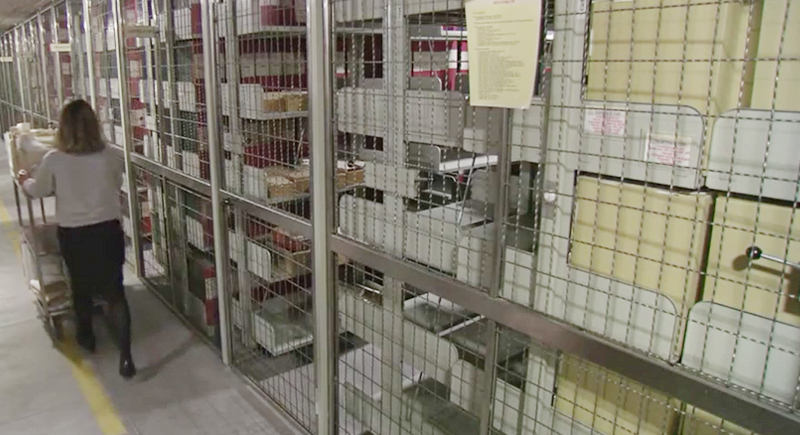
Image via Wikimedia Commons/Collective
Over the past century, the Vatican has slowly opened more of its historical records to scholars. Pope Leo XIII first allowed researchers to study the archives in 1881, and later popes have continued expanding access to older collections. Exhibitions and limited tours have also revealed small glimpses of the material preserved there.
Yet most of the archive remains known only to specialists. Hidden among miles of shelving are letters, treaties, legal judgments, and personal petitions written by people who lived centuries ago. Together they form a record of diplomacy, conflict, faith, and everyday life stretching back more than a millennium.
The Vatican’s legendary forbidden library is not a chamber of mystical secrets, but it remains one of the most guarded historical collections on Earth.