
From permission-first photos to cash etiquette, these are the small moves that helped me meet makers and buy better.
Bring small cash, and use it like a guest
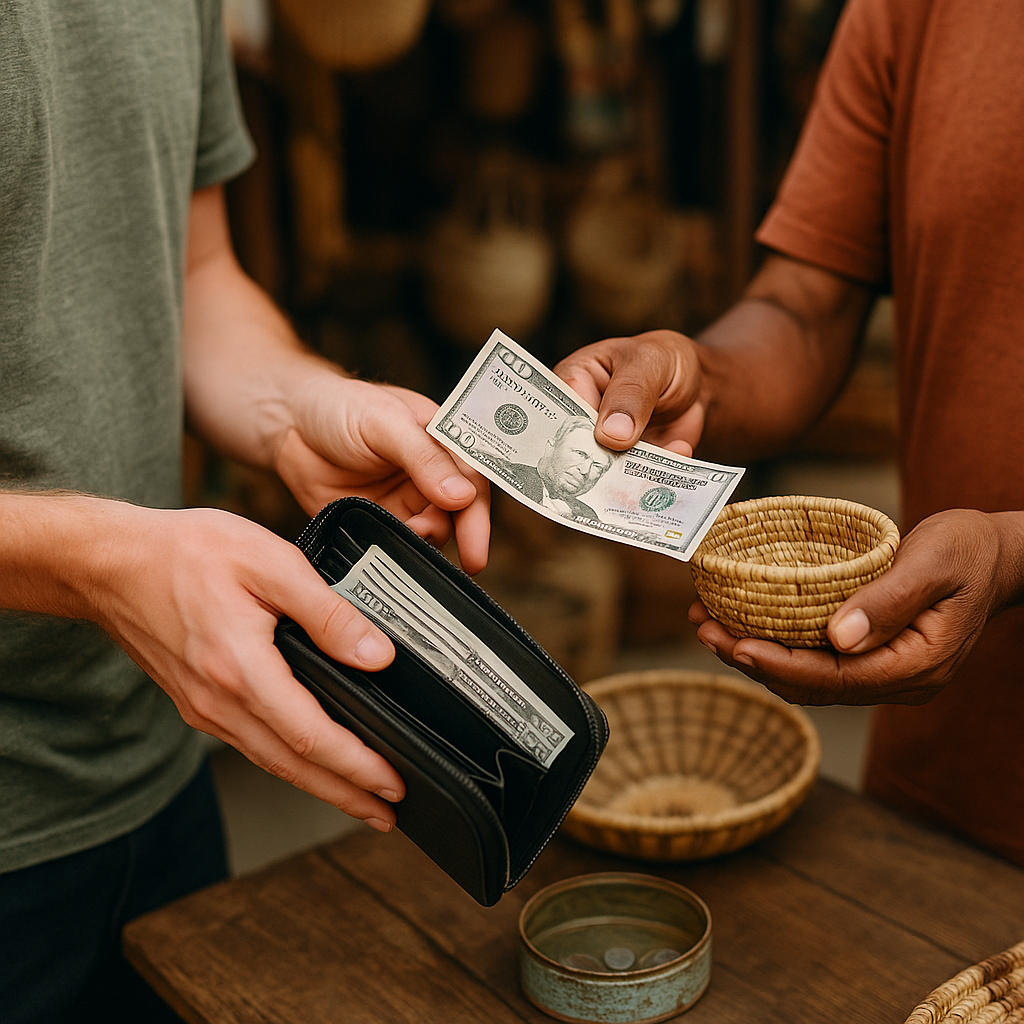
I learned this the annoying way: I walked into an artisan market with one crisp $50, bought a small woven piece, and watched the maker dig through a tin for change while a line formed behind me. Nobody said anything, but the air shifted. Since then, I treat cash like part of the etiquette, not just a payment method. Before I go, I break money into $1s, $5s, $10s, and a couple $20s, and I keep it in a simple zip wallet so I'm not flashing a wad. I also separate my spending money from my emergency cash so I don't do that dumb thing where you pull out everything you have because you're flustered.
The practical payoff is obvious: faster transactions, less pressure on someone who might not have a pile of change, and fewer awkward moments when a card reader is spotty or a generator is off. But the bigger payoff is how it changes the conversation. When you can pay cleanly, you can slow down and ask the questions that matter without feeling like you're holding up the whole aisle. I like starting with materials and time: What plant fiber is this? Where does the dye come from? How long does one basket take? Makers who are open to talking will usually light up at specifics, and you get a real sense of whether you're buying a piece made here or a lookalike that arrived in a box last week.
One more habit that feels small but counts: if I want to negotiate, I do it gently and early, not after someone has walked me through their work. If the price is out of my range, I ask if there's a smaller version or a piece in a different size, or I simply thank them and move on. If I do buy, I hand the money directly to the seller, not to a friend hovering behind them and not onto the table like I'm feeding a parking meter. It sounds fussy written out. In a busy market, it reads as respect.
Ask for the maker's story, then listen for the seams
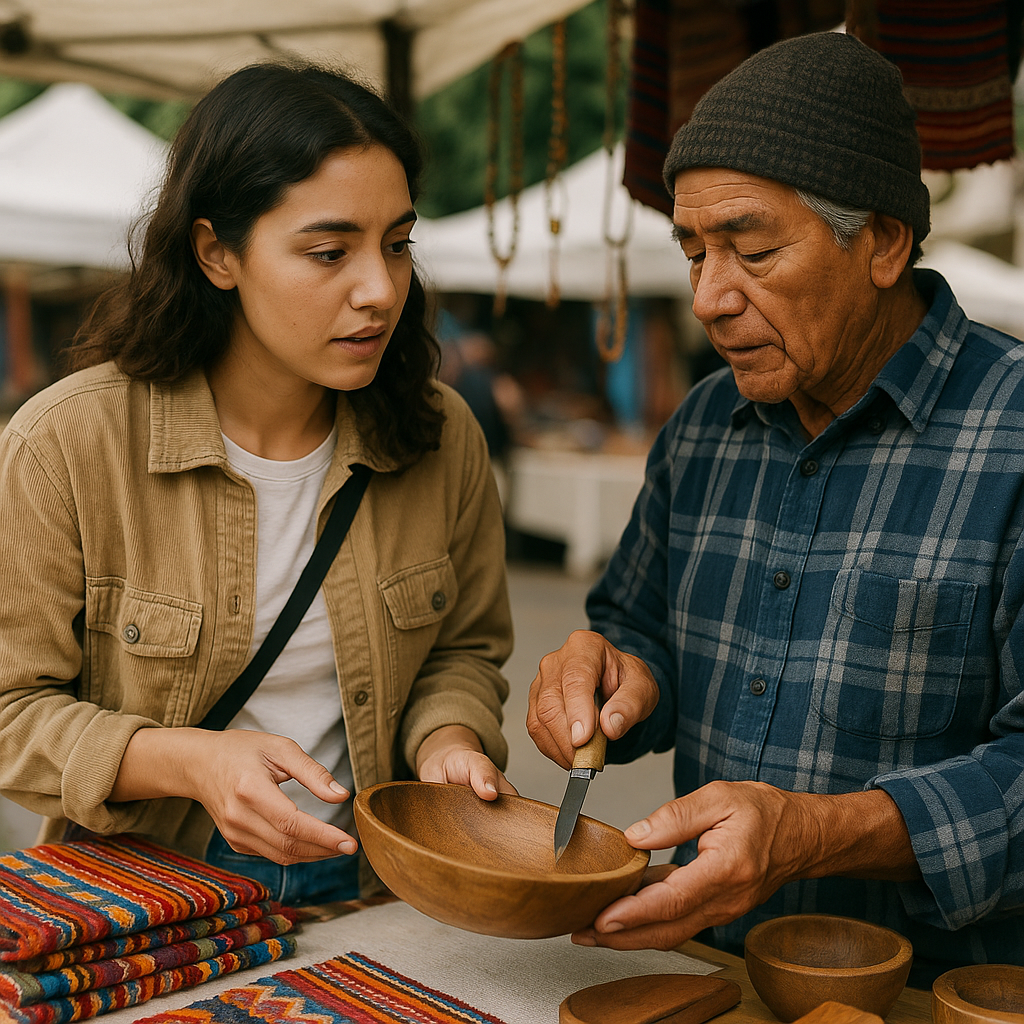
When I want to buy something that claims to be local, I don't quiz anyone like a customs officer. I just ask, "Did you make this one?" and then I shut up. If the answer is yes, my follow-up is about process, because process is hard to fake on the fly. For textiles, I ask what the fiber is and whether it's handspun or mill-spun. For beadwork, I ask if the design has a name in their community or if it's a personal pattern. For carving, I ask what tool they used to finish the edges. Not because I need a craft lesson, but because the details come out naturally when the person at the stall is the person who made the piece.
What I'm listening for isn't perfection. It's texture. Makers will mention things like how the humidity messes with drying, which colors bleed if you're not careful, or how long it took to get consistent tension on a loom. Sellers who are reselling imported goods tend to swing wide: "It's very traditional," "It's from our people," or a story that sounds like it came off a hang tag. Sometimes they're not trying to be shady; they were handed stock by a relative or a wholesaler and told what to say. Either way, it helps me spend my money where I meant it to go.
I also watch how the table is set up while we're talking. A maker's stall often has little evidence of work: a half-finished piece, a small kit of needles, thread, awl, a sanding block, maybe a few items that clearly belong to the same hand. A reseller table can be a greatest-hits wall of unrelated styles, with the same motif repeated across different materials in a way that looks like a catalog page. And yes, someone can be a maker and still have a wide range. That's why I don't use one signal. I stack gentle signals.
If I decide not to buy, I don't punish the person with a dramatic exit. I thank them for explaining, I step away, and I keep moving. The point isn't to win a gotcha moment. It's to come home with something you can point to later and say, with a straight face, who made it and why you chose it.
Photos are not neutral: get permission, and offer something back
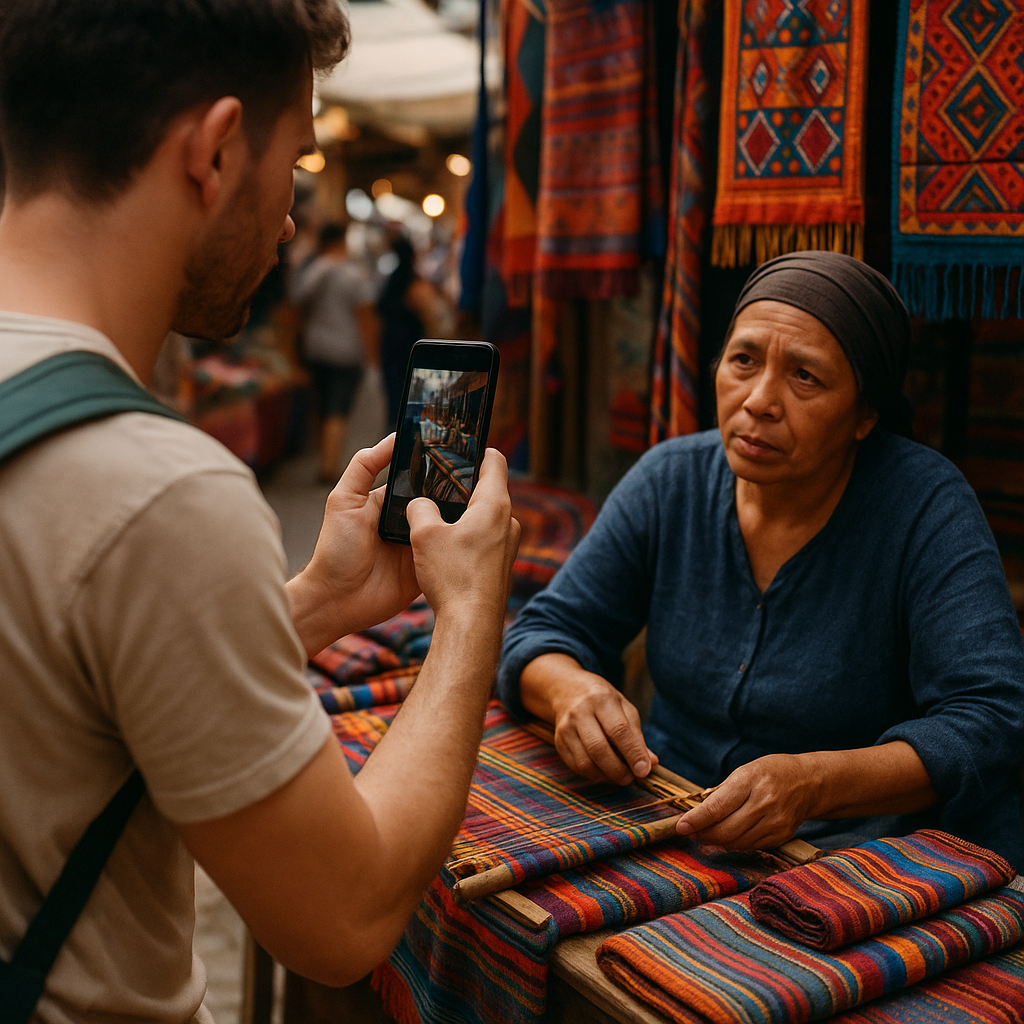
The first time I visited a market where people were actively working at the booth, I did what most travelers do: I lifted my phone for a quick shot of the colors and hands moving. The maker looked up, not angry, just tired. I lowered the phone and asked if photos were OK. They said no, and I realized I'd treated their work like scenery. Now I assume the answer is no until I ask. It takes two seconds, and it changes my posture from consumer to guest.
My rule is simple: if the photo includes a person, their hands, their face, or any identifiable part of their work process, I ask permission before I even open the camera app. If it's just a wide shot of the walkway, I still watch for signs posted by organizers. When someone says yes, I ask one more question that keeps me honest: "Do you want me to tag your handle or not post it?" Some makers want the exposure, some don't want their designs copied, and some have reasons that aren't mine to debate. If they do want credit, I type their name into my notes right then, because I will not remember it correctly later, and misspelling someone's name after they trusted you is its own kind of rude.
Offering something back doesn't have to be performative. If I'm going to take photos, I buy something small first, or I tip if there's a posted tip jar for demonstrations. If the maker has cards with a website or Instagram, I take one and follow on the spot so it doesn't become another piece of paper in my pocket. And if I post, I keep the caption factual. Where I was, who made it, what it is. I don't write fan fiction about a culture I visited for two hours between lunch and a taxi pickup.
This habit has also led me to better conversations. When you ask permission, you give someone a chance to set a boundary, and then the interaction can relax. I've been invited to photograph finished pieces laid out in better light, shown details I would've missed, and warned off the stalls that were selling mass-produced knockoffs two aisles over. None of that comes from sneaking a shot and jogging away.