
Three on-the-ground itinerary habits I use: timed arrivals, bottle discipline, and a waste loop that works even with no bins.
Build your day around water, not wishful thinking
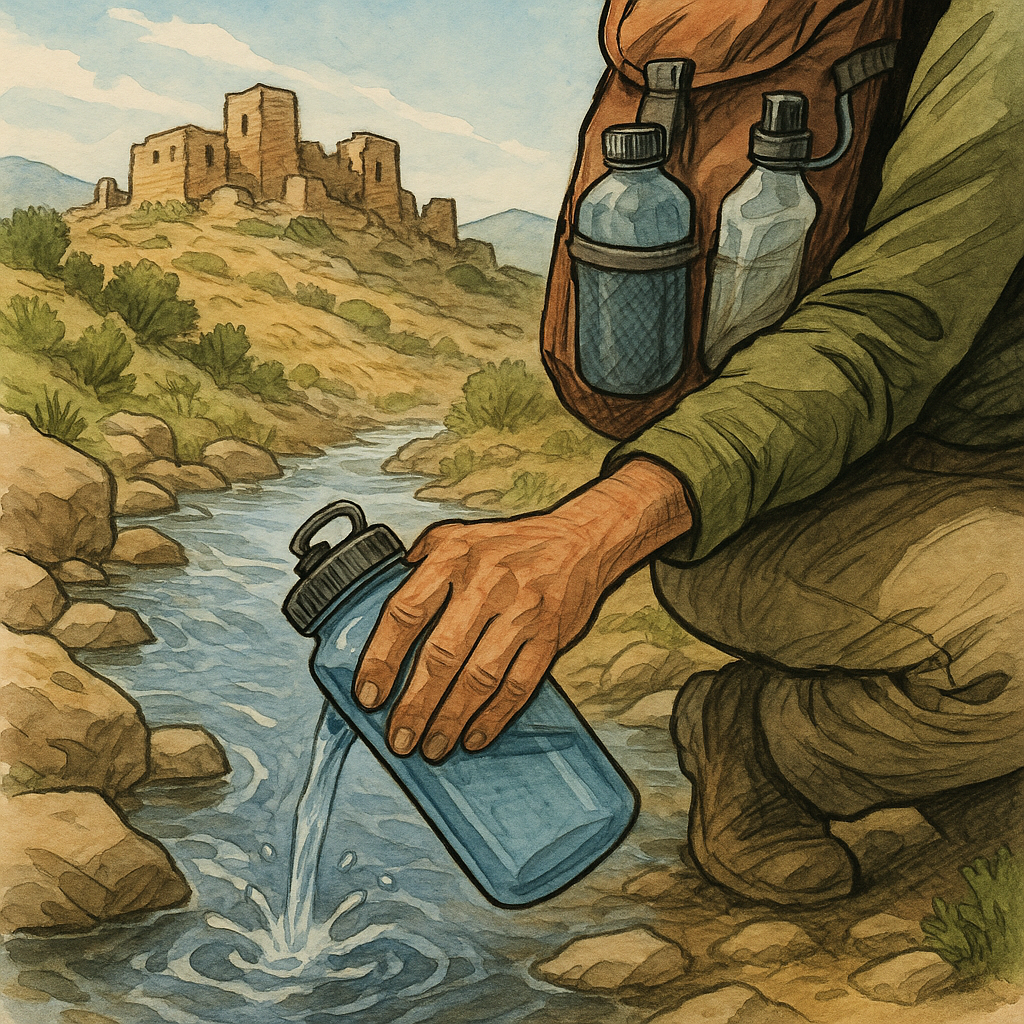
If you want an eco-friendly itinerary in a remote heritage spot, stop thinking in miles first. Think in liters, refill windows, and the kind of water source you can approach without turning the place into your personal wash station. I plan the day in three bands: a morning push (cool temps, less sweat), a mid-day site window (slow, careful time at the ruins), and an exit push (when people get sloppy and start dropping wrappers because they're tired). The glue between those bands is water discipline.
I carry two hard bottles (Nalgenes take a beating in talus) and one soft flask for mixing electrolyte powder without turning my drinking water into lemon-flavored regret. On the map, I circle every reliable water option, then I assume one of them is dry. If I'm relying on a spring, I give myself a backup line that doesn't require bushwhacking a new social trail down to it. That backup line is usually a longer approach that sticks to durable surfaces, even if it feels less direct.
Now the itinerary part: I time my most water-hungry stretch for early. If I know the final ridge walk is exposed and windy, I don't save it for the afternoon when I'm guzzling, and refilling becomes a crisis. I also take a short pause before the heritage site, not at it. That's where I eat, adjust layers, and do any filtering or treatment away from sensitive ground. Before reaching the site, I confirm that access and photography are permitted, follow guidance from land managers and local or Indigenous communities, and arrive prepared to avoid touching cultural features and to avoid stepping off approved surfaces. It sounds fussy, but it cuts down on the little back-and-forths that turn one careful pair of boots into a braided mess of footprints.
One more thing I learned the hard way: if you plan a lunch stop at the site because it has shade, you'll create trash pressure right where you least want it. Plan the lunch stop about 20 minutes before reaching the site, preferably somewhere with a view if the group needs a morale boost. Then arrive with nothing in your hands but a camera and maybe a small notebook.
Arrival timing is the cleanest impact reduction tool you own
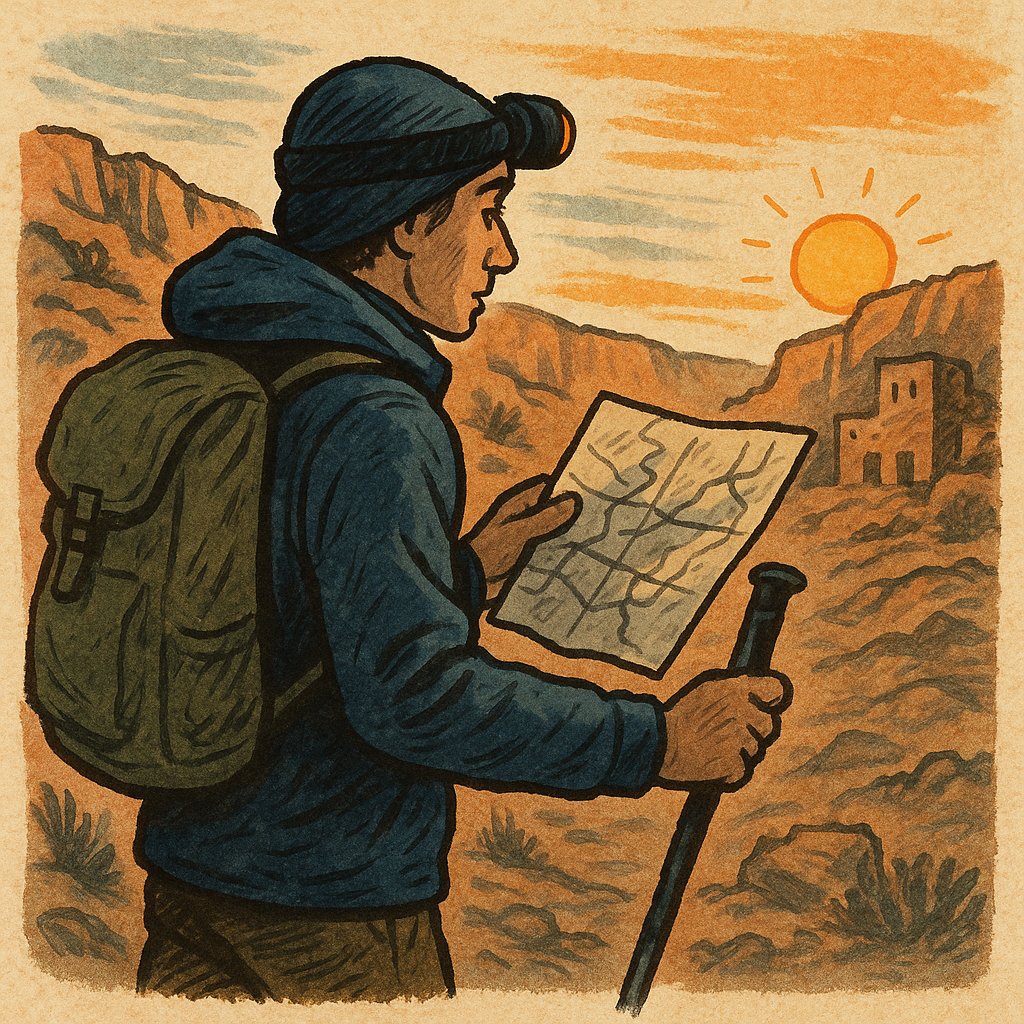
I used to treat arrival time as a convenience thing. Now it's a waste thing, a trail-widening thing, and a "how many people will be stepping off-route for photos" thing. If you're putting together an eco-friendly itinerary for a heritage spot that requires a long approach, the biggest single lever you have is not a gadget. It's showing up when the place can handle you.
Here's how I do it. I look at sunrise, then I work backward from my preferred site window: I want enough light to see the ground texture (rocks, pottery sherds, cryptobiotic soil, old wall alignments), but I don't want the crowd pulse that hits after breakfast. When official access hours, weather, and terrain conditions allow, I may begin before sunrise with a reliable headlamp and my route already prepared. I never start early to bypass closures, permit rules, or local guidance. I don't love pre-dawn starts, but I love what they prevent: the conga line that forces everyone to step aside on the same fragile edge, over and over, until a narrow tread becomes a scar.
Once I'm near the site, I slow down on purpose. Rushing near the site increases the chance of grabbing rocks for balance, leaning trekking poles against walls, or cutting new paths around vegetation. I build the itinerary so the last half-mile is never a "beat the clock" situation. If you need a hard rule, make it this: your schedule should protect the final approach, not squeeze it.
Departure timing matters too. I plan to leave before I'm hungry, not after. When people bonk, the micro-trash starts: the torn gel top, the bit of bar wrapper, the crushed electrolyte packet that ends up under a rock because someone swears they'll pick it up later. I like a "walking snack" that doesn't shed: a tortilla with nut butter wrapped in beeswax wrap, or a homemade rice bar in a silicone Stasher bag. I don't bring grapes, trail mix in a flimsy bag, or anything with a perforated tear strip that turns into tiny litter confetti.
If you're coordinating with a shuttle, a rough road drive, or a long hike from a trailhead, put those fixed-time constraints at the edges of the day. Keep the heritage window elastic. That flexibility is what lets you step back when the place feels busy, rather than forcing yourself into the middle of it.
Run a “pack-out loop” so nothing rides loose in your bag
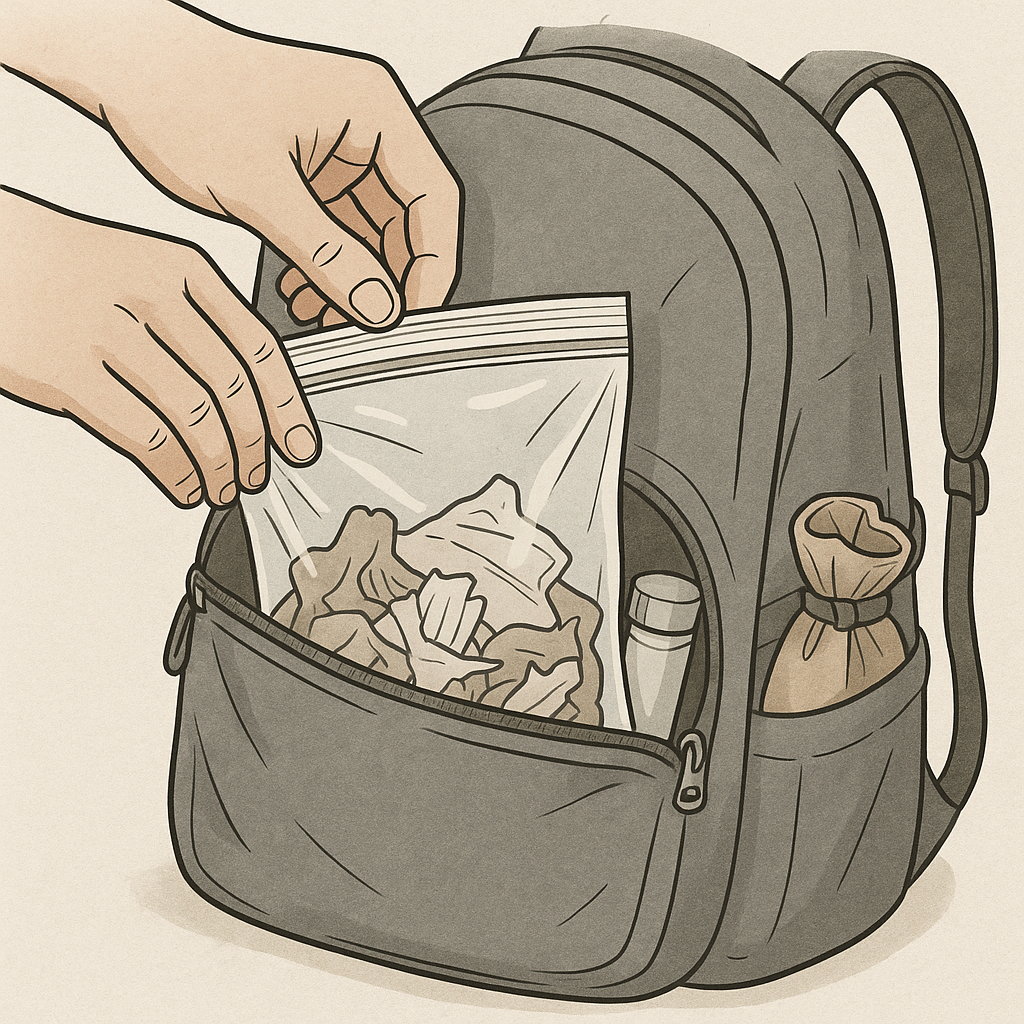
I don't count on finding a bin at the trailhead, and I definitely don't count on finding one near a remote heritage site. So I treat trash management as part of the itinerary, same as water and turnaround time. The system I use is boring, but it keeps the place clean and keeps my pack from turning into a crinkly junk drawer.
Before I leave the car, I set up three containers that live in the same pocket every trip. First is a gallon freezer-zip bag for true trash (wrappers, tape, used toilet paper, if you're packing it out in an appropriate setup). Second is a small hard-sided container for sharp-edged packaging and odor-prone waste. An empty drink-tablet tube or small screw-top jar keeps foil corners, dental floss, and tape backing from puncturing the main bag, while medical sharps require an approved sharps container. Third is a reusable bag for clean recyclables, only if I can keep them clean. If they get food residue, they're just trash in the main bag. I don't kid myself about it.
Then I run what I call my pack-out loop: every time I stop for water, layers, or navigation, I also do a 10-second sweep of the ground and my own pockets. Not a big ceremony. Just: look down, check the snack pocket, zip the trash bag. The reason I pair it with a stop I was already making is simple. If I leave it to memory, it won't happen when I'm tired and excited and thinking about the next landmark.
This matters extra on heritage days because the small stuff is what disappears into the same cracks and shadows people are photographing. A corner of a gum wrapper looks like rock mica. A clear gel packet looks like sun glare. And if a site has wind, loose trash doesn't just sit there. It migrates into the exact places you can't safely retrieve it without stepping where you shouldn't.
If you're trying to keep the itinerary low-waste, do yourself one favor at home: decant snacks. I refill a wide-mouth bottle with pretzels, pack jerky in a silicone pouch, and bring drink mix in a tiny screw-top jar. The only single-use thing I let myself carry is a few strips of Leukotape stuck to wax paper. They weigh nothing and save me from buying a pile of individually wrapped blister bandaids.