10 Hidden jungle spots inside America’s most beautiful gardens
Most people visit botanical gardens for the wide paths, colorful flower beds, and seasonal displays. But if you explore a little further, many gardens reveal areas that feel completely different. Thick greenery, humid conservatories, and winding walkways can suddenly make it feel like you stepped into a tropical jungle.
Public gardens across the United States protect thousands of plant species within carefully planned landscapes. Inside many of them are lesser-known sections that many visitors overlook. These 10 spots showcase where you can experience that dense, jungle-like atmosphere in some of America’s most beautiful gardens.
Climatron Rainforest at the Missouri Botanical Garden
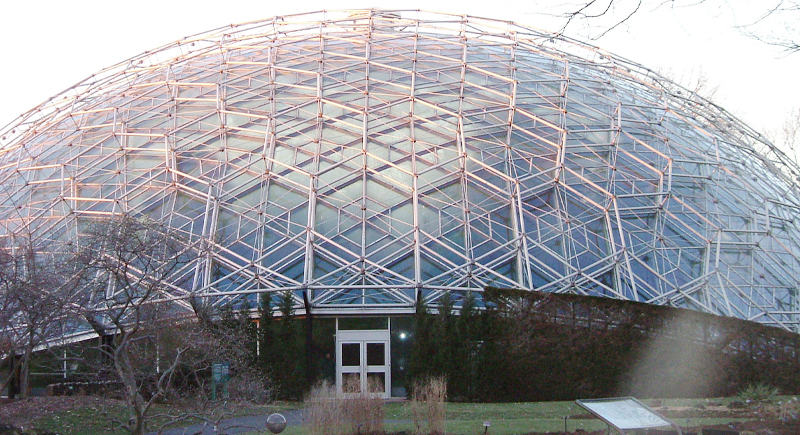
Image via Wikimedia Commons/Maksim
The Missouri Botanical Garden in St. Louis dates back to 1859 and ranks among the oldest botanical gardens in the United States. Its most fascinating space sits inside the Climatron, a massive geodesic dome built in 1960. The structure holds more than 2,800 tropical plants arranged to replicate a rainforest ecosystem.
Walkways curve through dense greenery while humidity keeps orchids, palms, and vines thriving. The dome uses a support-free design that allows maximum sunlight to reach the plants. Visitors often arrive hoping to see the rare corpse flower bloom. Native to Indonesia, the plant opens for roughly 24 hours and produces a famously foul odor.
Tropical Greenhouse At The United States Botanic Garden
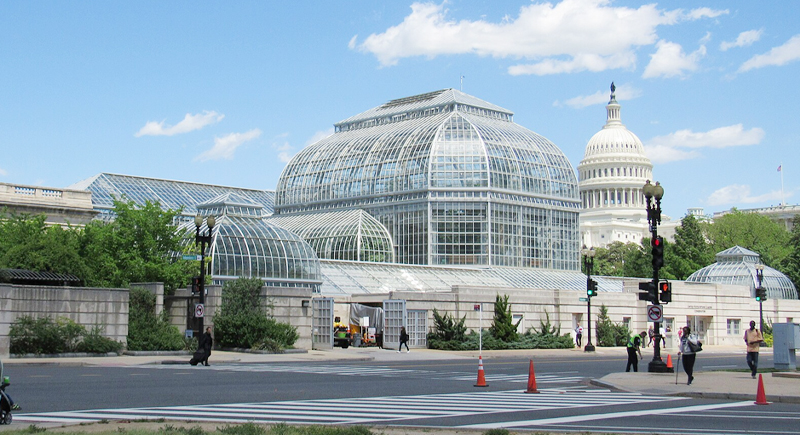
Image via Wikimedia Commons/Farragutful
The United States Botanic Garden houses nearly 44,000 plants inside its glass-domed conservatory. Several rooms recreate different ecosystems, though the tropical greenhouse is distinct.
Thick foliage fills the space, including towering palms and climbing vines that stretch toward the ceiling. Rare and threatened plant species grow alongside orchids and tropical fruit trees.
Butterfly Pavilion At Desert Botanical Garden
Phoenix might seem like an unlikely place to find a jungle-like environment, yet the Desert Botanical Garden proves otherwise. The garden spans 55 acres in the Sonoran Desert and houses more than 50K plants adapted to arid climates. Hidden within the grounds is a 3,000-square-foot butterfly pavilion. More than 2,000 butterflies flutter through the open-air structure. Native plants feed them while shaded greenery creates a pocket of dense life within the desert landscape.
Chocolate Garden At Princeville Botanical Gardens
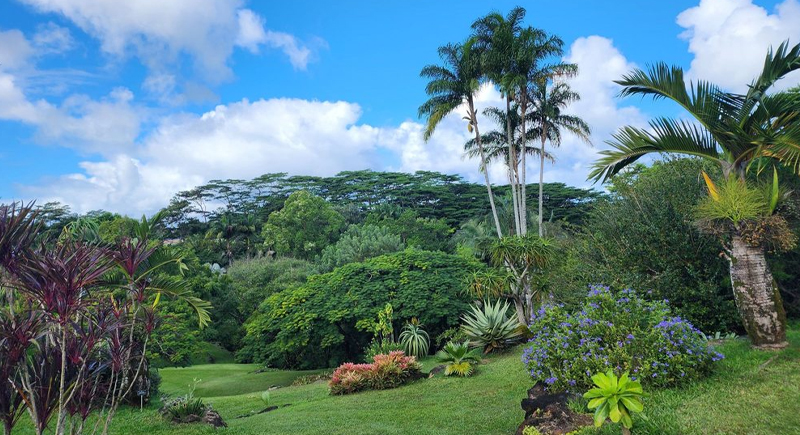
Image via Yelp/Perry O.
Princeville Botanical Gardens on Kauaʻi’s north shore began as a husband-and-wife project focused on restoring native Hawaiian ecosystems. One area surprises many visitors: the chocolate garden grows cacao trees alongside plants historically tied to chocolate production. Guided tours explain how cacao moved through global trade routes and eventually took root in Hawaii. Tastings of chocolate and tropical fruit turn the visit into a mix of education and indulgence.
Conservatory District At Longwood Gardens
Longwood Gardens, outside Philadelphia, spans hundreds of acres and houses one of the largest botanical collections in North America. The indoor Conservatory District hides a series of massive glasshouses packed with tropical plants and seasonal displays. Dense greenery fills the rooms year-round, while controlled-climate systems maintain rainforest conditions.
Japanese Tea Garden Trails At Portland Japanese Garden
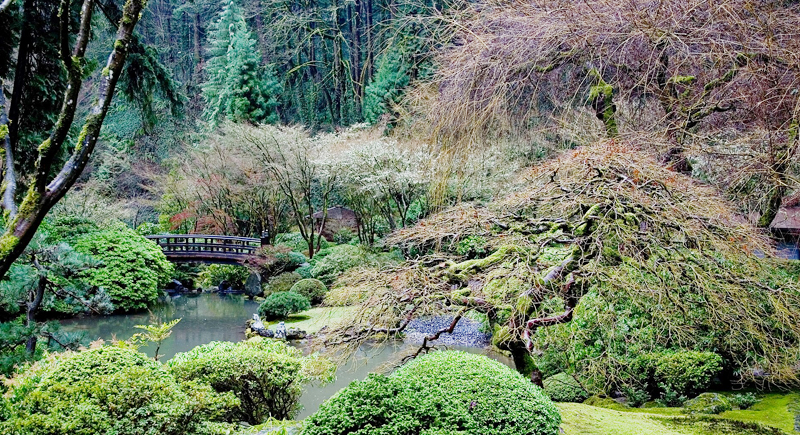
Image via Wikimedia Commons/Adonelson
The Portland Japanese Garden sits high above the city inside Washington Park and is often considered one of the most authentic Japanese gardens outside Japan. The landscape is divided into several carefully designed sections.
Two areas stand out in particular. The Tea Garden and the Strolling Pond Garden guide visitors along narrow paths surrounded by dense plant growth. As you follow the stone walkways, the greenery fills the view. On clear days, Mount Hood appears in the distance, though most people find themselves drawn to the layers of vegetation around the trail.
Sculpture Gardens At Brookgreen Gardens
Brookgreen Gardens opened in 1931 in Murrells Inlet, South Carolina. The property spans more than 9,000 acres and includes wetlands, wildlife areas, and formal garden spaces. Throughout the grounds, more than 2,000 sculptures created by over 430 artists appear among the plants.
Many of these works sit along shaded paths where trees and shrubs grow densely on both sides. As you walk through these green corridors, the sculptures appear one after another, blending art with the surrounding landscape.
Botanical Building Interior At Balboa Park
Balboa Park in San Diego spans roughly 1,200 acres, home to cultural institutions, museums, and gardens. Inside the park is the historic Botanical Building, constructed for the 1915 Panama-California Exposition. The wooden-slat structure holds more than 2,000 tropical and subtropical plants. Its open-air design allows sunlight and coastal breezes to circulate through the space. A lily pond outside reflects the building’s pink exterior, while interior paths wind through thick foliage.
Guardians Of The Seeds Trail At Coastal Maine Botanical Gardens
Coastal Maine Botanical Gardens covers roughly 300 acres near Boothbay, Maine, and one trail inside the property turns plant exploration into a scavenger hunt. The Guardians of the Seeds path leads visitors through forests of native plants, where giant wooden troll sculptures appear along the way. Swedish artist Thomas Dambo created the figures using recycled wood. The full trail can take several hours to complete, making it one of the most immersive walks in the garden.
Living Earth Goddess At Atlanta Botanical Garden
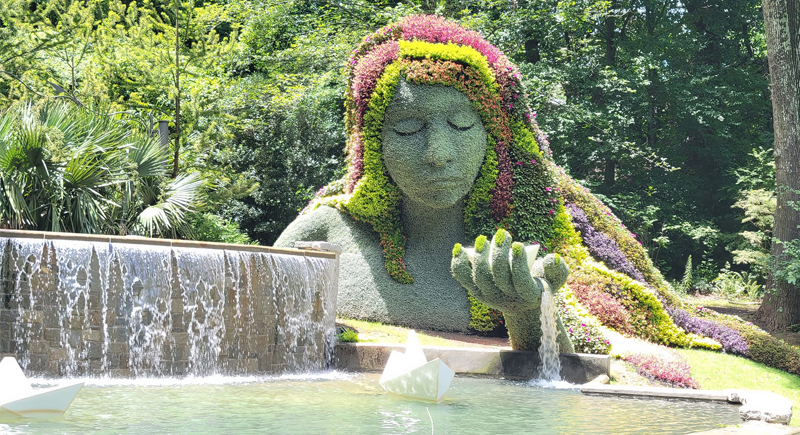
Image via Facebook/Christine Little
The Atlanta Botanical Garden spans 30 acres near Piedmont Park. Seasonal events and light displays draw large crowds, though one permanent feature stands out. A 25-foot sculpture known as the Earth Goddess rises beside a waterfall-fed pond.
Thousands of plants grow across its metal frame, forming a towering figure surrounded by dense greenery. The installation shows how horticulture and sculpture can merge into a single living centerpiece.