
Three small towns where one bold installation pulls you in, then keeps you for lunch, a walk, and a second look.
Marfa, Texas: the Prada you can't buy
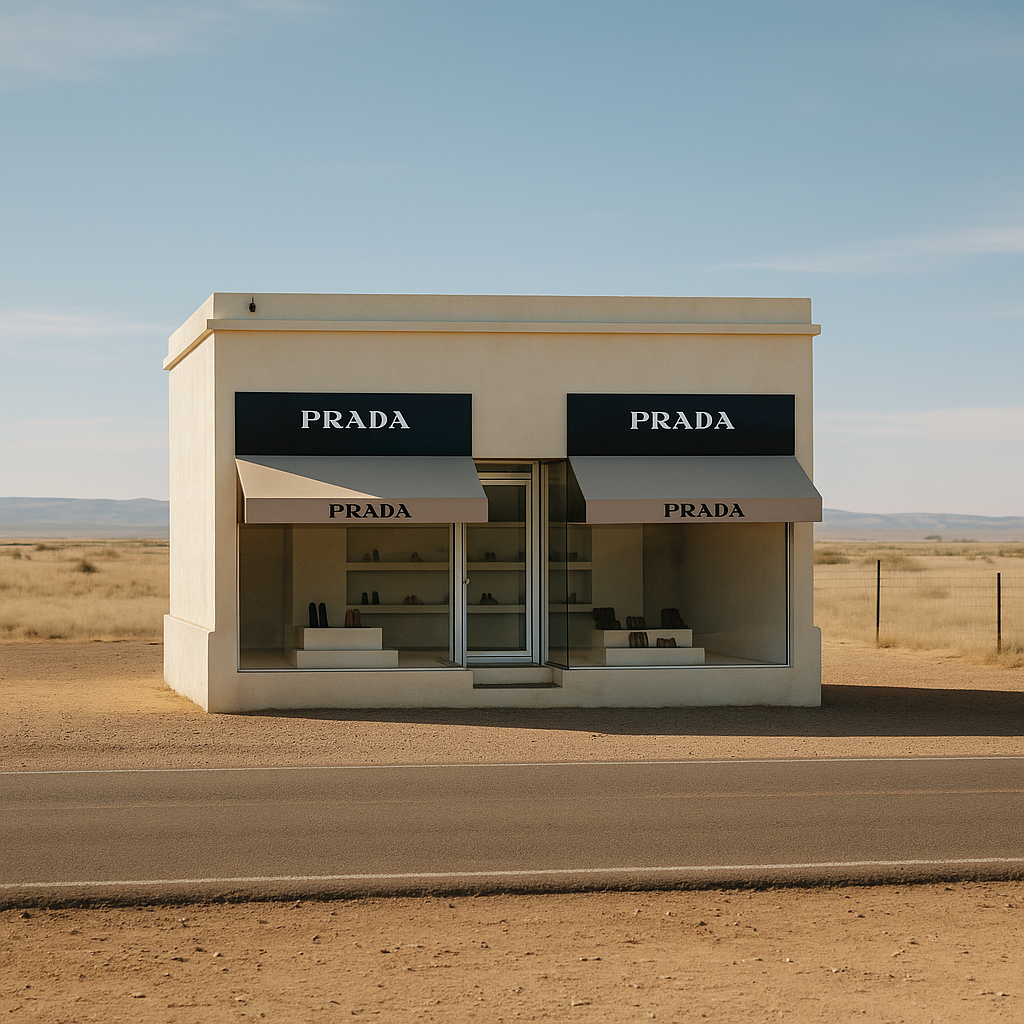
Prada Marfa is the kind of destination people love to roll their eyes at in advance. A luxury storefront in the desert. A selfie trap. A punchline. Then you pull off US-90, step into that West Texas wind, and it stops being theoretical. It sits out there like a dare: clean lines, pale stucco, that dead-serious Prada logo, and a plate-glass front that shows shoes you will never touch because you cannot go inside. It is a sculpture first, and it knows it.
Here is what surprised me the first time I did it: the drive out from town is part of the experience, not dead time. Marfa has you calibrating your eyes. Heat shimmer, long horizons, the hard shadow under a mesquite. By the time you reach the installation, the whole landscape has been stripped down to shapes and distance, which makes the fake boutique hit harder. People arrive laughing and leave quieter. I watched a couple argue about whether it was anti-consumerism or just a joke, then both of them walked the perimeter again, slower, like they were checking their own opinion.
And yes, it changes the local travel economy in a very grounded way. That little pull-off creates a predictable flow of cars, which makes Marfa itself feel less like a one-gallery gamble and more like a plan. You do the art on the roadside, then you are suddenly willing to spend the afternoon: coffee, bookshop, maybe an extra night. My practical tip: go early or late, not midday. The light is better, the photos are less blown out, and you will hear what the place sounds like when there is no crowd, just trucks in the distance and a flagpole clink from the wind.
Trolls, not trinkets, in Thomas Dambo's coastal towns
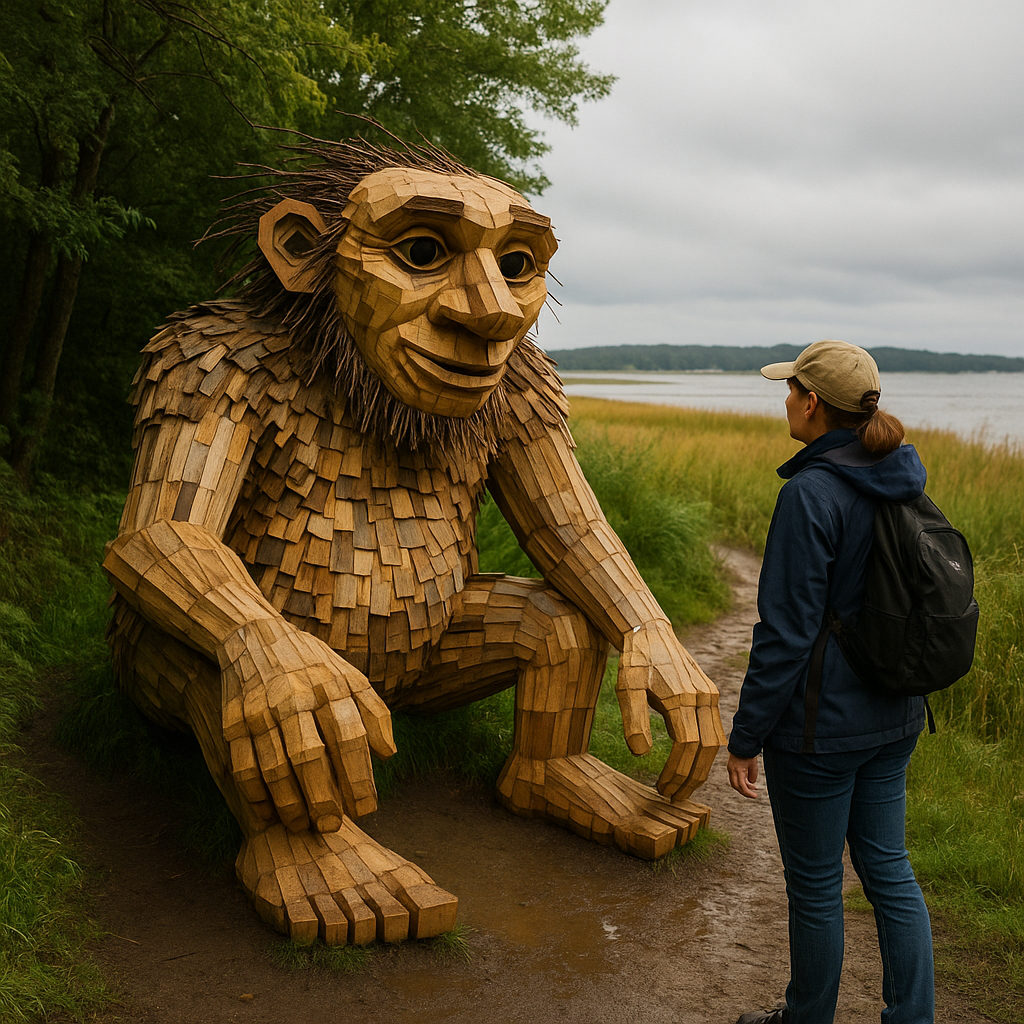
If your question is, "Can one art installation really move the needle for a tiny town?" go find one of Thomas Dambo's trolls. These are huge, friendly-looking figures built from reclaimed wood, and they are rarely placed where you can just park, snap, and leave. They are tucked into a patch of woods behind a neighborhood, down a damp trail by a marsh, or on the edge of a bike path where you can hear your tires humming on the pavement long before you see anything.
I chased a couple of them on a trip where the original plan was honestly just a coastal meander: seafood, a lighthouse, then back to the rental. The troll hunt rewired the whole day. Suddenly we were stopping for printed clue sheets, double-checking trailheads, and buying another coffee because we had time to kill while we waited for a rain band to slide through. Small towns benefit from that kind of delay. A single oversized figure made us act like we belonged there for a few hours, not like we were passing through on the way to the bigger headline destination.
The craftsmanship is what keeps it from feeling like a gimmick. Up close you can see how the slats overlap, where the screws bite, and how the surfaces weather in salty air. Kids treat them like a character; adults end up running a hand along the wood without realizing it. (It is the opposite of a museum hands-off vibe.) Bring a light rain jacket and shoes you do not mind rinsing off in a hotel sink later, because these are often set in places that stay muddy even after the weather clears.
What I like as a traveler is how the installation forces you into the town's ordinary geography: the side road where locals walk their dogs, the little footbridge, the park you would have driven past. You end up seeing the place from the inside out. Then, because you are already out, you are more likely to add the local bakery or that low-key lunch spot with three tables and a chalkboard menu. One sculpture turns into a whole itinerary without anyone having to sell you a package.
When the mural isn't decoration, it's the reason you came
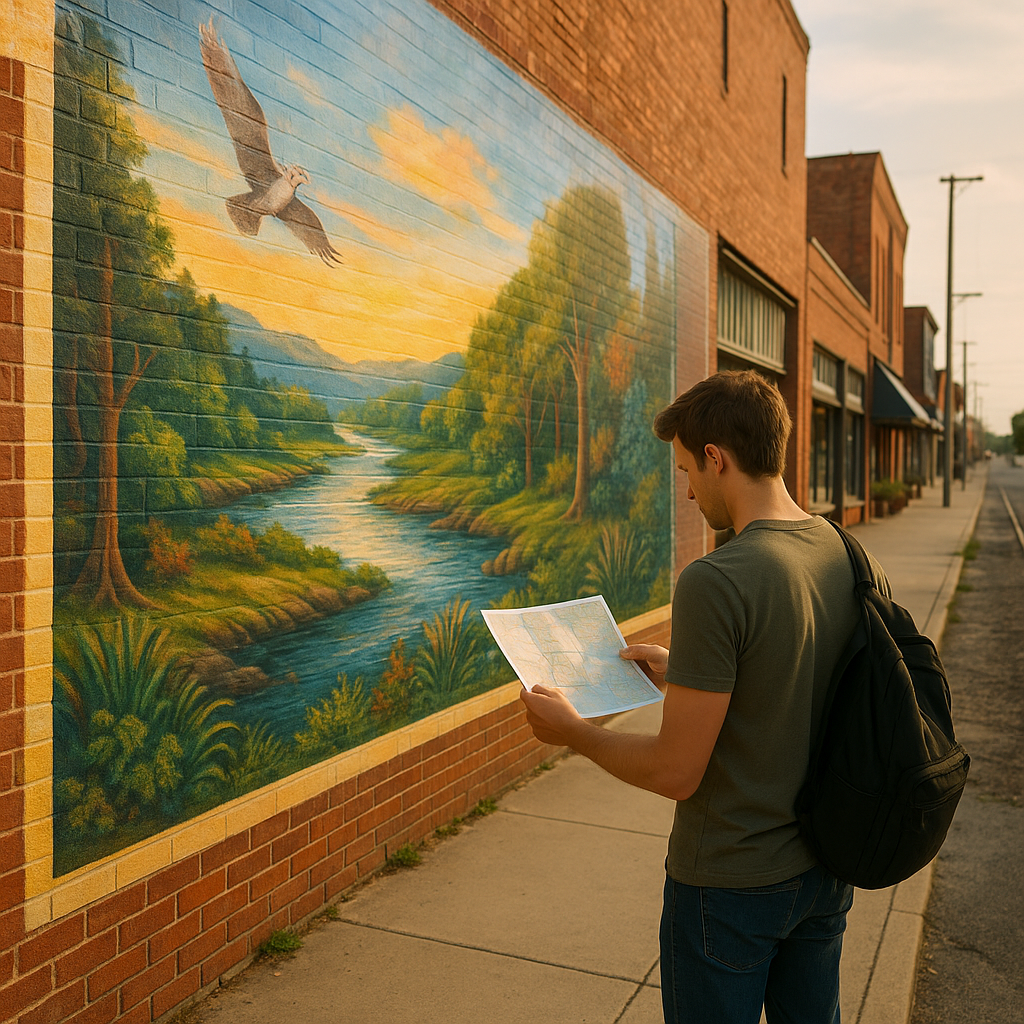
I've watched people underestimate mural towns the same way they underestimate a roadside diner. "How long can you look at a wall?" Then you get there, and the wall is not one wall. It is a whole walking loop. A proper mural destination has a map (paper or digital), a handful of pieces that are truly unmissable, and enough smaller work that you keep wandering because you do not want to miss the good one that is hiding around the next corner.
The trick is scale and placement. The big works that transform a place are usually not tucked in an alley for insiders. They are painted where they can pull a visitor across a street they would not otherwise cross: the side of a hardware store, the back of a grain building, a long brick facade behind the railroad tracks. That changes how a visitor moves. You do not just pop into the main square, buy an ice cream, and leave. You start circling blocks. You notice the antique shop you would have skipped. You end up in a cafe because you need a break and shade, not because you planned a meal.
I like to treat these towns like a low-stakes photo assignment. Not a perfect Instagram hunt, just a way to pay attention. I pick one constraint, like "only wide shots" or "only details," and it keeps me from standing in the same spot as everyone else with the same phone angle. If you are traveling with someone who says they are not into art, this is the format that wins them over. It feels like exploration. You are outside. You are moving. Nobody has to whisper.
Practical stuff that matters: go when the sun is lower so the paint is not washed out and you are not photographing harsh glare. Bring a polarizing filter if you are using a real camera, because glossy sealants and bright skies can flatten color. And do not ignore the plaque or QR code if there is one. The best mural towns commission work with local references that are easy to miss: a river that used to flood, a factory closure, a community hero, a species that only locals recognize. Those details are what make it feel like you visited a specific place, not just another pretty wall.