The Real Reason Tourists Will Wait Hours in Line for a Viral Croissant
When a bakery opens its doors at 8 a.m., and the line begins forming before 7, that says a lot about its food. The viral Suprême croissant at New York City’s Lafayette Bakery is the latest example of a global pattern where travelers willingly lose hours of their vacation to line up for a pastry. The behavior might look irrational from the outside, but psychologists, cultural researchers, and the bakers point to a very modern kind of motivation that has nothing to do with hunger.
The Psychology
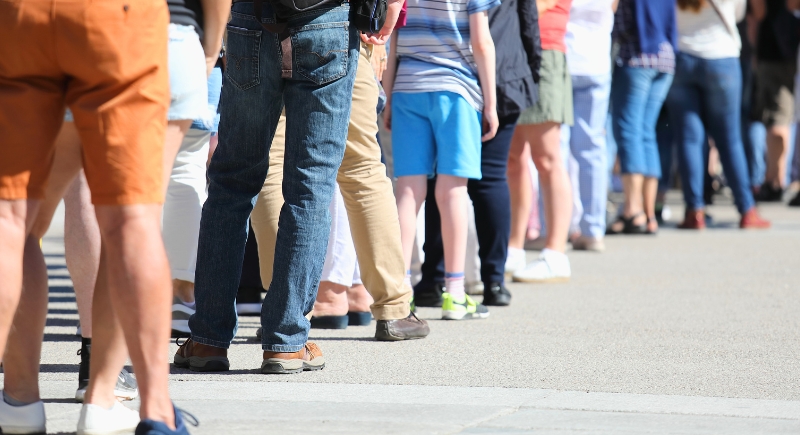
Image via Getty Images/TkKurikawa
Even before travelers reach the block-long queue in Manhattan’s NoHo neighborhood, they have likely seen the Suprême hundreds of times online. TikTok and Instagram feeds act as conveyor belts for repetition, and that repetition creates its own gravitational pull. Psychologists describe the effect as a dual force involving fear of missing out and social proof.
Experts note that seeing people line up for a specific food signals that the experience must be worth having, even among total strangers. This pattern plays out globally. In Amsterdam, crowds wait for cones of fries or ornate stroopwafels.
In Tokyo and New York, a doughnut craze prompts the same behavior. Travelers watch the crowds multiply and assume there must be a reason, even if they cannot articulate what it is.
The Line Becomes Part Of The Performance
Standing in line is an active part of the experience. Social media has transformed travel into an ongoing performance, and viral food is an easy prop. Filming a queue, posing with the pastry, and sharing the moment signal participation in a cultural trend. The visibility functions like a badge of modern tourism.
Researchers studying travel behavior describe this as a shift from exploration to staged participation. Travelers no longer wander into bakeries by accident. Algorithms guide them directly to high-demand spots, where the chance to capture a “must-try” moment outweighs the wait itself. Waiting, in this case, becomes proof of commitment.
In many cities, the wait has become so integral to the phenomenon that it creates logistical challenges for the neighborhoods hosting these hotspots.
Scarcity Fuels The Desire Even More
At Lafayette, the scarcity is real. The bakery limits each customer to one Suprême, and even with the restriction, the pastries sell out daily. The baking process takes three days, and the team refuses to speed it up or lower their standards. As such, supply is naturally limited, which only heightens demand. Tourists routinely plan entire itineraries around the chance to buy a single croissant.
Travelers from Toronto, Queens, and across the country have described their visit to Lafayette as a central reason for their trip. Many attempt multiple times before finally securing one.
The idea of being among the few who managed to get one feels like an exclusive experience.
Engineered To Meet The Moment
The Suprême’s visual design plays directly into the forces that made it famous. The round, layered shape reveals its structure immediately, and each flavor, whether it is pistachio, pain au chocolat, or a seasonal release, looks engineered for the camera. Colorful drizzles, glossy glazes, and dramatic cross-sections feed the visual economy of social media.
However, appearance alone cannot sustain a trend. The pastry is built on a genuinely high level of craftsmanship. The team’s dedication to a meticulous, multi-day process ensures that once customers reach the counter, the experience matches the hype. Unlike many stunt foods that go viral briefly and disappear, the Suprême has staying power because it tastes as good as it looks.
Limited-time croissants, such as the Rose Berry Spritz or the Peaches N’ Crème release, give travelers a new reason to return. Each new flavor creates a new wave of online buzz and a fresh cycle of queues.