
Three islands where the e-bike cutoff, shared cart keys, and one tiny ferry schedule quietly protect local life.
The sign at the dock that changes how you move
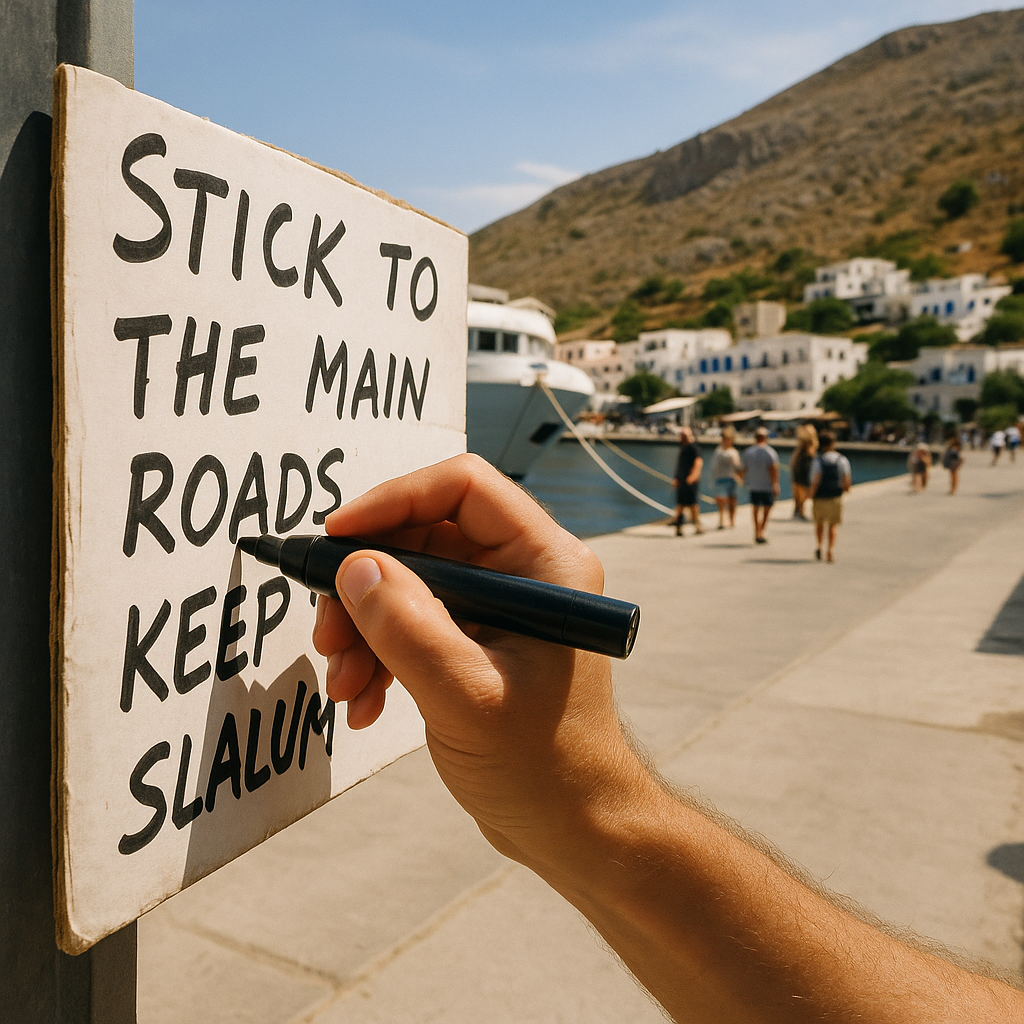
I first noticed it because it looked temporary, like someone had written it five minutes ago with a thick marker and then got pulled away to help with a mooring line. On Tilos (a small Dodecanese island), the transportation story starts at the harbor, not in an app. You step off the ferry and you immediately feel the constraint: fewer vehicles, fewer places to stash them, and a rhythm that runs on whatever the boat brings in that day. That limited infrastructure is exactly what nudges you toward the lowest-impact choice without anybody preaching at you.
On my last visit, I watched two different groups arrive with the same idea: rent scooters, zip to the beach, call it a win. Only one group pulled it off, and the difference was that they listened to the local rule-of-thumb posted right there at the dock and repeated by the rental guy. It boiled down to: stick to the main roads, keep speeds sane through the villages, and don't treat the narrow lanes like your personal slalom course. No drama, no lecture. Just a social contract written in plain language because enforcement is mostly neighborly.
If you're chasing eco-friendly transportation, Tilos is a masterclass in how constraints make the good option the obvious option. You'll see e-bikes and small scooters used for actual errands, not just joyrides. You also see the built-in limit: charging points are not everywhere, and that pushes you to plan your loops like locals do. Pick a base in Megalo Chorio or Livadia, walk the short stuff, and use two wheels for the longer climbs. The payoff isn't smugness. It's that you arrive places without a motor echoing off stone walls, and you notice things you miss from behind a windshield: goats nosing at a low wall, the smell of sun-warmed thyme, the way everyone pauses when a delivery van needs to squeeze through.
Practical tip that saved me a headache: ask where you're allowed to park before you hand over your ID. On islands with tight village centers, parking isn't about painted lines, it's about not blocking the path someone uses to carry groceries home. That small courtesy is part of why these places keep their character, even with visitors coming and going on a finite ferry schedule.
Hydra's no-car silence, and the fastest "vehicle" is a pair of feet
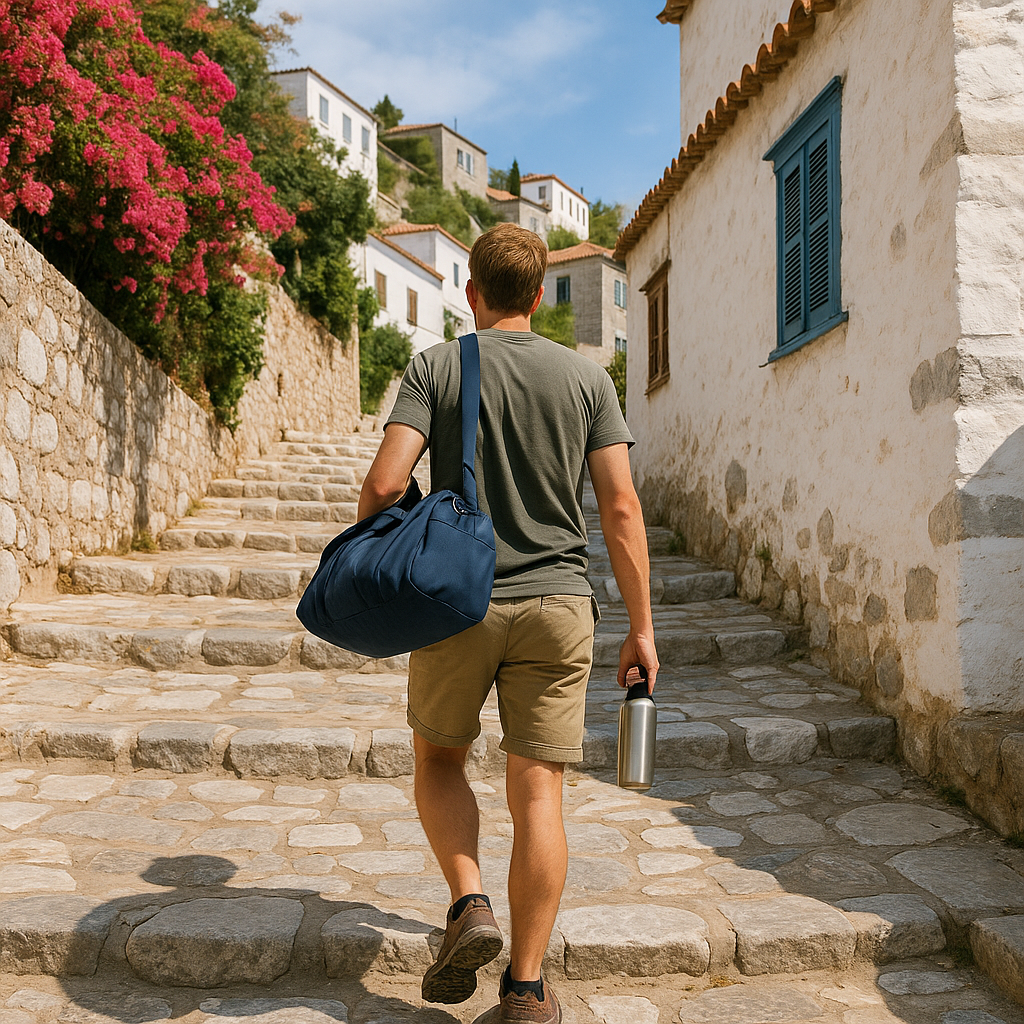
Hydra is the island I use as a reset button when I catch myself building trips around roads. It's famously car-free, and that one policy does more to preserve local texture than any amount of heritage signage. The second you leave the harbor, you realize you can't solve your day by driving five minutes in the wrong direction and laughing it off. You solve it by walking, or by timing your water taxi, or by accepting that your hotel up the hill comes with calves.
It sounds romantic until you're standing there with a bag you packed like you're headed to a big resort. I did that once. Never again. On Hydra, eco-friendly transportation isn't a special choice. It's the default because the infrastructure simply doesn't support private cars. Your movement menu is legs, donkeys and mules used for hauling (you'll see them working, not posing), small boats, and the occasional e-bike in limited contexts. The island's distinct local character shows up in that movement: shopkeepers know each other because they meet on foot; kids dart across stone steps; neighbors can hear the harbor gossip without a constant background of engines.
Here's the hands-on part I wish someone had told me before my first walk up to a hillside stay: pack like you're going to carry everything for 20 minutes, because you are. Soft duffel over hard suitcase. Water bottle you can refill. Shoes with a grippy sole for polished stone. And if you're tempted by a last-minute motorized shortcut, remember that Hydra's quiet is fragile. A place can be car-free on paper and still get loud if visitors push for exceptions.
One little scene that sticks with me: early morning, I was sitting on a harbor wall eating something sesame-covered from a bakery, and the loudest sound was a broom on stone. Not a metaphor, not a vibe. A broom. That is what limited infrastructure buys you when it's paired with a community that likes it that way. You don't visit Hydra to rack up miles. You visit to move slower than you planned and realize you didn't miss anything.
Anegada: golf carts, sandy roads, and the gentle speed limit of reality
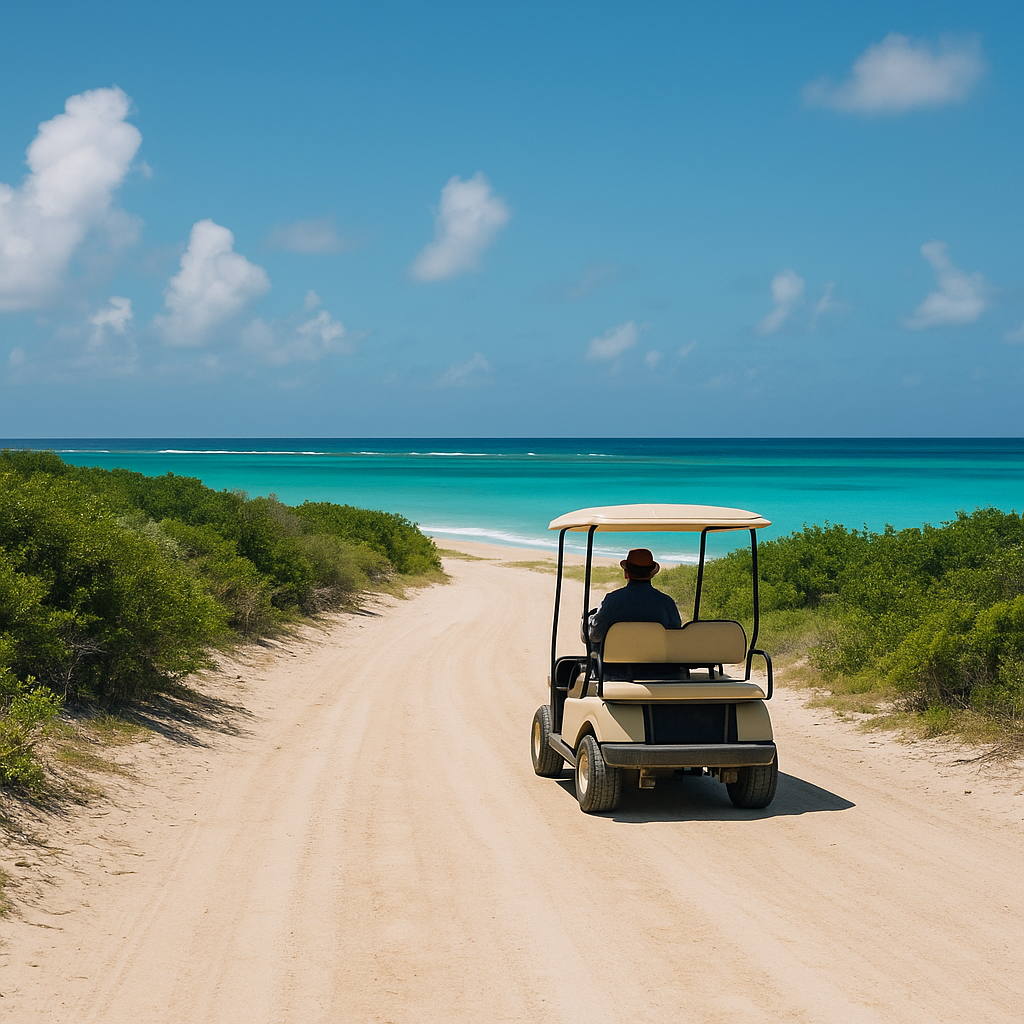
Anegada (in the British Virgin Islands) doesn't feel like it should be in the same conversation as dramatic green islands because it's low, flat, and ringed with beaches that look like someone turned the saturation up. But it's exactly the kind of place where limited infrastructure protects a distinct local character in a very unglamorous way: roads and services are sparse, and that scarcity shapes transportation into something lighter.
If you're used to renting a car without thinking, Anegada pushes you toward golf carts and small scooters because they're the practical tool for sandy, sometimes rough roads. That matters for eco-friendly transportation in two ways. First, the vehicles tend to be smaller and slower by design. Second, the island's reality enforces restraint. Even if you wanted to drive like you're on a highway, the road surface politely refuses. You end up moving at a pace where you can spot iguanas crossing, you can stop without a chorus of honks, and you can pull off to let someone pass without it turning into a whole thing.
The best day I had there was also the least complicated: I grabbed a cart, asked the rental place which stretches get rutted after rain, and then set a simple loop. Beach time, a late lunch, and a slow ride back as the light went gold. No chasing a checklist. The cart wasn't a novelty. It was a compromise that fit the island, and because everybody is making the same compromise, the vibe stays relaxed. You don't get the aggressive parking hunts and idling lines that change the mood of busier places.
Two practical notes from doing it wrong once: bring a bandana or buff for dust if it's dry, and don't count on constant cell service for navigation. Anegada is not the place to burn battery all day and then panic. I carry an offline map and I ask for a quick sketch at the counter if the beach access points are confusing. It feels old-school because it is. And that old-school edge is part of why the island still feels like itself, even when you're just passing through on a boat schedule you didn't control.