
Three small on-board rituals, from a dining-car tally to a window-side mile log, that turn long rides into the trip.
Steal the dining-car rhythm, even if you're in coach
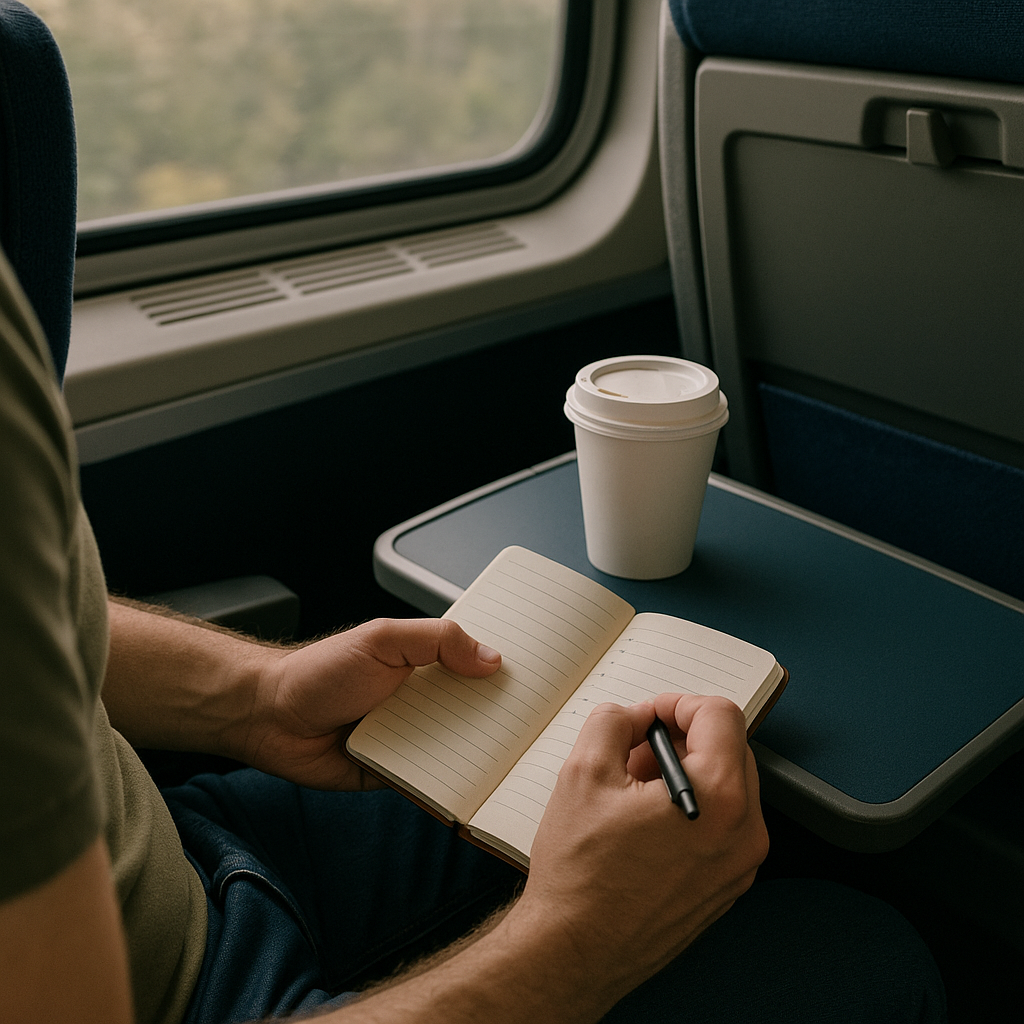
On a long-distance train, time gets weird fast. Your phone says 2:14, the onboard announcement says the next stop is in 90 minutes, and your body thinks you should be asleep. The easiest way I've found to stop floating around is to borrow the dining-car rhythm, even if I'm nowhere near a white tablecloth. When I do have access to a dining car, I watch the crew's cadence like it's a metronome: the seatings, the little reset between rushes, the way the same conductor voice hits the same beats over the PA. When I'm in coach (or when the cafe is the only option), I recreate that structure with a tiny ledger in my Notes app or a pocket notebook: meal, hot drink, stretch, and one small "checkpoint" task.
Here's what that looks like in practice. I pick two anchor times based on the timetable, not the clock: first major stop after sunrise, and the stop that lands me closest to dinner. Around those, I make a short list I can complete without hovering in the aisle: grab something warm from the cafe car (even if it's just coffee and a microwaved wrap), walk the length of the train once when the vestibules are quiet, and do a 5-minute pack reset so I'm not hunting for earbuds in the dark later. I write it down because otherwise I keep snacking and scrolling until the trip blurs. The funny part is how quickly the crew's routine rubs off on you. Once you're thinking in seatings and station calls, the ride stops being a passive wait and starts feeling like you're moving through chapters.
If you can swing the dining car, commit to it once. You don't have to treat it like a splurge dinner. Treat it like a clock you can eat. I learned that the hard way on an overnight route where I skipped the early seating, got stuck behind a line at the cafe, and spent the next two hours cranky in my seat with a warm seltzer and nothing to do. A real plate and a set time fixed my mood more than any charger or neck pillow ever has.
The window-mile log: what I track between station stops
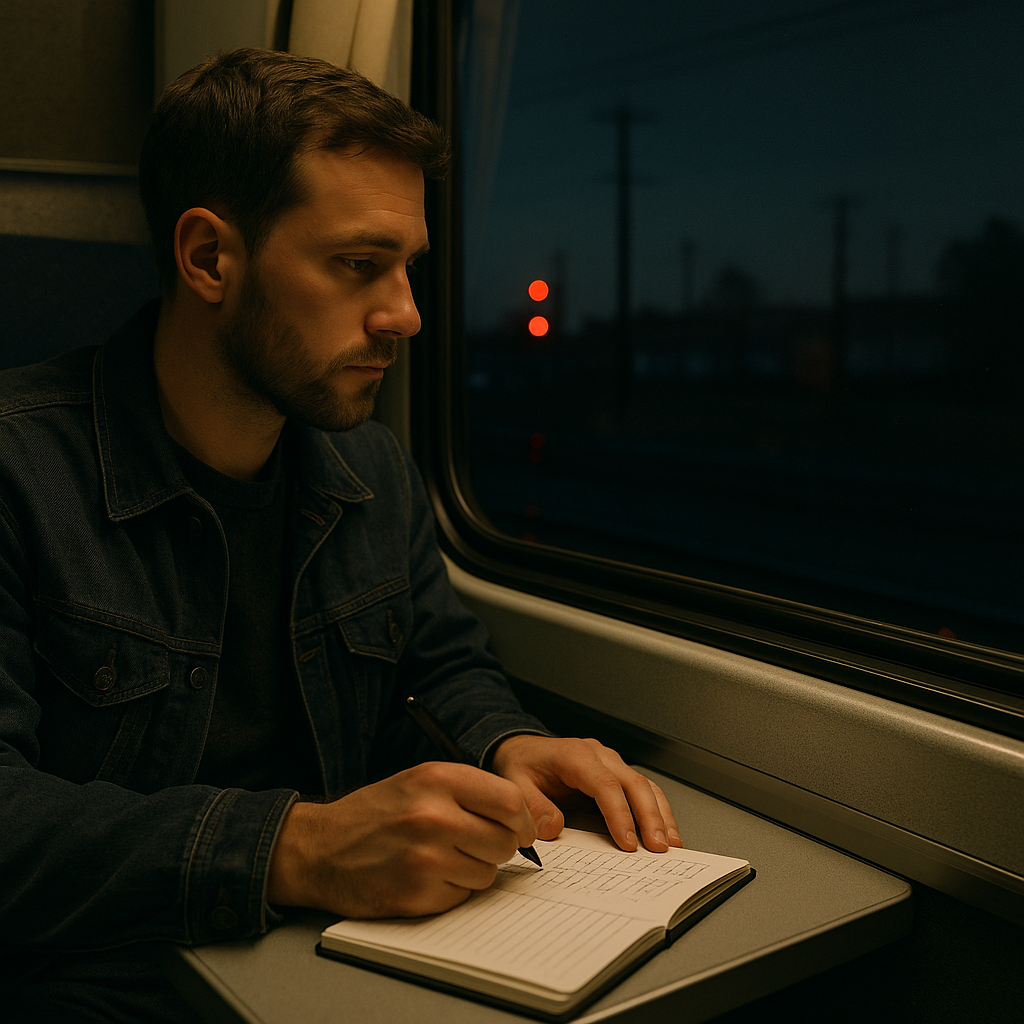
I used to board a night train with big, vague hopes: read a book, watch a movie, maybe sleep. The problem is that those are indoor goals. They'd work in my living room, so they don't automatically make the rails feel special. What changed the experience for me was keeping a simple window-mile log, the same way ferry people end up memorizing the sequence of buoys and headlands without trying. I don't mean mileage like a railfan with a stopwatch. I mean: a quick list of what the route is doing to the outside world, so the trip has a spine even when you're parked at a red signal in the middle of nowhere.
I start the log the moment we roll out of the station throat and the building density drops. I note five kinds of things, and I keep them consistent so I'm not inventing a new hobby at every window: (1) big water crossings (bridges, marsh, river bends), (2) industrial zones (grain elevators, refinery lights, container yards), (3) the first real dark stretch where the car goes quiet, (4) sunrise cues (fog, the first line of pink on the horizon, when people start snapping open laptop lids), and (5) any place where the train obviously slows for a curve or a town even if it's not a scheduled stop. It takes maybe two minutes total across a whole evening, and it gives you something to look back on when the hours smear together.
The surprisingly satisfying part is how this dovetails with the actual onboard system. You hear the conductor call a station, you jot what was outside right before it, and later the timetable makes sense in a way it doesn't when it's just a grid of times. On one route I rode last fall, I could predict we were about to hit a long river bridge because the air in the car changed, that wet-metal smell you only notice at night with the HVAC humming. That went in the log. So did the moment we slid past a line of parked freight cars tagged neon-bright under a sodium yard light, like we were borrowing someone else's city for thirty seconds.
If you're sharing a compartment or traveling with a friend, this turns into low-stakes conversation that isn't just, "How much longer?" You end up saying things like, "We haven't seen a crossing since before that refinery," which sounds nerdy until you realize you're paying attention. And paying attention is the whole point of choosing a scenic rail route over a flight.
The 10 p.m. ferry trick that makes a sleeper berth work
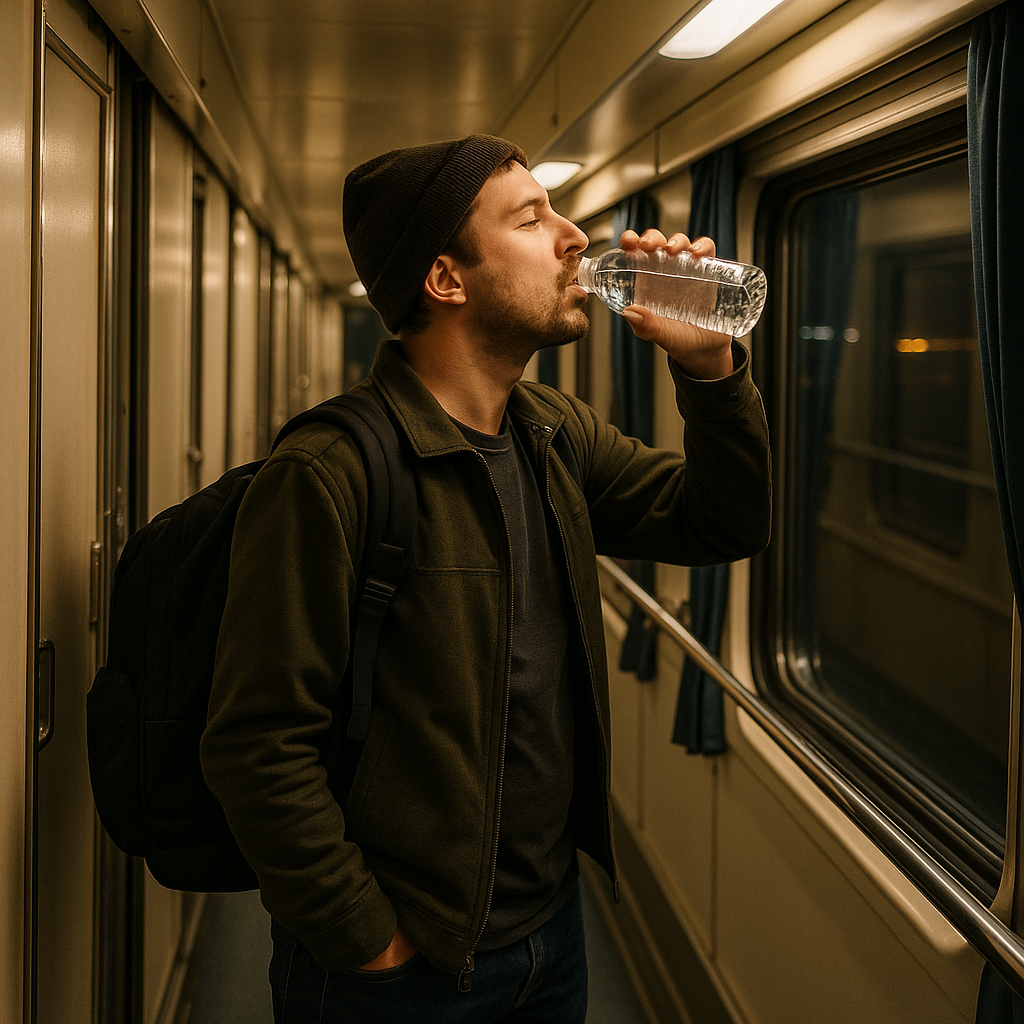
Overnight ferries taught me something I didn't expect to carry over to rail: the best sleep isn't about knocking yourself out, it's about doing one small, repeatable closing routine so your brain believes the vehicle is your room for the night. On ferries, the ritual is baked in. You stash your bag, you find your cabin, you do a loop of the deck, and then you come back inside when the wind gets sharp. Trains don't hand you that sequence, especially if you're in a roomette and everyone's schedule is different. So I bring my own 10 p.m. ferry trick and I do it whether I'm tired or not.
The routine is deliberately boring: I do a lap, I reset my space, I set one rule about light, and I pick my wake-up cue. The lap is not for steps. It's to notice what's open, where the quiet pockets are, and whether the cafe car is about to shut down. I fill my water bottle then, because nothing is more annoying than waking up parched and realizing you're trapped by a sleeping stranger in the aisle seat. Then I go back to my berth and do a two-minute reset: shoes together, charger plugged in, earplugs and eye mask within reach, ticket and ID in the same pocket they were in all day. If I'm in a sleeper, I also check the door latch and the curtain track once, not obsessively, just enough that I'm not fiddling with it later in the dark.
Light is the biggest difference between a great overnight and a miserable one. On ferries, the cabin is either yours or it isn't, and most people respect that. On trains, you have that constant corridor glow and the occasional flash of a platform. So I choose one light source and stick to it. Usually it's the berth reading light turned down low, not my phone. Phone light wakes me up in a specific, irritated way, like my brain thinks it has to do chores. And I decide my wake-up cue before I fall asleep: not wake up at 6, but "wake up when the first station stop after sunrise happens." On most long routes, you'll hear the air brakes and the doors before your alarm matters anyway.
This is also where ferries and rail feel like part of the trip instead of transport: you're participating in the vehicle's night. You hear the change in the rails, the tiny sway that means you're off the straight track. You catch the muffled announcement you half understand. You're not just trying to time-skip to arrival. You're letting the overnight be a place you were, not a blank spot on your map.