The Beautiful Vacation Spot You Saved on Instagram Is Actually Fake
A growing number of travelers have shown up at lakes, cable cars, and hot springs that simply do not exist. In July 2025, a couple traveled for hours to ride the so-called Kuak Skyride after watching a polished tourism video online, but when they arrived, locals had never heard of it. The video had been created with Google’s Veo 3 AI engine.
In February 2026, three women hunting for a pink lotus lake outside Bangkok learned at a hotel desk that the shimmering skyline view they saved had been digitally stitched together. The place they came to see was never there. That saved post sitting in your Instagram folder might fall into the same category.
The Illusion Economy Is Booming
AI no longer just enhances travel photos or clears a cloudy sky. It can fabricate entire destinations that look ready for visitors. The Kuak Skyride clip even showed a small Veo 3 logo in the corner, yet it felt like a credible news segment, complete with a reporter and cheerful tourists. Viewers believed it, and some were prepared to plan real trips.
The Bangkok lotus scene blended the pink blooms of Thale Bua Daeng with the Bangkok skyline. The image looked natural, so few questioned it. In 2025, a Tasmania Tours blog promoted “Weldborough Hot Springs” as a forest retreat in northeast Tasmania. The location did not exist, and the company later admitted the AI content had been outsourced and published while the owner was overseas.
In Peru, travelers searched for a nonexistent “Sacred Canyon of Humantay.” In Malaysia, an elderly couple drove more than 370 kilometers to ride a cable car that turned out to be fictional. The pattern is hard to ignore. AI can now sell an invented place as convincingly as it sells a real one.
It Started With Staged Reality
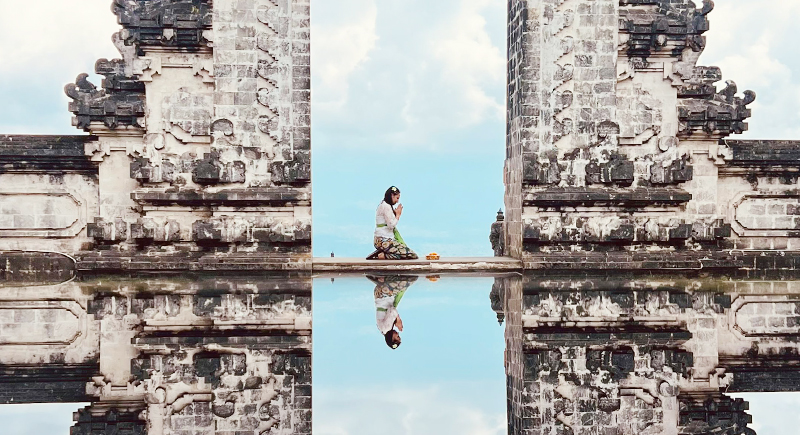
Image via Pexels/Own Creation
Travel illusion did not begin with generative AI, but with performance. At Bali’s Lempuyang Temple, visitors line up for hours to photograph the “Gate of Heaven” reflection shot. The water reflection is created with a handheld mirror for about $5. The temple is real, but the mirror trick is the magic.
At Ubud’s Sacred Monkey Forest, ranger I Nyoman Surata uses bananas to prompt monkeys into grabbing smartphones at just the right moment. In a 2019 interview with Tribun Bali, he explained that he times the shot to the moment the monkey reaches for the fruit. Tourists love it, and many present it online as a spontaneous wildlife selfie.
On Inle Lake in Myanmar, fishermen strike a traditional leg-rowing pose for passing boats. The method is no longer used for daily fishing. It survives as a paid photo opportunity. These scenes still exist in the real world. But they are curated, and that difference is important.
AI Has Raised The Stakes
Image via Canva/GNEPPHOTO
Generative tools now remove the need for a real location entirely. A Booking.com survey found that 89 percent of consumers want to use AI for future travel planning. Many place greater trust in digital assistants than bloggers or influencers. Reliance is rising at the same time fabrication is getting harder to detect.
AI can also flood review sections with glowing testimonials that describe amenities that never existed. A cable car can trend online before anyone builds a single support beam. Spotting clues takes effort, but reverse image searches help. Cross-checking multiple independent sources helps. Overly perfect crowd shots should raise suspicion, and a landmark with only promotional footage and no tagged traveler photos deserves a second look.
The Industry Is Trying To Respond
Airlines and travel platforms see the problem. Icelandair launched a campaign titled “Is This Real or AI?” in late 2025 and January 2026. The airline challenged viewers to distinguish actual Iceland photography from AI-generated travel images. The goal was simple: reset expectations.
Cruise Critic recently introduced a strict AI Use Policy requiring member-submitted photos to be original and unmanipulated. Any AI-generated images must be clearly labeled. These efforts help, but they are limited, and there is still no global standard requiring clear disclosure across platforms.
That saved destination might be breathtaking, but it might also be a set of pixels arranged by software. The only way to know is to verify before booking the flight.