The Arkansas Diamond Mine, Where Visitors Can Keep the Gems They Find
Crater of Diamonds State Park is located in Murfreesboro, Arkansas, and operates under one of the simplest policies in American tourism. If you find a diamond there, it belongs to you.
Families, hobbyists, and first-time visitors show up year after year, drawn by the same possibility. Most understand the odds before stepping onto the field. Diamonds are rare, but they are still found often enough to make the search worthwhile, which keeps people coming back.
A Diamond Field Open To Everyone
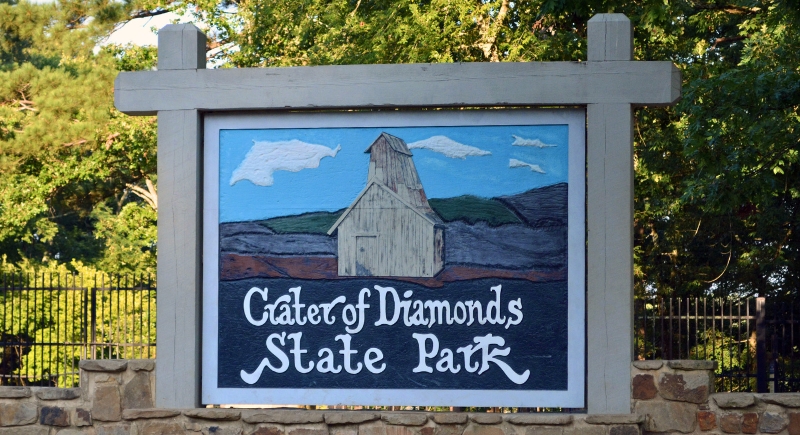
Image via Getty Images/PaaschPhotography
Crater of Diamonds State Park is the only public diamond-producing site in the world where visitors search for diamonds in their original volcanic source and keep what they find.
The diamond search area covers about 37 acres and is situated on the eroded surface of an ancient volcanic crater. Millions of years ago, volcanic activity carried diamond-bearing material upward. Over time, erosion and farming brought some of those stones closer to the surface, where they remain accessible today. The site became part of the Arkansas State Park system in 1972.
Before that, several commercial mining efforts tried and failed to turn a profit. Fires, legal disputes, and operating costs ultimately led to the end of those ventures. The land remained better suited for public access than industrial mining.
How Often Diamonds Actually Turn Up
More than 35,000 diamonds have been discovered at Crater of Diamonds State Park since it opened to the public. On most days, one or two diamonds are found and officially registered.
Many visitors leave with other minerals instead. Quartz, jasper, agate, and garnet are common finds across the field. Some visitors leave with nothing more than dirt on their shoes and a better sense of how challenging the search can be. Every so often, a discovery draws wider attention.
The largest diamond ever found in the United States came from this site. The 40.23-carat Uncle Sam diamond was discovered in 1924 and is now on display at the Smithsonian National Museum of Natural History in Washington, D.C.
Recent findings show that new discoveries are still being made. In spring 2025, a visitor noticed a reflective glint on the ground and stopped to take a closer look. The pause revealed a 3.81-carat brown diamond, the largest found at the park that year.
Rain Changes Everything
Image via Getty Images/SKLA
Weather conditions influence how the field looks from day to day. Rainfall often makes diamonds easier to spot.
Diamonds are heavier than much of the surrounding soil. When rain washes across the field, lighter dirt moves away while denser materials remain closer to the surface. After storms, stones sometimes become visible without digging.
Visitors often plan trips around this detail. Some prefer digging and sifting methods. Others focus on surface searches, walking slowly and scanning the ground for flashes of light. Both approaches have led to documented finds.
What The Search Looks Like In Practice
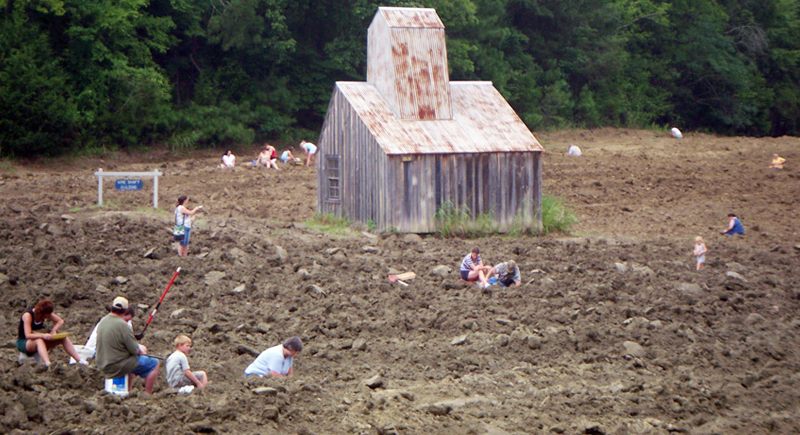
Image via Wikimedia Commons/Doug Wertman from Rogers, AR, USA
The diamond search area is plowed periodically during warmer months to loosen soil and refresh the surface. Each round of plowing reshapes the field slightly and changes where stones may appear.
Visitors enter through the Diamond Discovery Center, where staff explain common search methods and later assist with identifying finds. Diamonds discovered in the field are registered and documented at no cost.
Hand tools are allowed, and equipment rentals are available on-site. However, motor-driven and battery-powered tools are restricted to allow consistent conditions for all visitors. Each person may also take home one five-gallon bucket of sifted gravel per day to search again later.
Diamonds found at the park usually appear white, yellow, or brown. The uncertainty keeps visitors paying close attention to every step.
A Place Built On Possibility
Crater of Diamonds State Park attracts thousands of visitors each year through a simple promise grounded in access and chance. The site’s history adds context to the experience; the first diamond was discovered here in 1906 by farmer John Huddleston.