
Three calendar checks that keep your dark-sky trip from getting nuked by moonlight, closures, or a surprise star party crowd.
Start with the moon, then work backward 48 hours
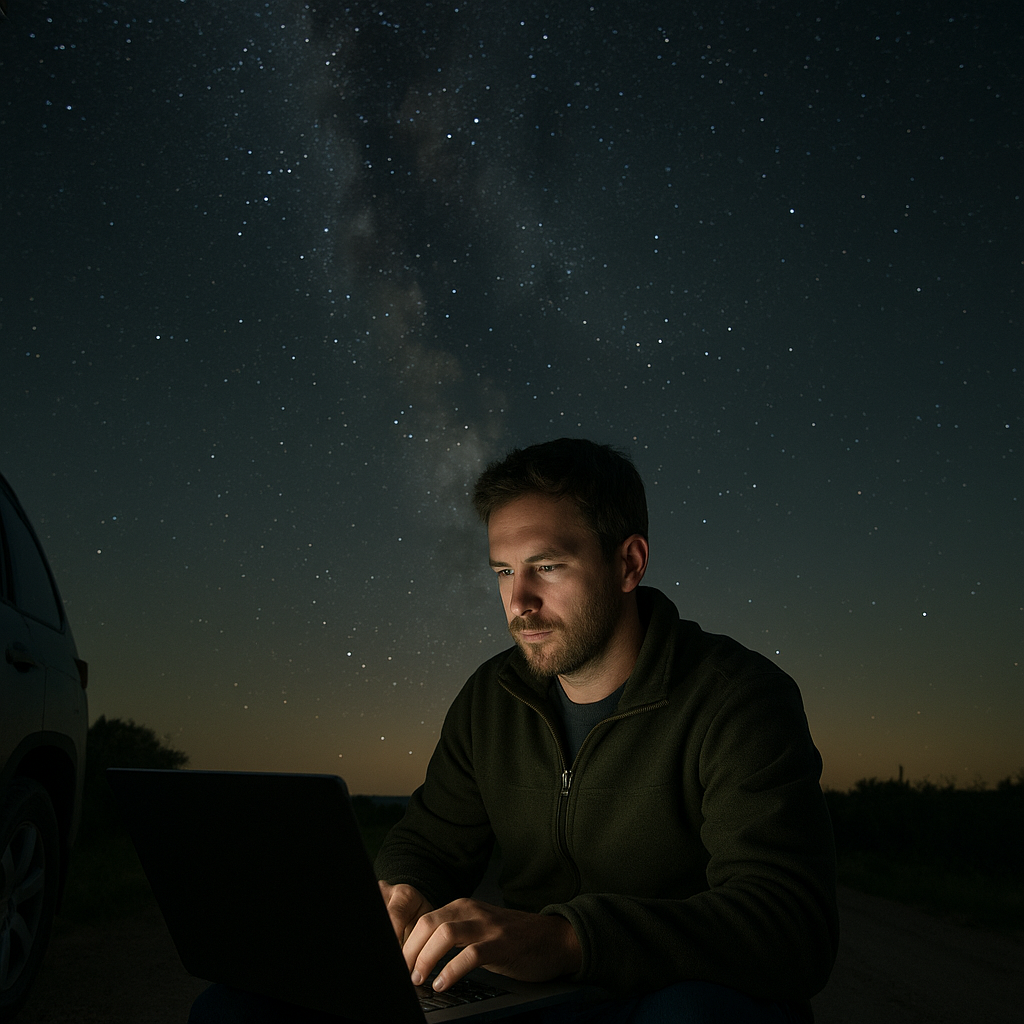
I used to pick a weekend first, then hope the sky cooperated. That would work great for a beach trip. It does not work when your whole reason for driving three hours past the last gas station is to see faint stuff: the Milky Way structure, the little smudge of Andromeda, the dark lanes that disappear the second the moon shows up like a porch light.
My calendar habit now is boring, but it has saved me more than once: I find the new moon date, then I plan the trip around the two nights closest to it, not the other way around. The reason is simple. A new moon minimizes interfering moonlight, giving faint stars and deep-sky objects better visibility during the available hours of darkness. If the new moon is on a Tuesday, I don't automatically grab the nearest Friday. I look at the weekend before and the weekend after, then check moonrise and moonset for each night. The weekend before the new moon may have a waning Moon rising late at night, while the weekend after can have a waxing Moon lingering after sunset. Checking the actual moonrise and moonset times tells me which part of the night will be moon-free.
I do this in a planetarium app (Stellarium on a laptop when I'm at home, SkySafari on my phone when I'm not). I'm not hunting for a perfect number, I'm hunting for a simple yes/no: will I get at least 3 to 4 hours of moon-free darkness at the dark-sky site when I'm realistically awake? Then I put a second reminder on my calendar for 48 hours before the trip: check again, not because the moon changes, but because your life does. This is when I decide whether I'm driving out after dinner, napping and leaving at 10:00 p.m., or treating it like a pre-dawn session. That one decision changes what I pack (thermos vs. cooler, extra layers vs. bug spray) and how miserable the drive home feels.
One more detail people skip: twilight. In summer at higher latitudes, astronomical twilight can eat a big chunk of the night even on a new moon. I pull up the dark-sky site's sunset and end-of-twilight time, and I write down the first moment the sky is fully dark. It sounds picky until you're standing there at 10:15 p.m. staring at a bright blue horizon, wondering if you drove all this way for nothing.
The closure-and-gate-hours trap (and the email I always send)
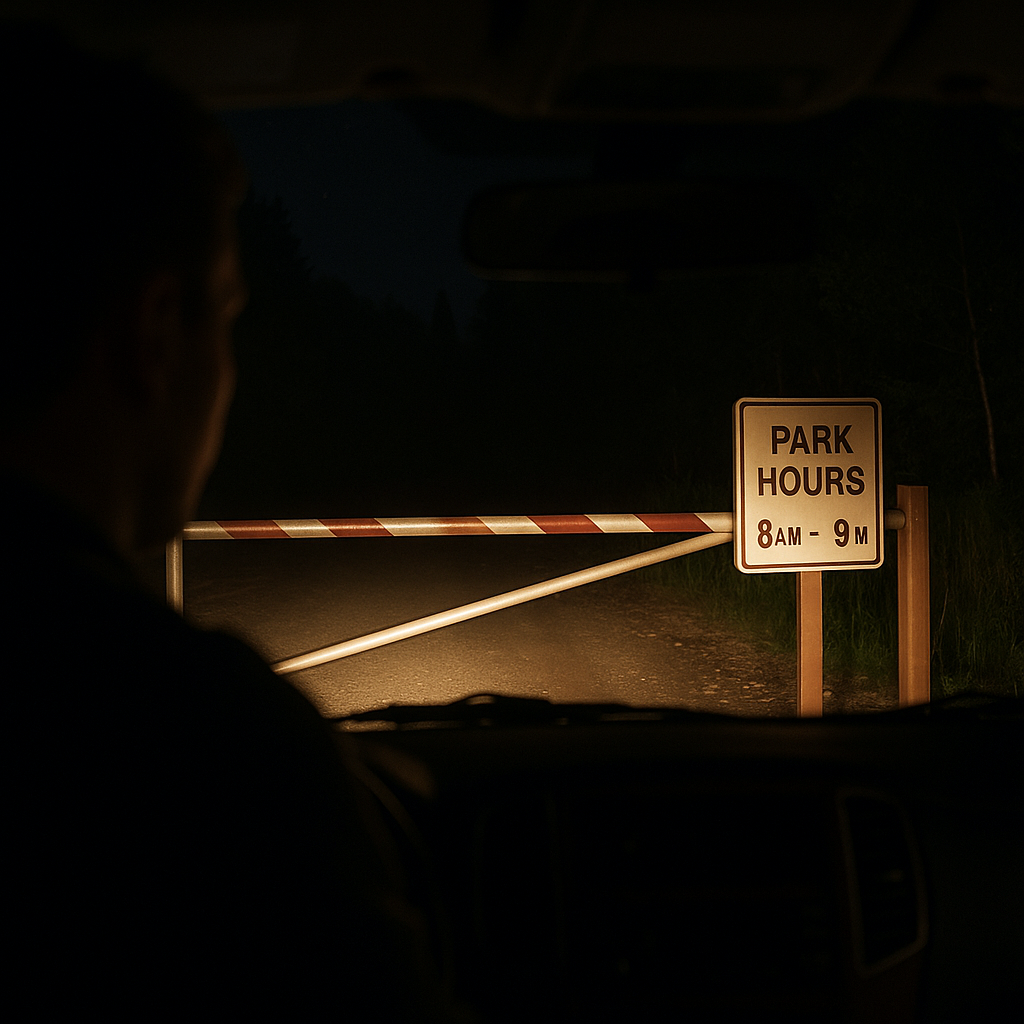
The first time I planned a dark-sky weekend around moon phase and weather, I felt smug. Then I found the gate locked. Not a dramatic chain across a road situation, either. It was a neat little sign with hours, and my headlights hit it like a punchline. That was the moment I learned that an events calendar isn't just about star parties. It's also about access.
So now, once I have my two candidate weekends, I do a second pass that looks less romantic and more like a project manager with a caffeine problem. I check three things, in this order:
- Operating hours for the exact viewing area. Not the visitor center, not the general park hours. The pullout, the trailhead, the observatory lot, the campground amphitheater. A lot of dark-sky sites are located within parks with day-use rules, seasonal gate closures, or roads that close when snow shows up.
- Construction and special closures. Some sites post this under alerts, some bury it in a PDF. If I see any mention of repaving, washouts, or controlled burns, the best viewing lot might be inaccessible at night, even if the park is technically open.
- Permits and reservations. If the dark-sky destination has a designated night-sky area, it might be tied to a campground reservation, a guided program, or a limited-capacity permit. Those rules change by season, which is why I don't trust a memory from last year.
Then I send a short email or a message via the contact form. I keep it specific so I get a useful answer: the date, the time window (for example, 9:00 p.m. to 2:00 a.m.), and the exact location name as the park labels it. I ask one question: where can I legally park and stargaze during those hours? Rangers and site managers are usually happy to reply when it's framed as me trying not to be a problem.
This step also catches the sneaky stuff the glossy event listing won't say. I've been warned about a gate that closes automatically at 10:00 p.m. but doesn't reopen until 6:00 a.m. (great if you're camping inside, terrible if you're planning to drive out). I've also been told, politely, that the famous overlook is a no-go at night because people kept wandering into the road with tripods. That isn't a vibe-killer. It's a gift, because it tells you where the staff wants you to be, which is usually the safest place with the best sightlines anyway.
When the star party is the plan, not the surprise
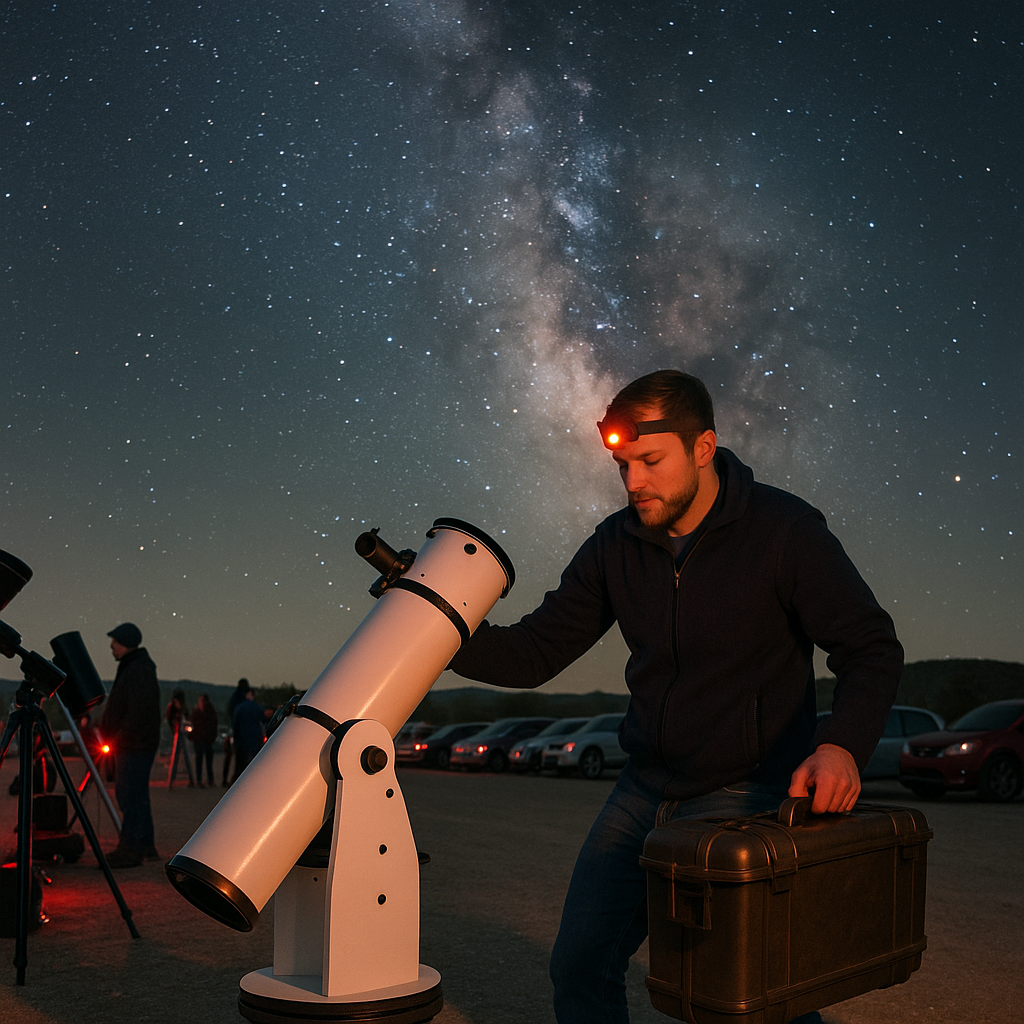
A quiet observing night and a scheduled star party can feel like completely different trips. Checking the events calendar beforehand lets me decide which experience I want rather than discovering a packed viewing area after I arrive.
If I'm traveling with someone new to this, I like to schedule a public night on purpose. A good star party means red lights, someone doing crowd control so headlights don't wreck everyone's night vision, and a lineup of telescopes that let you see Saturn cleanly without spending the next hour swearing at a finder scope. I look for listings from local astronomy clubs (they're often the ones bringing the serious Dobsonians), dark-sky-site programs, or nearby planetariums that do outreach. If the listing mentions a laser-pointer constellation tour, I assume it will be beginner-friendly. If it mentions astrophotography workshops, it'll be more gear-heavy and less chatty.
When I want the quiet version, I do the opposite. I scan the same calendar and avoid the big advertised nights, especially around the new moon. The other thing I check is whether the dark-sky site is tied to an annual festival. Those events are fun, but they can turn a remote place into a mini city for a weekend. Campground loops fill up, and the prime viewing pads become a polite but constant shuffle of people asking what you're shooting. If I'm testing a new lens or trying to catch a meteor shower peak at 2:00 a.m., I don't want to be managing an audience.
Either way, I plan my arrival time around the program schedule. If the talk starts at 8:30 p.m., I get there early enough to park, walk the site, and pick a spot before darkness locks in. That sounds obvious until you watch someone set up directly in front of a low horizon because it was the only empty patch of gravel left. On my last club night, the best tip I overheard wasn't about gear at all. It was a volunteer reminding people to turn off the auto-unlock flash and interior dome light on their cars. That single setting is the difference between a dark-sky destination feeling like a sanctuary and feeling like a parking lot.